Netflix Beats Q2 Earnings on ‘Squid Game’ Success But Stock Falls on Conservative Outlook
 Isabella Alexiou
18 Jul 2025
Isabella Alexiou
18 Jul 2025
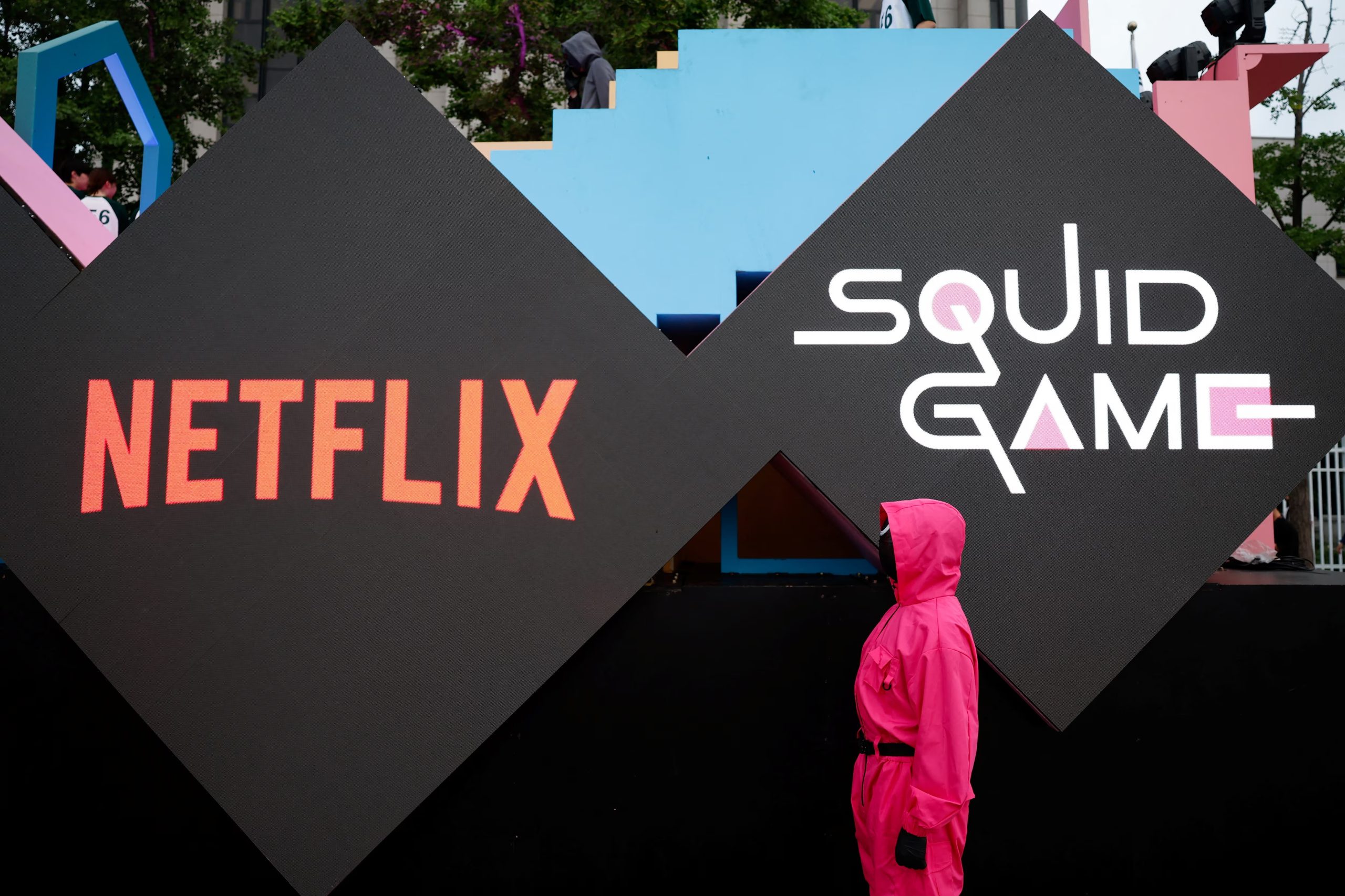
Netflix exceeded Wall Street earnings expectations for the second quarter, driven by the final season of global phenomenon “Squid Game,” but shares dropped 1.8% to $1,897 in after-hours trading as investors expressed disappointment with the company’s conservative revenue guidance for 2025.
The streaming service had surged nearly 44% year-to-date before the earnings announcement.
The company posted diluted earnings per share of $10.89, surpassing the $10.73 consensus estimate from analysts polled by LSEG.
Net income reached $4.7 billion, slightly above forecasts of $4.6 billion, while revenue totalled $16.8 billion, exceeding the $16.7 billion analyst projection for the April-June period.
Netflix raised its full-year revenue guidance to $67.8 billion to $68.4 billion, citing US dollar weakness and “healthy member growth and ad sales,” up from previous guidance of $67.3 billion.
However, investors had anticipated a more substantial upward revision, according to Investing.com analyst Thomas Monteiro.
“The full-year outlook now feels quite conservative, which is problematic for a stock priced for perfection,” Monteiro said.
“At this stage, the company appears overly dependent on further price increases, at least through 2026, to drive revenue.”
The final season of dystopian Korean drama “Squid Game,” released just before the quarter’s end in June, significantly contributed to subscriber engagement.
The show, which remains Netflix’s most popular non-English series, generated 122 million views for its third season, demonstrating the continued global appeal of international content on the platform.
Other notable releases during the quarter included “Sirens,” “The Four Seasons,” and a third season of “Ginny & Georgia.”

Netflix discontinued reporting quarterly subscriber numbers this year, instead directing investors to focus on profitability metrics as indicators of business performance.
The company acknowledged that member growth exceeded forecasts but occurred late in the quarter, limiting the impact on second-quarter revenue.
Netflix has been developing its advertising-supported tier to attract price-sensitive viewers, though management indicated advertising would not serve as a primary revenue driver in 2025.
Looking ahead, Netflix projected third-quarter revenue of $17.4 billion and net income of nearly $4.5 billion, exceeding analyst expectations of $17.1 billion and $4.4 billion, respectively.
The optimistic guidance reflects confidence in upcoming content releases and continued subscriber momentum.
The streaming service has significant content releases scheduled for the remainder of 2025, including the return of “Wednesday” in August and the final episodes of “Stranger Things” scheduled for November and December.
These flagship series are expected to drive subscriber engagement and retention during the traditionally competitive fourth quarter.
Netflix has also expanded into live programming, adding WWE wrestling events to attract both advertisers and viewers seeking real-time entertainment experiences.
This strategy complements the company’s traditional on-demand content library while creating new revenue opportunities through live advertising placements.
Chief Financial Officer Spencer Neumann addressed acquisition strategies during the post-earnings video, indicating Netflix would remain “choosy” about potential purchases from other media companies.
“We’ve historically been more builders than buyers, and we continue to see a big runway for growth without fundamentally changing that playbook,” Neumann explained.
The earnings results highlight Netflix’s continued dominance in streaming entertainment while revealing investor expectations for accelerated growth in an increasingly competitive market.
Despite beating financial targets, the company faces pressure to demonstrate sustainable revenue expansion beyond subscription price increases as the streaming landscape becomes more saturated globally.