OZ TV Market Undergoing Biggest Transformation In Decades
 David Richards
13 Jun 2025
David Richards
13 Jun 2025
The TV display market is experiencing a massive transformation as brands like Sony struggle, Samsung jumps into the B2b market after a tough 2024, and LG moves to flogging data on owners of LG OLED TV’s in an effort to bolster their falling TV revenues, then there are the Chinese brands that are stripping share due to the quality of their TV’s their lower prices and their dominance in the LED market.
Currently Chinese brands Hisense and TCL are stripping market share away from traditional TV brands in Australia, with Hisense now dominating in the over 65″ and over 100″ TV display market.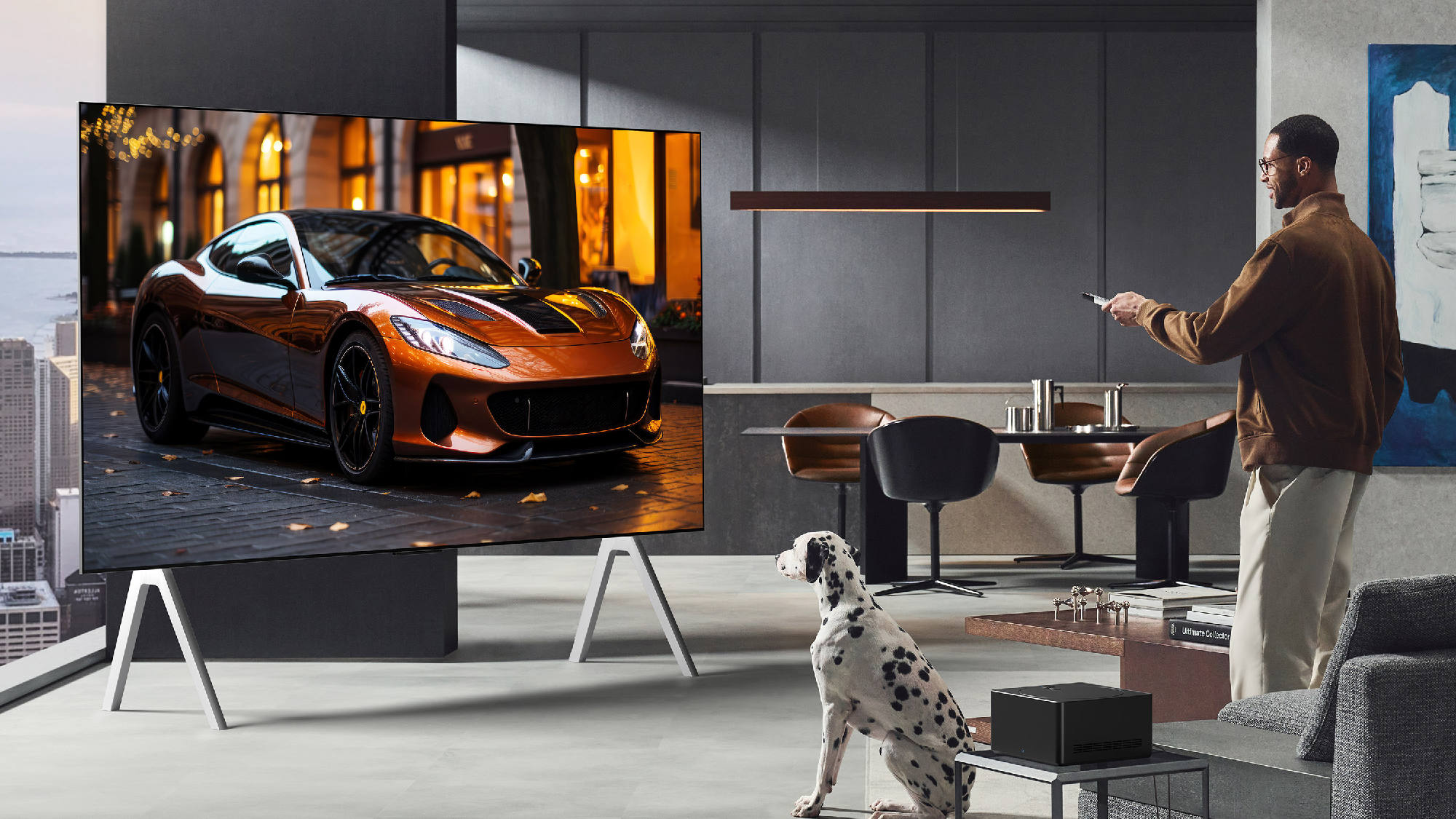
What emerges from the latest industry data is a picture of a sector in flux, where traditional assumptions about market dynamics, technology preferences, and competitive positioning are being fundamentally being rewritten around new TV technology such as MiniLED, QLED, ULED and Quantum Dot.
Mini-LED technology uses thousands of tiny LEDs to create precise backlighting, resulting in deeper blacks and higher contrast. QLED technology utilizes quantum dots to emit light and enhance colour accuracy and brightness.
All of these technologies are creating confusion for retailers who have to train staff on the new technology while deciding which brands to range.
For the first time since Samsung established its dominance in the premium TV market, the Company faces a legitimate threat to its leadership position.
In Australia Chinese brands have chosen an entirely different strategic playbook than their South Korean competitors with both TCL and Hisense, leveraging China’s manufacturing dominance in LCD panels to deliver lower priced TV’s.
What Chinese brands are offering is a premium viewing experiences at lower prices than their Korean competitors with brands such as LG now having to manufacture their LED TVs on production lines owned by TCL.
In the first quarter of 2025, TCL’s unit share in the premium TV market jumped from 13% to 19%, while revenue share increased from 13% to 16% (Counterpoint, June 2, 2025).
Hisense performed better with unit share rising from 14% to 20% and revenue share growing from 13% to 17% over the same period.
Both companies achieved triple-digit percentage increases in shipments, with revenues growing 74% and 87% respectively YoY.
Samsung’s share of the premium TV market fell from 39% in Q1 2024 to just 28% in Q1 2025.
Their revenue share also dropped from 38% to 30% (Counterpoint, June 2, 2025).
Samsung’s shipments increased a mere 1% YoY compared to its Chinese rivals’ explosive growth, signalling a fundamental shift in competitive dynamics that extends far beyond typical market fluctuations claim analysts.
Despite the battles and lower prices TV sales in Australia are struggling despite global overall growth.
Currently Display manufacturers are forecasting a 3% decline in the next quarter.
This planned reduction represents an unusual departure from historical patterns, as panel makers typically increase production in the second quarter to prepare for end-market demands in the latter half of the year.
The decision to cut production reflects manufacturers’ growing caution about future demand.
Top Chinese panel makers BOE, TCL CSOT, and HKC Display, which collectively account for 60% of global display manufacturing capacity by area, are projected to lower their monthly productions by up to 9%. because of anticipated cuts in LCD TV panel orders from major TV brands.
Alex Kang, Principal Analyst at Omdia, claims that “The uncertainty surrounding end market demand in 2H2025 has led panel makers to adopt a more conservative approach to panel production volume in 2Q25. The impact of the Chinese government’s subsidy program is expected to diminish in the second half of the year, and set makers are unlikely to aggressively pursue year-end promotions due to ongoing US tariff issues.”
Global TV shipments grew 2.4% YoY in Q1 2025, reaching 47.5 million units, despite ongoing uncertainty around potential US tariff implementations with brands stockpiling TVs for sale in the USA.
In Australia, the battle could come down to which technology to choose. Samsung who moved to OLED panels is already stripping share away from traditional OLED TV brand LG with this set to continue due to the strength of the Samsung brand in the TV market.
While Samsung has focused its resources on OLED technology and achieved remarkable success, increasing its OLED TV unit share from 12% in Q1 2023 to 31% in Q1 2025 according to analysts it’s the actions of Chinese manufacturers who have chosen a different path entirely.
In Australia Hisense management appear to be avoiding being questioned about their strategies and their push into the laser TV market.
Rather than compete directly with Samsung’s OLED strength, TCL and Hisense have leveraged China’s dominance in LCD panel production to aggressively promote large-screen MiniLED LCD models.
The end result is that consumers have two choices, a smaller and more expensive OLED TV or a larger Mini LED TV which looks to the naked eye remarkably similar to an OLED TV offering that is also cheaper than OLED.
Increasingly, consumers are choosing size over OLED technology.
Last year MiniLED LCD TV shipments increased 159% YoY in Q1 2025, while OLED TV shipments grew only 10% according to Counterpoint, June 2, 2025).
Revenue growth tells a similar story, with MiniLED revenues increasing 111% compared to OLED’s 14% growth.
This shift has fundamentally altered the competitive landscape in the super-premium market, where MiniLED surpassed OLED in Q2 2024 and has continued expanding its share in each subsequent quarter.
Samsung, despite its OLED market share gains, has seen its position in MiniLED rankings slide precipitously.
After dominating the MiniLED category in 2021-2022 and maintaining leadership through 2023, Samsung was passed by TCL, then Hisense with the business now looking for new markets to compete in.
As for unit sales Samsung is in fourth position in unit and third position in revenues in the MiniLED category where they were once #1.