How Diamonds Can Make PCs Run Faster and Cooler
 Joe Gallop
10 Oct 2025
Joe Gallop
10 Oct 2025

As AI drives demand for more powerful data centres, engineers are facing the growing challenge of heat and the amount of electricity these facilities consume is skyrocketing.
Every year, billions of dollars are spent powering and cooling processors that waste more than half their energy as heat leaking from transistors.
Now, researchers believe diamonds may be the unlikely hero to solve the problem.
Synthetic diamond, a material that conducts heat five times better than copper, is emerging as a breakthrough solution for next-generation computer chips.
Engineers from Diamond Foundry, Element Six and Stanford University are developing ultra-thin diamond layers that can be embedded directly into silicon chips to help them stay cool and run faster.
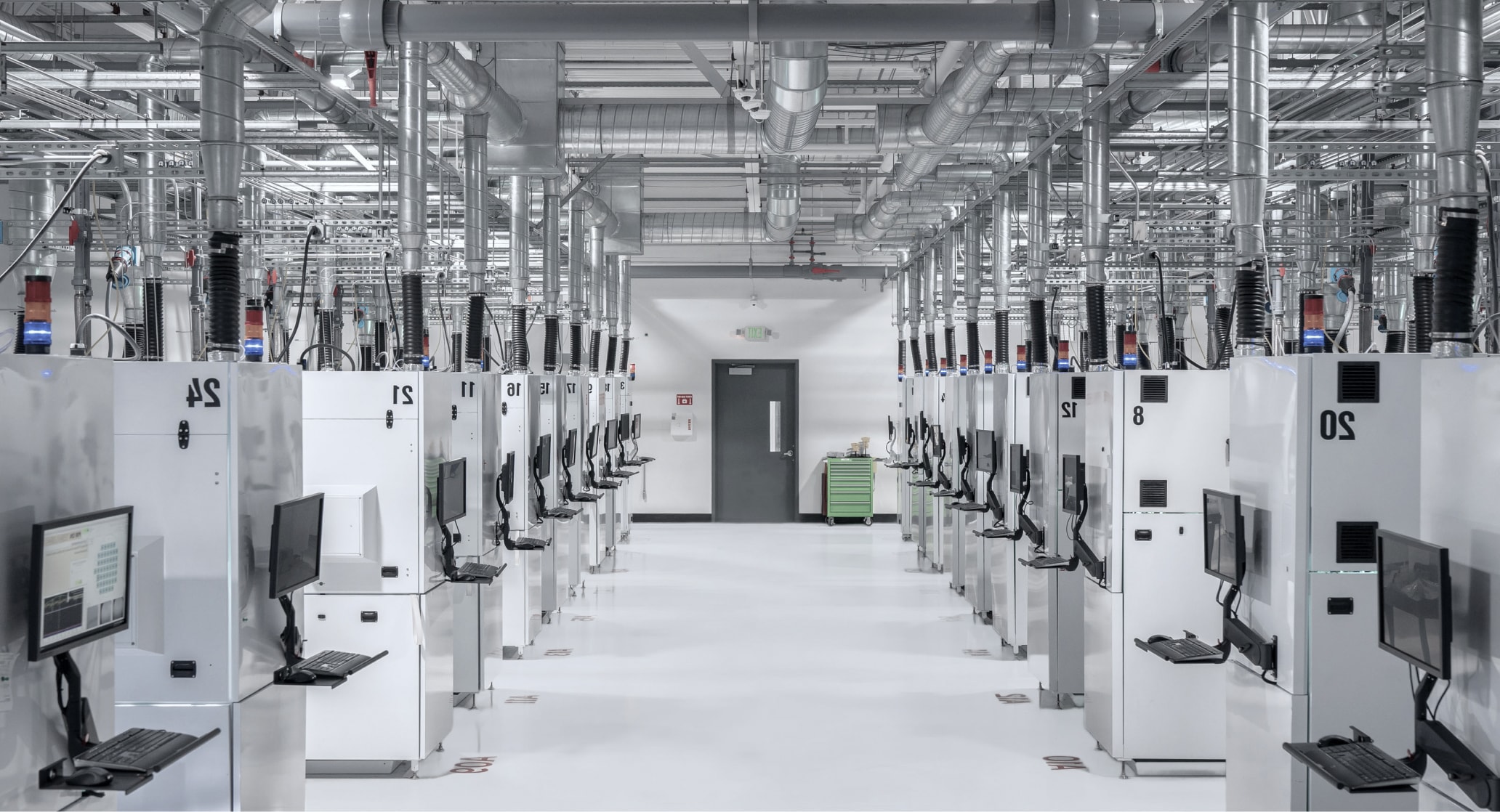
Diamond Foundry’s headquarters in San Francisco, California
Diamond Foundry uses a patented process in which a plasma rich in carbon deposits atoms in a perfectly ordered crystal configuration, creating wafers polished to atomic smoothness.
Diamond’s tightly bonded atomic structure, each carbon atom connecting to four neighbours, creates efficient pathways for heat to move rapidly through the crystal.
This superior thermal conductivity could not only prevent overheating but also extend chip lifespans and significantly reduce energy consumption across the tech industry.
High-end electronics already use diamond heat-spreaders. Experts predict that processors in PCs and smartphones could soon follow suit.
The race to harness diamond cooling is heating up.

Diamond Foundry has begun producing four-inch synthetic diamond wafers polished to atomic smoothness, while De Beers’ industrial arm, Element Six, is experimenting with copper-diamond hybrids designed for AI processors that run hotter than ever.
Element Six says its hybrid material offers optimal thermal management at lower cost than pure diamond.
Meanwhile, Stanford researchers are exploring diamond-based transistor stacking – a technique that could boost processing speeds without melting the hardware.
The potential applications go beyond data centres. Within a few years, experts predict the same diamond-cooling technology could appear in laptops, smartphones and even quantum computers, enabling faster, more efficient devices without the need for bulky cooling systems.
But challenges remain. Producing high-quality diamond wafers is still costly and researchers are working to scale up manufacturing to make it commercially viable.
Nevertheless, from AI servers to everyday devices, diamonds may soon become as essential to computing as silicon itself.