Apple Announces Free Mac Mini M2 Repairs and Launches Advanced Gaming Platform with Metal 4
 Isabella Alexiou
16 Jun 2025
Isabella Alexiou
16 Jun 2025

Apple has initiated a worldwide service program offering free repairs for 2023 Mac mini computers with M2 chips experiencing power failures, while simultaneously announcing significant gaming platform enhancements, including a new Games app and Metal 4 graphics technology.
The service program addresses power issues affecting “a very small percentage” of Mac mini M2 units manufactured between June 16 and November 23, 2024.
Affected devices may fail to turn on, with Apple providing free repairs through authorised service providers for up to three years from the original purchase date, even for units outside warranty coverage.
Users can verify eligibility by entering their Mac mini serial number on Apple’s program webpage.
The repair coverage applies globally, though Apple may restrict services to the device’s original country or region of purchase.
The latest Mac mini models powered by M4 and M4 Pro chips are not affected by these issues.
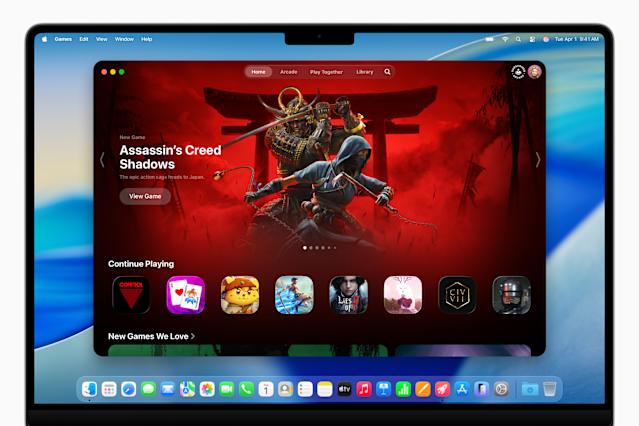
Apple is expanding its gaming initiative with a dedicated Games app launching this fall across iPhone, iPad, and Mac with iOS 26, iPadOS 26, and macOS Tahoe.
The app will serve as a central gaming hub featuring game discovery, Game Center integration for multiplayer challenges, leaderboards, achievements, and events.
The company has initially excluded Apple TV and Apple Vision Pro from the Games app rollout, focusing on more established gaming platforms, though future expansion appears likely.
Metal 4 replaces Metal 3 as Apple’s gaming API, introducing path-tracing and AI-based frame interpolation capabilities comparable to Nvidia’s DLSS 3.5 and AMD’s FSR 4 technologies.
The system enables real-time generation of intermediate frames to increase frame rates and supports advanced lighting effects in games like Cyberpunk 2077.
“Metal 4 is designed exclusively for Apple silicon, and sets the stage for the next generation of games on Apple platforms with support for advanced graphics and machine learning technologies,” Apple announced.
The API allows developers to run inference networks directly in shaders for computing lighting, materials, and geometry.
Metal 4 supports devices including iPhone, iPad, and Apple TV with A13 Bionic or newer, Mac with M1 or newer, and Apple Vision Pro with M2 or newer.
However, hardware-accelerated path-tracing requires A17 Pro and M3 or newer processors.
MetalFX Frame Interpolation generates intermediate frames between input frames for higher frame rates, while MetalFX Denoising enables real-time ray tracing and path-tracing in advanced games.
Apple claims Metal 4 represents the first gaming API enabling path-tracing on mobile devices, a technology currently limited to high-end PC hardware due to computational demands.
The simultaneous hardware service program and gaming platform enhancements demonstrate Apple’s commitment to both product reliability and competitive positioning in the gaming market across its device ecosystem.