Amazon Caught Selling Dodgy Storage
 David Richards
10 Jul 2026
David Richards
10 Jul 2026
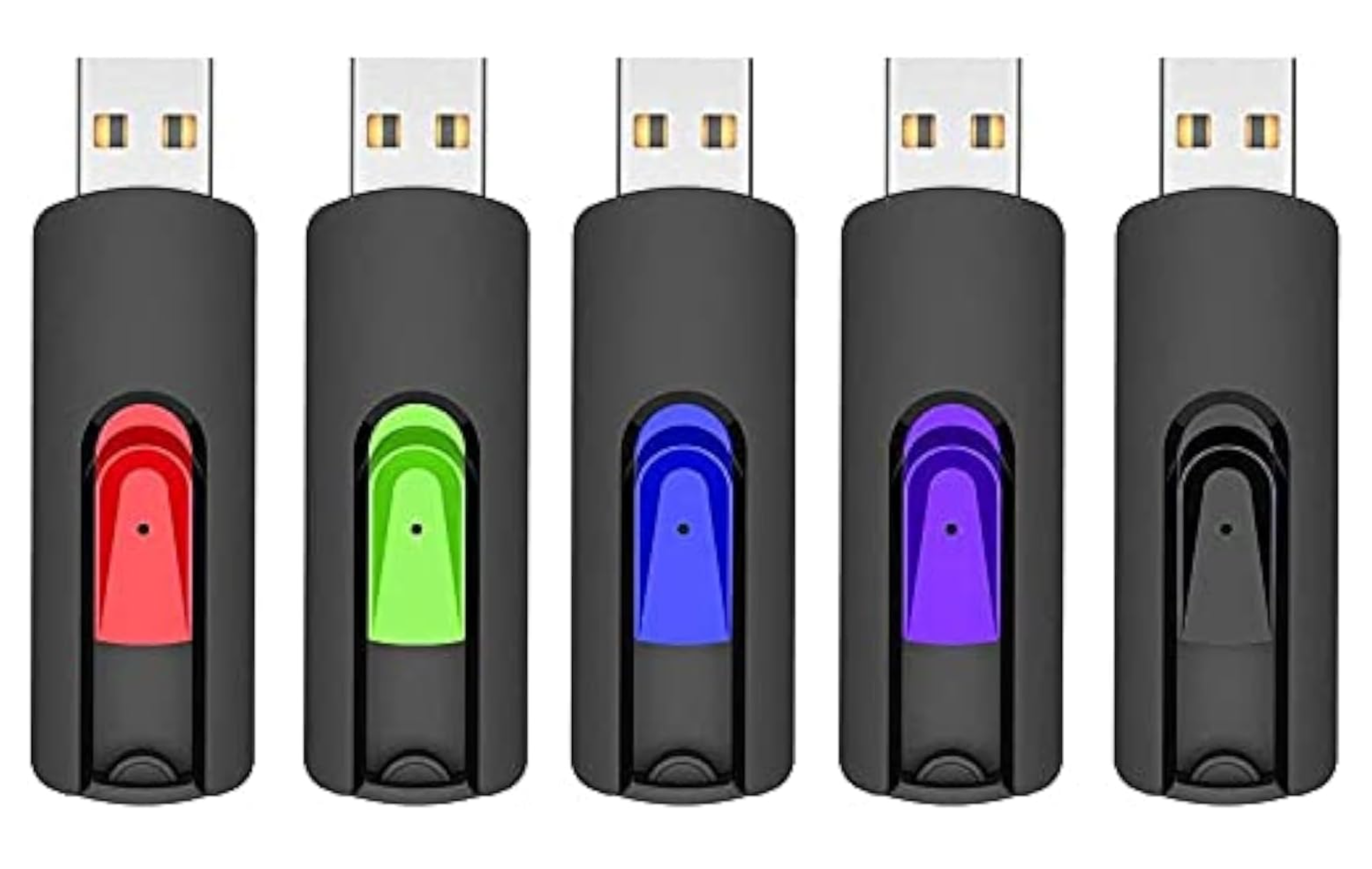
The risk of shopping online at Amazon is again under the spotlight this time the online retail group has been caught out selling dogy storage that is being sold by third parties, that don’t contain the level of storage claimed.
Malware and Chinese linked viruses have also been found on storage products sold by Amazon.
It now appears that 20% of USB drives appearing as recommended picks in Amazon searches have multiple problems including capacity has been misrepresented, a Nikkei Asia investigation has revealed.
Basically Amazon who is looking to expand sales in Australia is not vetting who is allowed to sell products on their sites.
Ironically the problems were exposed when Japan’s Ground Self-Defense Force the equivalent of the SES in Australia, found thumb drives containing a China-linked virus.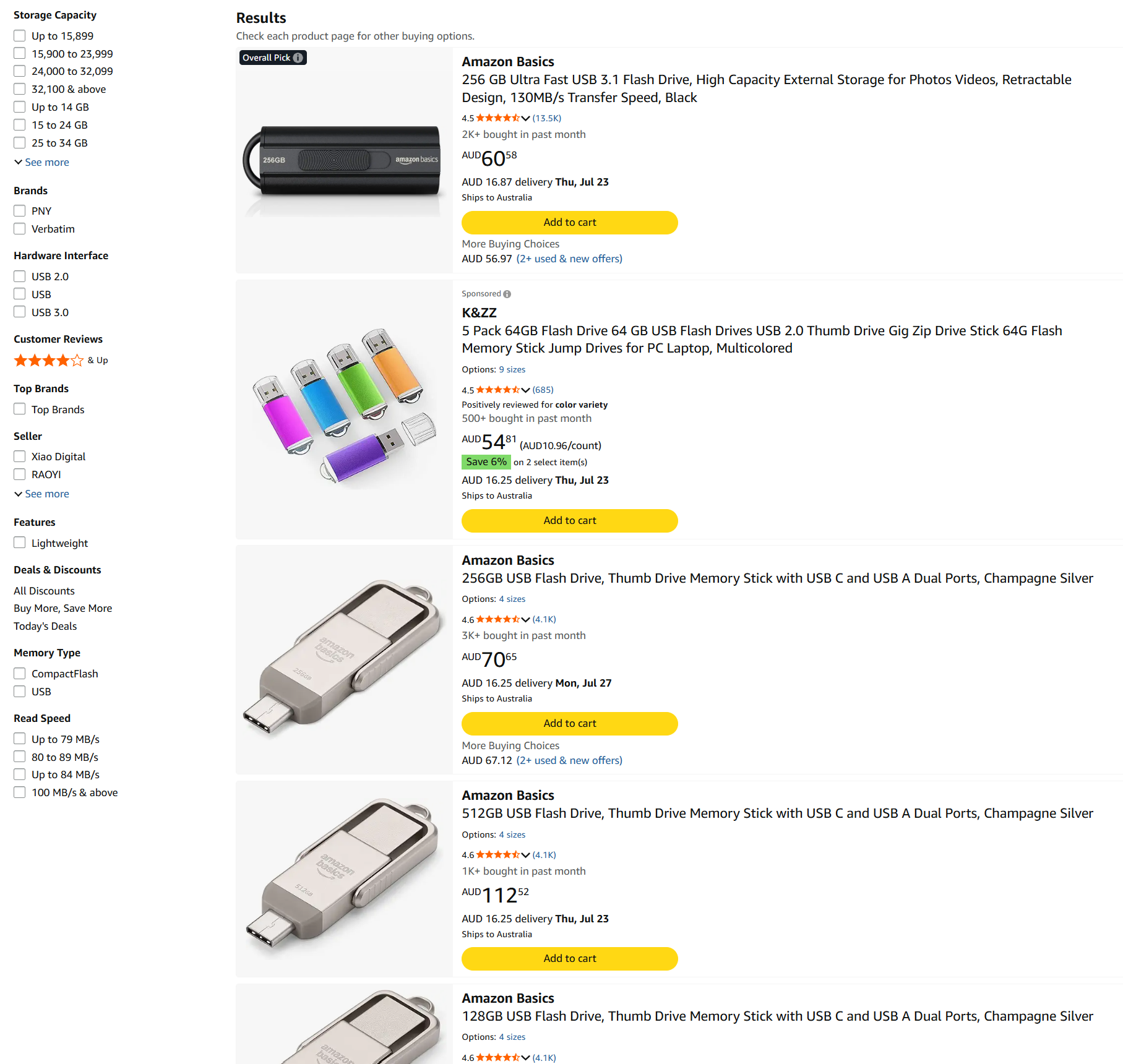
Internal Self-Defense Forces documents claimed that devices with falsified storage capacity were sold widely online
Fake USB drives that are also being sold in Australia can also contain malware, posing a continued risk to the buyer claim observers.
Unlike JB Hi Fi, Harvey Norman or The Good Guys Chinese-branded USB drives sold at Amazon are not being sold in Australia by the three big CE retailers.
The big seller is Amazon with Nikki Asia reporting that an analysis of 200 recommended products in searches for “USB memory” on Amazon’s Japanese and U.S. marketplaces where Australians are able to shop, in late June found that about 20% had multiple reviews pointing to faked capacity.
This included nearly 40% of items on the U.S. site which is widely used in Australia or linked with the Australian store.
To verify some of these claims, Nikkei bought five Chinese-branded USB drives from Amazon priced at around half the typical amount of those sold in main high street stores.
Japanese data recovery company AI Data examined the drives and found that all had less capacity than advertised.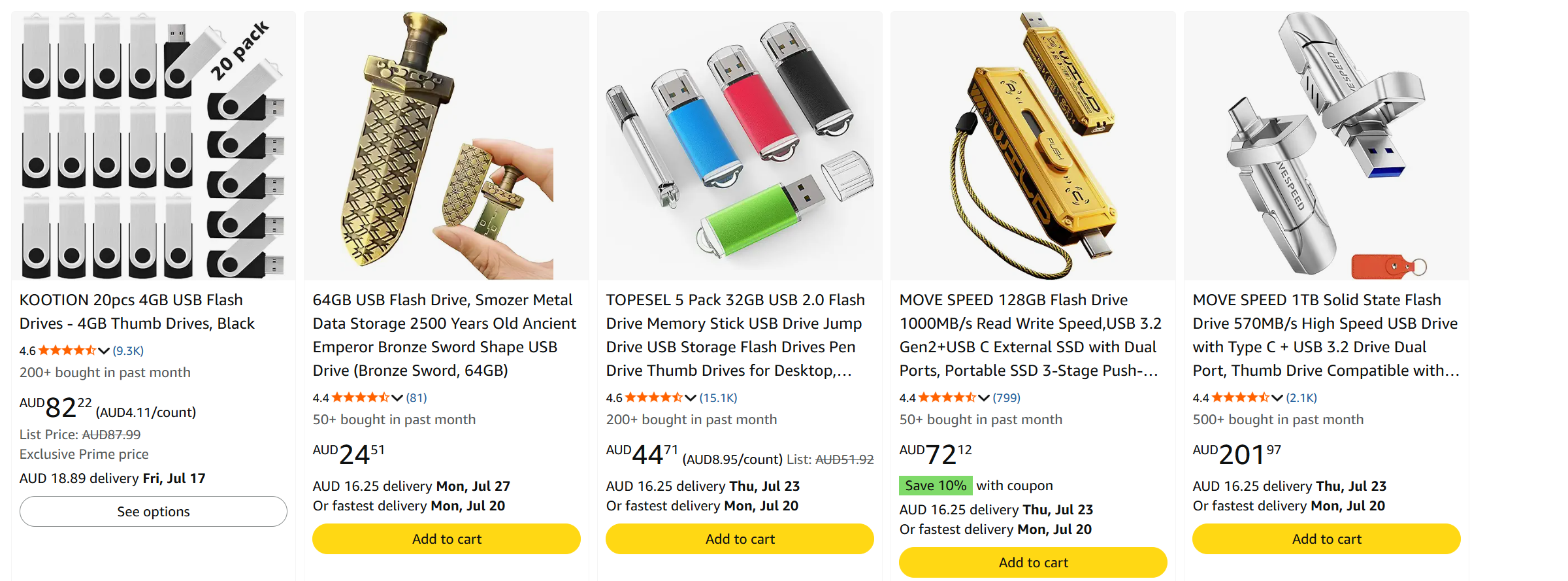
One Amazon customer purchased a “cheap” Chinese-branded USB drive on Amazon that could connect to both his smartphone and his computer.
But when it ran short on memory, he checked and found that it had only a quarter as much storage as it should have.
“To think that Amazon would just sell fake products,” he said.
The 220 negative reviews Nikkei found appeared on drives from not only little-known Chinese brands, but also bigger names including Amazon own Basics brand.
These products had reviews claiming that users though had bought genuine products but received fakes.This part of the problem stems from an element of how Amazon’s marketplace works.
The site offers the option to choose from among multiple sellers of a given product on the same page.
The one offering the lowest price tends to be placed more prominently, giving purveyors of fake products an opportunity to ship them instead of the real thing. Buyers have few alternatives to protect themselves other than checking the seller information in small text on the side of the page.
“There’s no end to the number of sellers who abuse this system, using the trust and reputation that genuine products have to sell counterfeits,” said Takayuki Tsutsumi, secretary-general of Union des Fabricants Tokyo, an association for protection of intellectual property rights.
“Security and product authenticity are of the utmost importance to Amazon,” an Amazon representative told Nikkei when asked about fake products and seller vetting. “We are looking into these claims and will take appropriate action if needed.”