Profit Crunch Hits Premium Appliance Sector As BSH Earnings Collapse, Winnings, e&s And Harvey Norman Commercial Battle For Share
 David Richards
10 Jul 2026
David Richards
10 Jul 2026

Australia’s premium appliance market is coming under mounting financial pressure, with new company filings revealing collapsing profits across manufacturers, distributors and retailers as a weakening housing market, soft consumer demand and an escalating retail price war squeeze margins.
The latest warning comes from German appliance giant BSH, the owner of Bosch, Gaggenau and NEFF, whose Australian operation has reported what industry observers describe as an alarming collapse in profitability.
Financial accounts lodged with the Australian Securities & Investments Commission show BSH Home Appliances Pty Ltd generated just $12,000 in after-tax profit for 2025 despite recording revenue of almost $495 million. Revenue increased from $483 million the previous year, yet virtually none of that additional turnover translated into earnings. No dividend was paid to its German parent.
The results raise serious questions about the health of Australia’s premium appliance market, particularly as residential construction remains weak, renovation activity slows and inflation continues to weigh on discretionary spending.
The BSH results follow ChannelNews’ exclusive report last month revealing that premium appliance distributor Andi-Co Australia suffered an 83% collapse in net profit despite continuing to distribute luxury brands including Liebherr, Falcon, La Cornue and EVO Grills. Despite the dramatic earnings decline, the company still paid $2.68 million in dividends.
Miele has also come under pressure.
While aggressive promotional campaigns helped lift Australian revenue above $523 million, the strategy came at the expense of profitability, with net profit falling 3.75% as heavy discounting eroded margins.
Collectively, the latest financial results point to an industry generating sales but struggling to produce meaningful profits.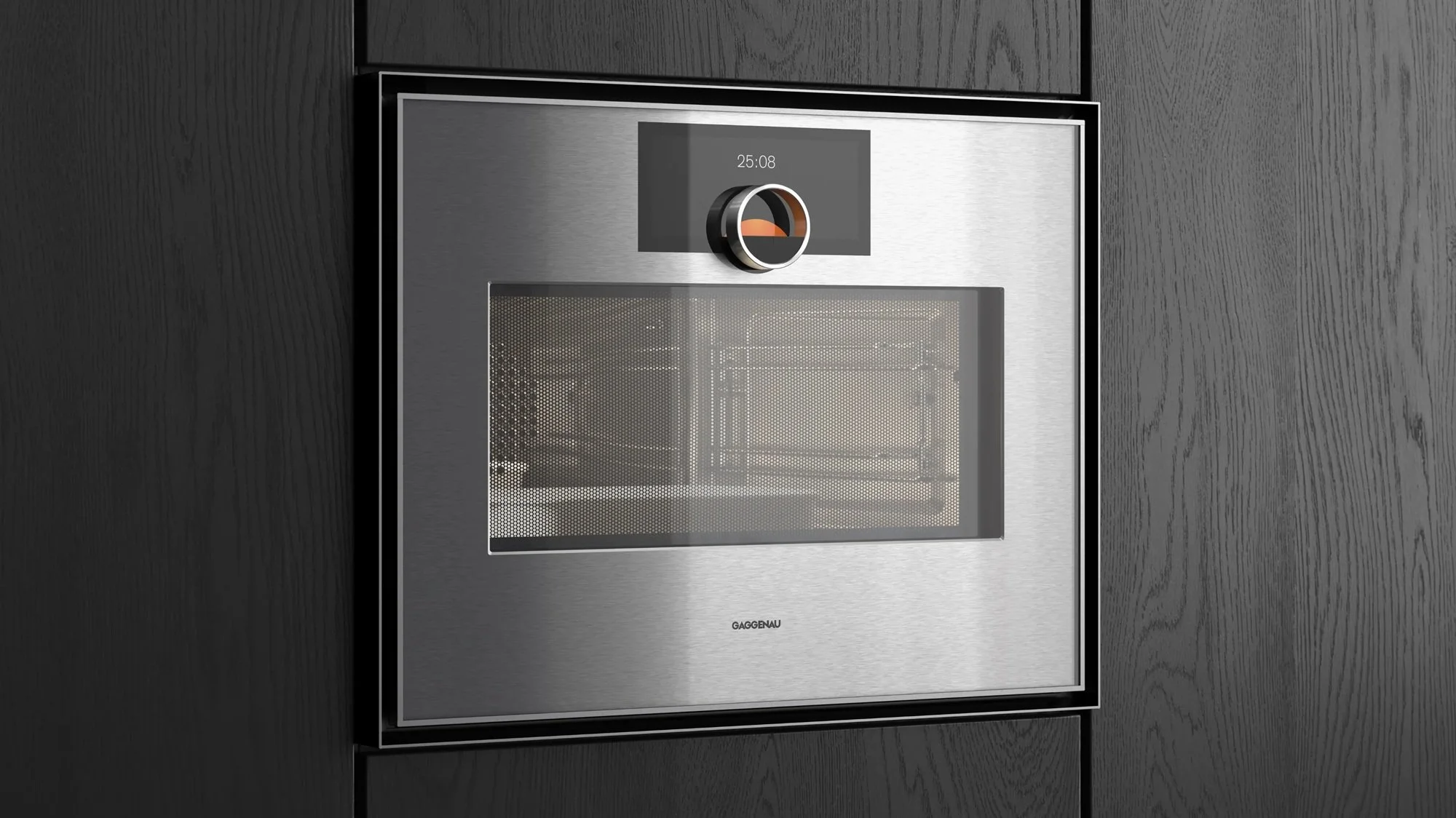
Industry analysts say premium appliances have become one of the hardest-hit categories within the broader whitegoods market because demand is heavily dependent on new housing, apartment developments and major renovations.
JB Hi-Fi’s recent trading update pointed to an “increasingly uncertain retail environment”, while The Good Guys delivered only modest growth of 2.5%, reinforcing concerns that consumers are delaying big-ticket purchases.
The premium category that includes the likes of V Zug, is now facing pressure from almost every direction.
European manufacturers continue to battle rising freight costs and supply chain disruption linked to ongoing geopolitical instability in the Middle East.
At the same time, Chinese manufacturers including Haier, TCL and Changhong are steadily increasing pressure on established European and Korean brands while also acquiring premium brands such as Fisher & Paykel and ASKO to strengthen their global market positions.
Several analysts believe the competitive pressure currently being experienced in Europe will increasingly flow into Australia.
Adding further uncertainty is a fundamental shift in the way premium brands are approaching the market.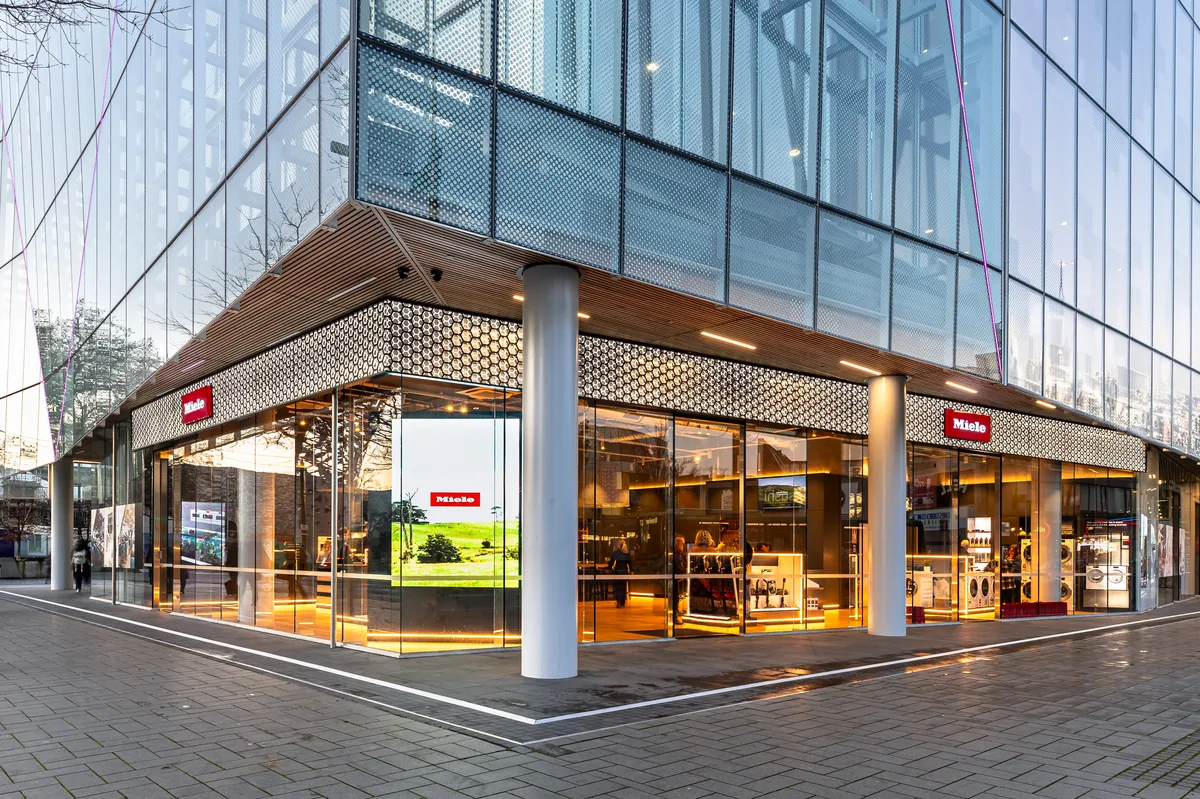
At Milan Design Week this year, Gaggenau made it clear that its future strategy is focused less on selling appliances and more on selling architectural solutions directly to architects, interior designers and property developers.
The move has the potential to fundamentally reshape Australia’s premium appliance channel by reducing the importance of traditional retailers including Winnings, e&s and Harvey Norman Commercial, which have historically invested heavily in expensive showroom experiences.
If premium manufacturers increasingly deal directly with specifiers or open their own flagship stores, retailers risk becoming little more than fulfilment partners.
Several major premium appliance manufacturers are already understood to be investigating standalone retail operations in Brisbane and on the Gold Coast.
Winnings Under Pressure
The financial strain is also evident at Australia’s largest premium appliance retailer.
Winning Appliances reported a 60% collapse in FY25 after-tax profit to just $1.9 million, down from $4.75 million a year earlier.
Revenue remained strong at approximately $886 million, however EBITDA slipped from around $30 million to approximately $25 million, leaving analysts describing margins as “razor thin” for a business preparing a potential ASX listing reportedly valued at more than $1 billion.
The balance sheet also reflects mounting pressure.
Current liabilities exceed current assets by almost $37 million, with approximately $92 million held in customer deposits.
The company is simultaneously navigating major management change.
Long-serving CEO John Winning has stepped aside as the business prepares for a possible public listing backed by an estimated $100 million investment from Ellerston Capital through a convertible note expected to deliver a 10-15% equity position.
Former Super Retail Group CEO Anthony Heraghty is widely tipped to become chief executive as the business accelerates expansion ahead of any IPO.
Winning also continues to defend NSW Supreme Court proceedings relating to the Appliance Companies Online pricing algorithm dispute while internally reviewing logistics operations, delivery networks and customer service functions as part of broader restructuring.
JB Hi-Fi Expands Through e&s Despite Margin Pressure
JB Hi-Fi-owned e&s continues expanding nationally, however growth is proving expensive.
The retailer delivered revenue of $144.8 million, up 56.8%, but EBIT fell 11.3% to $1.7 million as operating margins almost halved from 2.03% to 1.15%.
On a comparable six-month basis, sales increased only 2.9%.
The figures reflect JB Hi-Fi’s deliberate strategy of investing heavily to establish e&s outside Victoria before pursuing greater commercial market share.
Management continues to build relationships with architects, builders and developers while leveraging premium brands including Gaggenau, Miele, Sub-Zero and Fisher & Paykel.
While the long-term strategy remains intact, the financial cost of expansion is becoming increasingly evident.
Harvey Norman Commercial Quietly Strengthens
Meanwhile Harvey Norman Commercial appears to be taking a more measured approach.
The business has quietly strengthened its presence in Victoria and Queensland, particularly on the Gold Coast, precisely the markets where both Winning and e&s are aggressively investing.
Harvey Norman has also deepened relationships with premium manufacturers, recently unveiling Fisher & Paykel’s flagship Series 11 Minimal kitchen collection ahead of its international EuroCucina launch.
Backed by Harvey Norman’s substantial property portfolio and balance sheet, the commercial division is regarded by many industry participants as entering this battle from a position of financial strength while competitors absorb the cost of expansion and restructuring.
Construction Pipeline Becomes The New Battleground
Behind the retail battle lies an even larger contest.
Australia’s premium appliance market is increasingly being driven by apartment developments, luxury housing projects and build-to-rent construction.
Developers are increasingly specifying premium integrated kitchens to differentiate projects, creating fierce competition between brands including Gaggenau, Fisher & Paykel and Miele for inclusion in new developments.
As residential construction slowly recovers, builders, developers, architects and interior designers are becoming the most valuable customers in the premium appliance sector.
For retailers, winning specification today often determines sales years before consumers ever walk into a showroom.
The result is an increasingly intense three-way battle.
Winning Appliances is attempting to restore profitability while preparing for a billion-dollar IPO.
JB Hi-Fi is prepared to sacrifice short-term earnings to rapidly expand e&s nationally.
Harvey Norman Commercial is using its financial strength to defend market share while selectively expanding relationships with Australia’s largest developers.
At the same time, several global premium manufacturers are reassessing whether they need traditional retailers at all.
The latest financial results suggest Australia’s premium appliance industry is no longer fighting for growth.
It is fighting to protect profits.