UK Retail Giant’s “Track the Tech” Campaign Puts Australian Mobile Phone Retailers on Notice Over $560M Recycling Opportunity
 David Richards
23 Jun 2026
David Richards
23 Jun 2026

A bold new transparency campaign by UK electronics retailer Currys, the equivalent of JB Hi-Fi, is setting a benchmark that Australian CE retailers have yet to match, as new data reveals the local smartphone recycling and refurbishment market is on a trajectory to reach $560 million by 2034.
Currys has launched “Track the Tech,” a video-led initiative that follows traded-in and recycled devices through every stage of the recovery process, from secure data wiping and parts harvesting through to refurbishment and resale. The campaign is a direct response to a critical barrier that is suppressing recycling rates on both sides of the world: consumer fear that personal data left on discarded devices could be exploited.
The move should be required viewing for JB Hi-Fi, Harvey Norman, Officeworks and The Good Guys, all of whom operate some form of mobile recycling or trade-in program, but none of which have deployed anything approaching this level of consumer-facing transparency.
Research underpinning the Currys campaign found that UK households are collectively hoarding around 880 million unused tech items, an average of 30 devices per home, with mobile phones among the most commonly stockpiled gadgets. Four in five consumers are holding onto at least one unused handset, and one in three still owns their first-ever mobile phone. A quarter of those first devices are old Nokia handsets.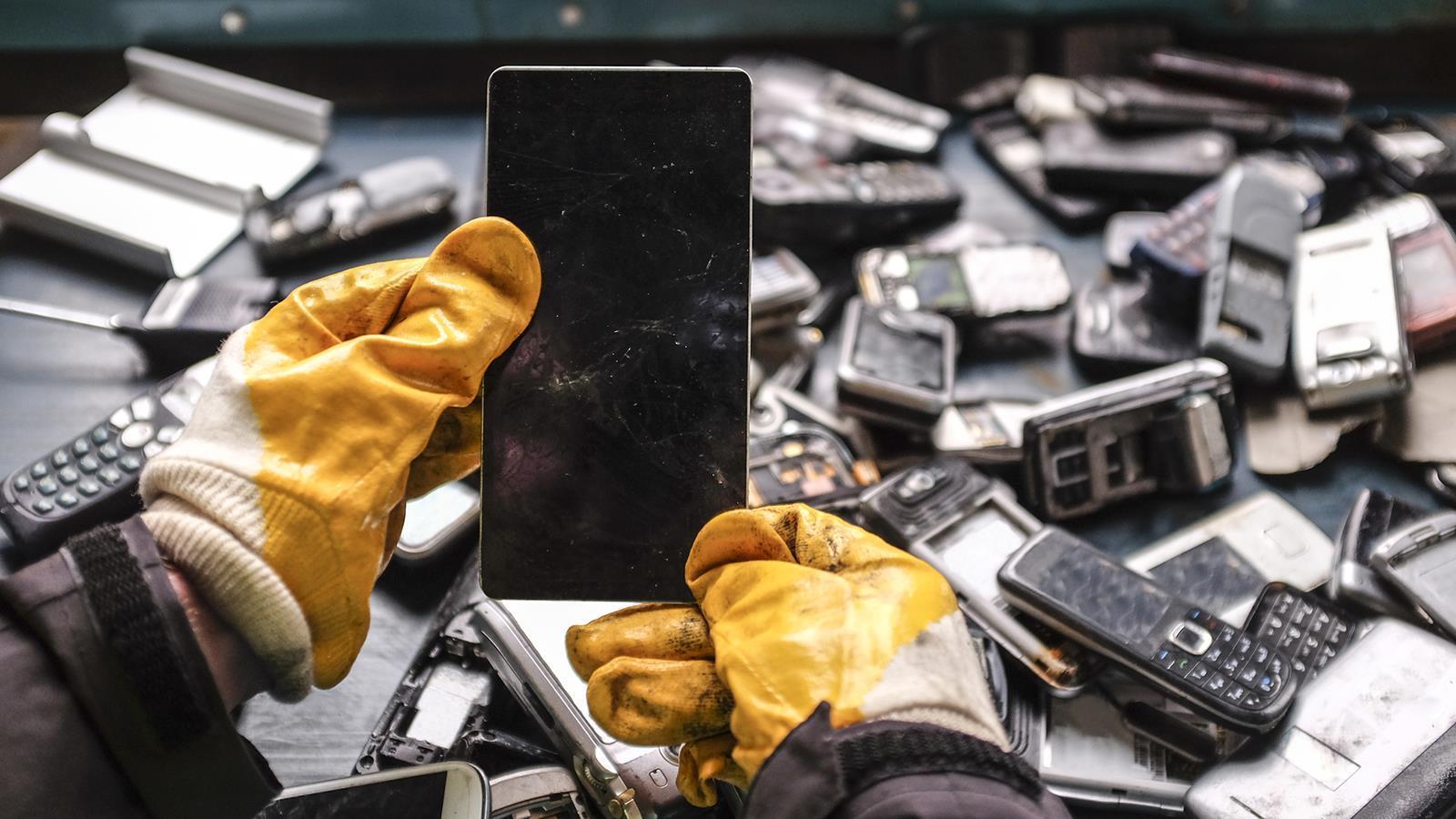
The parallel in Australia is stark.
MobileMuster research shows nearly 13 million inactive mobile phones are currently sitting in Australian households, with just over one in three Australians holding onto at least one non-working mobile at home.Despite over 3,000 drop-off points existing within 10 kilometres of 94 per cent of the Australian population, more than 67 per cent of Australians remain unaware, with approximately 10 per cent disposing of their devices in general waste.
The recycling gap represents a significant commercial and environmental failure. Only an estimated 20 per cent of phones in Australia are recycled, meaning 80 per cent go to waste according to researchers.
A Market Retailers Are Leaving on the Table
Australia’s consumer electronics recycling market reached A$320.7 million in 2025 and is projected to reach A$557.8 million by 2034, expanding at a CAGR of 6.16 per cent.
Simultaneously, the Australian refurbished and used mobile phones market is projected to grow at a CAGR of approximately 8 per cent from 2024 to 2034, nearly five times faster than the primary smartphone market. Demand for sustainable and long-lasting models is rising, while consumers increasingly favour online channels for smartphone purchases and service support. Globally, refurbished phones are expected to account for nearly 25 per cent of the global smartphone market by 2025.
The Currys model captures both sides of that opportunity.
Behind the campaign sits the retailer’s repair and recycling operation in Nottinghamshire, which processed 5.5 million items of e-waste for reuse and recycling last year.
The company offers trade-in and Cash for Trash schemes alongside a refurbished product range sold both online and in-store.
“People understand why recycling tech matters, but too often, that’s where it stops,” said Currys chief people, communications and sustainability officer Paula Coughlan.
“Track the Tech shows exactly what happens once a device is dropped off in-store. The film gives customers confidence that their data is secure and that their devices are put to good use.”
Data Fear Is the Blocker, and Retailers Aren’t Addressing It
The Currys research identified data security anxiety as the primary reason consumers are sitting on unused devices rather than trading them in or recycling them. That finding is consistent with Australian consumer behaviour. For mobile phones processed through MobileMuster, more than 95 per cent of materials can be recovered, yet the program’s reach remains limited because consumers do not trust that their personal information is adequately destroyed.
MobileMuster has collected and recycled over 16 million handsets since 1998, and in the 2024 financial year alone, 109 tonnes of mobile phone components were recycled through the scheme.
But those figures mask a fundamental problem, while MobileMuster has claimed a collection rate of 12 per cent, research suggests it is more likely less than 8 per cent.
The Currys campaign directly attacks that gap.
By visually demystifying the process, showing customers exactly how data is wiped and devices dismantled, the retailer is converting passive environmental awareness into active participation.
The Currys data shows 81 per cent of UK consumers already know that batteries disposed of in household waste can cause fires, and 77 per cent understand that recycling reduces demand for newly mined raw materials, yet only a third had actually recycled any technology in the past year. Awareness without action is the problem, and transparency is the solution.
Refurbished Is a Growth Market Australian Retailers Are Under-Exploiting
The Currys campaign also addresses the commercial opportunity in refurbished technology.
Four in ten UK consumers have now purchased a refurbished product, with adoption highest among 18 to 34-year-olds, half of whom have bought refurbished, compared with 29 per cent of those aged over 55.
In Australia, demand for eco-friendly devices is no longer confined to niche markets, with mainstream consumers leaning towards brands that offer green alternatives, a shift that creates a direct commercial incentive for major retailers to build refurbishment pipelines rather than cede that business to specialist online platforms.
MobileMuster operates over 3,000 public drop-off points throughout Australia, including all major phone retailers such as Optus, Telstra and Vodafone, as well as Officeworks stores. The infrastructure exists. What is missing is the retail ambition, and the consumer confidence, to use it.