Key Supplier & Retail Partner Placed Into Administration Owing Millions
 David Richards
07 Aug 2026
David Richards
07 Aug 2026
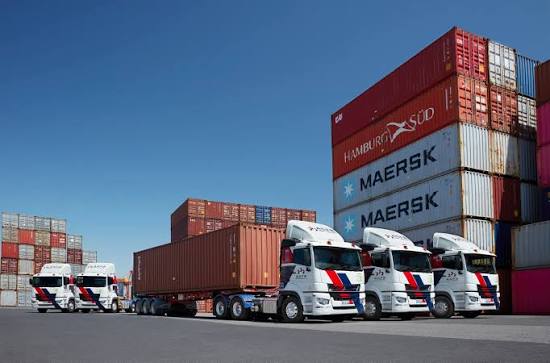
ACFS Port Logistics has collapsed into administration as $60m ATO battle raises questions for major retailers and their funder.
One of Australia’s largest container logistics operators, ACFS Port Logistics, has been placed into voluntary administration, raising questions about the potential fallout for major retailers, their suppliers and lenders exposed to the distribution sector.
ACFS, the logistics empire controlled by billionaire Tzaneros family interests, is a key logistics partner to some of Australia’s biggest retailers, including Big W, Bunnings, Officeworks, Kmart and Coles, as well as numerous suppliers servicing the retail sector.
As of August 7, 2026, ACFS Port Logistics had entered voluntary administration, with Salea Advisory reported to have been appointed administrator.
The administration comes amid action involving specialist lender ScotPac and immediately before a Federal Court hearing concerning an Australian Taxation Office application to wind up the company over almost $60 million in alleged unpaid liabilities.
The scale of ACFS’s overall debts is not yet clear, although industry sources believe total liabilities could exceed $100 million. What is known is that the ATO claim alone is approaching $60 million.
The collapse could have implications extending well beyond ACFS.
Questions are now being raised about the exposure of retailers and suppliers dependent on ACFS to move containers through Australia’s ports and distribution network. There is also uncertainty about the potential impact on merchandise being imported ahead of the critical Black Friday and Christmas trading periods.
Another issue is the position of ScotPac, a major specialist lender to Australian businesses, including distributors supplying the retail sector. ScotPac has itself been pursuing a sale of its Australian operations.
ACFS, headquartered at Sydney’s Port Botany, is one of the country’s significant container logistics businesses.
A Federal Court search shows further proceedings in the ATO’s winding-up application scheduled for August 7.
Only days earlier, ACFS appeared confident the tax dispute would be resolved.
An ACFS spokesman said last Sunday that the company had “finalised arrangements” to pay the full amount by Tuesday and that it understood the winding-up application would be withdrawn once payment was received.
Instead, the company has entered administration.
The Australian Financial Review has reported that ACFS had previously resolved winding-up threats from suppliers and other creditors, with the company blaming the slowing economy for payment delays.
In June, Transurban applied to the NSW Supreme Court to wind up the company before a last-minute settlement was reached.
Other reported creditor action has included Crown Equipment, while numerous payment defaults have previously been registered against ACFS.
Those events raise broader questions about the liquidity pressures that had been building inside the business and how long those pressures had existed before administrators were appointed.
They also raise questions about the financial support, if any, being provided by the wealthy family behind the operation.
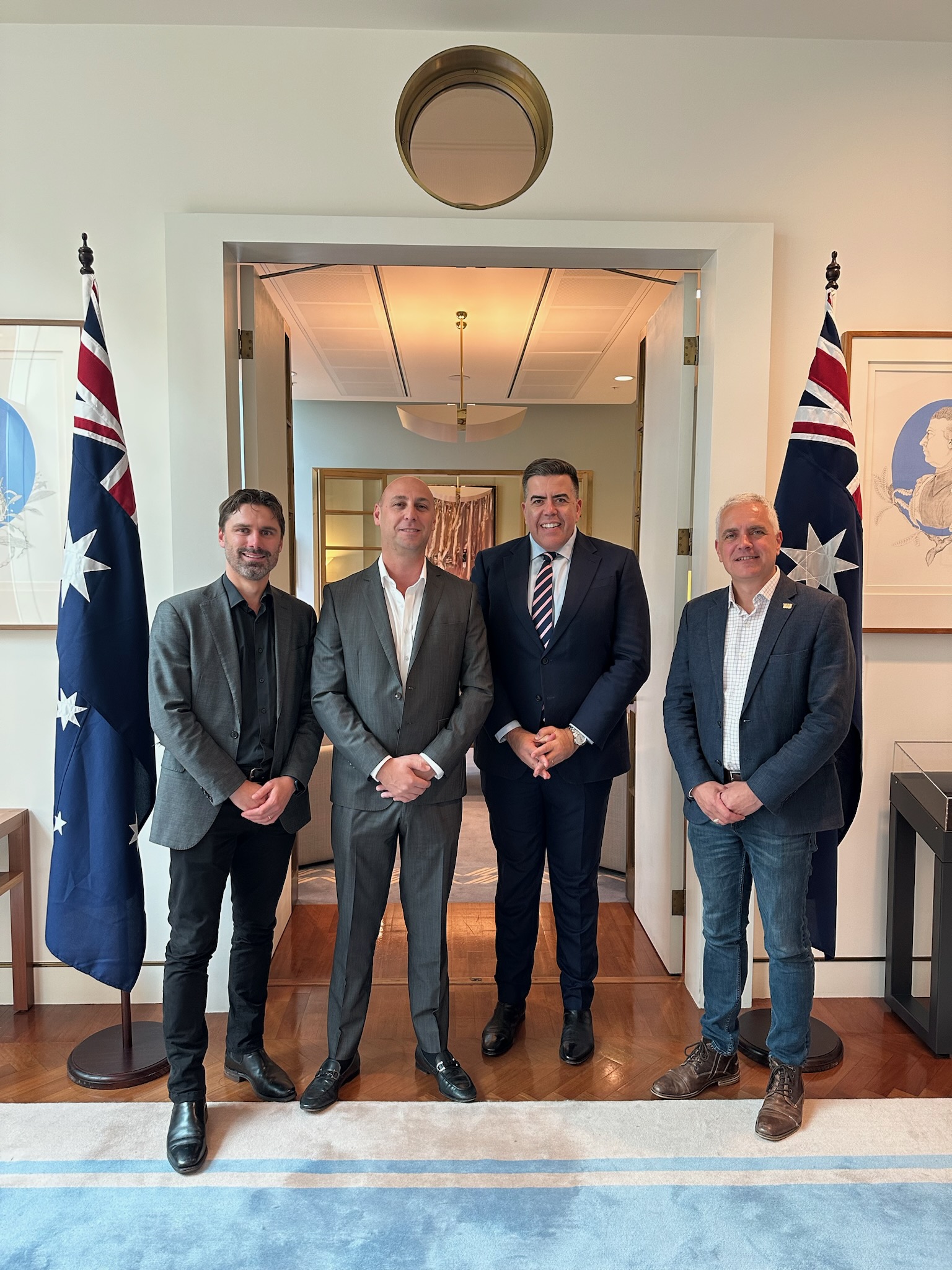
Company executives were recently in Canberra lobbying the Federal Labor Government. See left to right, Nick McIntosh – TWU Assistant National Secretary, Arthur Tzaneros – CEO ACFS Port Logisticss, Milton Dick MP Speaker of the House of Representatives, and Michael Kaine – TWU National Secretary
The Financial Review Rich List has estimated the Tzaneros family’s wealth at approximately $1.61 billion.
At the same time, members of the family and associated interests have been active participants in Sydney’s premium property market, including Point Piper and Vaucluse.
$479m revenue but a $26.7m loss
The most recently available ACFS accounts provide another indication of the financial pressure confronting the company.
For the relevant financial year, ACFS reported approximately $479 million in revenue but recorded a net loss of $26.7 million.
The company had yet to lodge its accounts for the subsequent 12-month period, making it difficult for creditors, suppliers and other stakeholders to establish its more recent financial position.
The Transport Workers’ Union has told employees that ACFS is continuing to operate for the time being while administrators assess the business.
That continued operation will be closely watched by retailers and suppliers, particularly as containers carrying stock for the second half of the year move through Australian ports.
Any disruption to the movement of imported merchandise could become increasingly significant as retailers build inventory for November’s Black Friday sales and the Christmas trading period.
Who owns the logistics properties?
Attention is also likely to turn to the corporate and property structure surrounding the ACFS business.
A key question is which Tzaneros-controlled entities own the industrial properties used by ACFS at Port Botany, Brisbane, Melbourne, St Marys and other logistics locations.
Establishing which properties are owned directly by ACFS Port Logistics and which sit within separate related family companies will be critical to understanding the asset position available to creditors.
The circumstances surrounding the 2016 acquisition of the former Patrick landside logistics properties are also relevant to establishing how the group’s industrial property portfolio was assembled and where those assets are held today.
The current ownership and value of that portfolio could become an important part of the administration.
However, the existence of valuable property elsewhere within the wider Tzaneros corporate structure does not necessarily mean those assets are available to meet the debts of ACFS Port Logistics.
That depends on which legal entity owns each asset, which entity incurred the relevant debt, the security held by lenders and creditors, and whether administrators subsequently identify transactions or circumstances capable of being challenged.
The $60m question
One of the most important outstanding issues is precisely which ACFS entity—or entities—owes the money claimed by the ATO.
That distinction matters because ACFS operates within a broader network of companies and family interests.
Investigators and creditors will want to establish what assets and liabilities actually sit within ACFS Port Logistics Pty Limited, ACN 603 120 047, as opposed to related entities.
The Australian Business Register continues to record ACFS Port Logistics Pty Limited as an active Australian private company.
For retailers and their suppliers, however, the immediate issue is considerably more practical: whether ACFS can keep containers and merchandise moving while administrators determine whether the business can be restructured, refinanced or sold.
With almost $60 million being pursued by the ATO, potentially substantial additional creditor claims and one of Australia’s busiest retail trading periods approaching, the administration of ACFS could have consequences extending well beyond the Tzaneros family.
The next major questions are how much ACFS actually owes, who holds security over its assets, what assets are available to creditors—and whether Australia’s major retailers and their suppliers face disruption as the administrators attempt to keep the logistics operation running.