Sony’s Custom Camera Tech Powers Apple’s F1 Movie
 Joe Gallop
12 Aug 2025
Joe Gallop
12 Aug 2025

At the heart of Apple’s new F1 film – its biggest theatrical hit to date with US$550 million (A$843 million) grossed worldwide – is a breakthrough from Sony’s motion picture camera division.
Directed by Top Gun: Maverick filmmaker Joseph Kosinski and shot by Oscar-winning cinematographer Claudio Miranda, F1 put audiences inside the cockpit of real race cars hurtling at over 300km/h.
To pull it off, Sony developed a bespoke “sensor-on-a-stick” camera system – a miniature, detachable image head tethered to a full camera body – that could fit inside the cramped, high-vibration environment of an F1-style cockpit while still delivering IMAX-ready image quality.
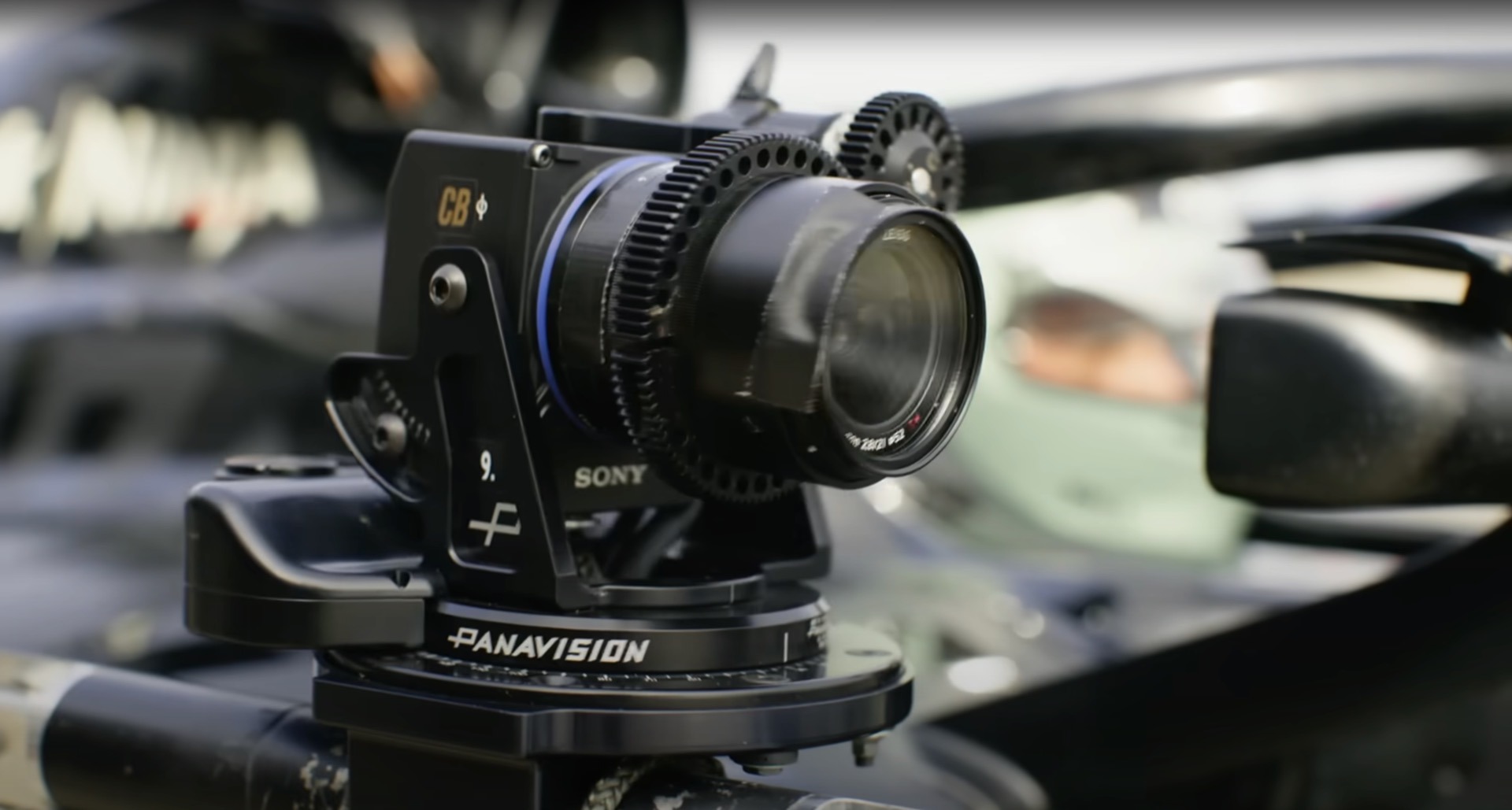
The prototype, based on the full-frame Exmor R sensor from the FX6, recorded in 4K 10-bit XAVC-I at up to 600Mbps.
Every screw and housing component was miniaturised, with size reductions measured in fractions of a millimetre.
Within just four months, Sony built more than 20 units, which were mounted in unprecedented positions: above the front wing, inside the halo, even on helmet-level pans.
The film’s primary camera, the Sony VENICE 2, handled large-format scenes, while Apple contributed its own custom iPhone 15 Pro–derived camera system for onboard shots traditionally reserved for broadcast feeds.
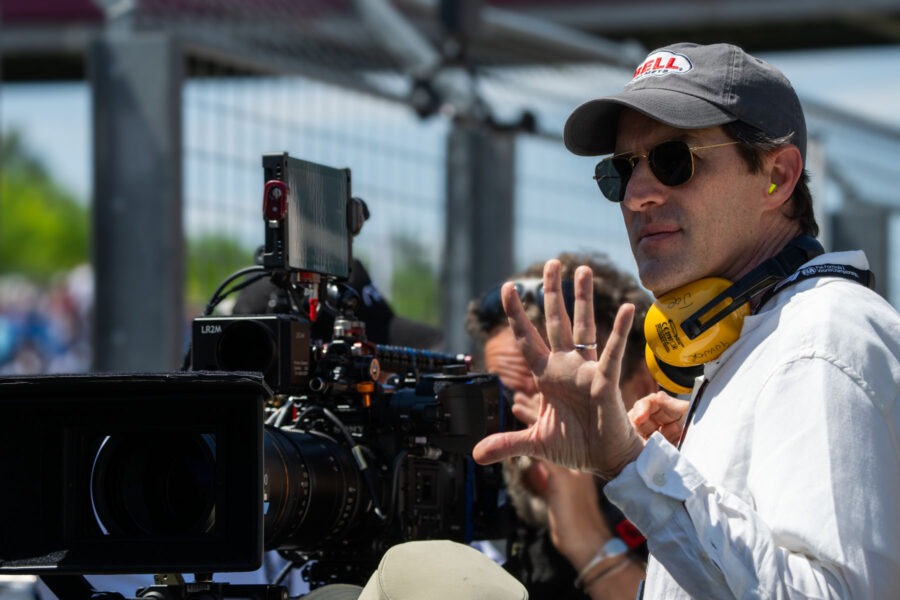
Director and producer Joseph Kosinski on the set of F1
This rig, built to FIA weight and aerodynamic specs, recorded in Apple ProRes Log and integrated seamlessly into the grading pipeline alongside Sony’s footage.
The collaboration between Apple, Sony, and the production team spanned live race weekends, with engineers testing cameras under real-world heat, G-forces and vibration.
The result was a unified, cinematic look across three camera systems, capturing over 5,000 hours of material without losing immersion or consistency.
Sony’s cameras were used in half of all 2025 Oscar-nominated films, up from under 10% three years ago.
While there’s no word yet on whether the “sensor-on-a-stick” will become a commercial product, its success in F1 points to a promising new tool for filmmakers.