PC Shipments Fall As Memory Crunch Hits, But Apple Bucks The Slump
 Joe Gallop
09 Jul 2026
Joe Gallop
09 Jul 2026

Global PC shipments have fallen for the first time in more than two years as the AI-driven memory shortage pushes up component costs and starts to hit consumer demand.
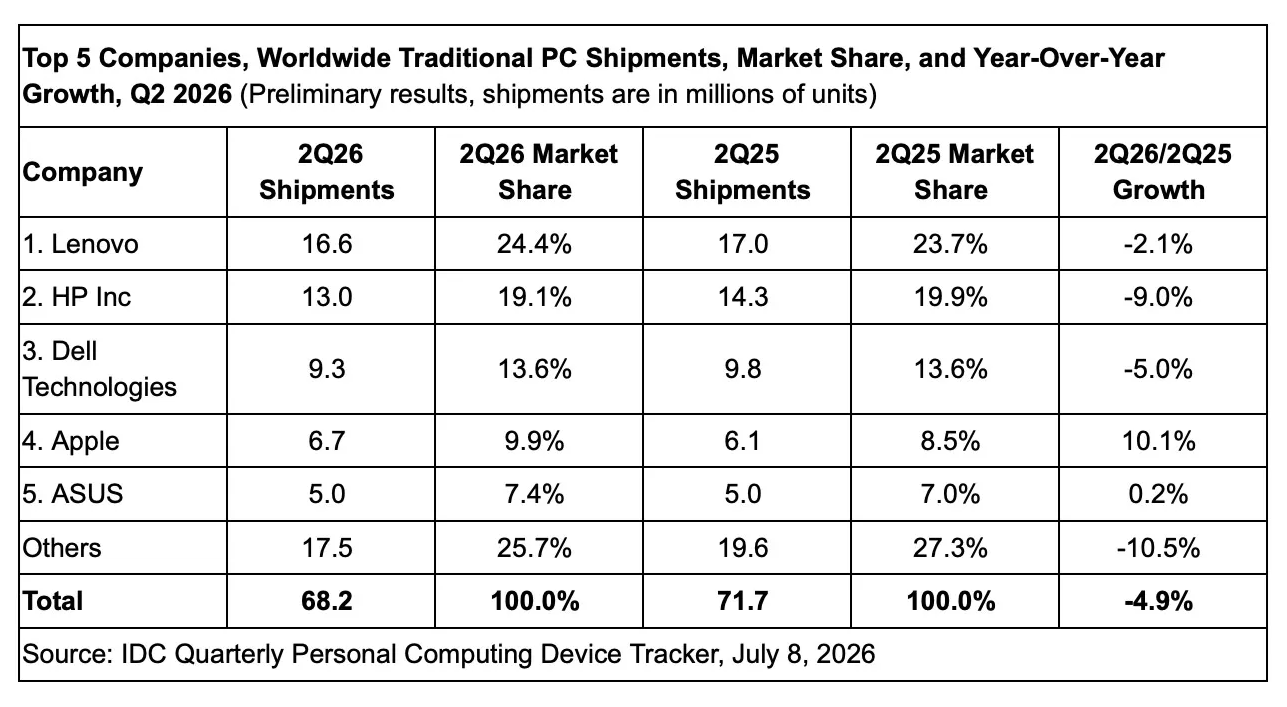
New figures from IDC show worldwide PC shipments dropped 4.9% year-on-year in the second quarter of 2026, falling to 68.2 million units. It marks the first decline after nine consecutive quarters of growth.
IDC blamed the downturn on persistent memory chip shortages, storage supply constraints and broader geopolitical issues.
The figures also point to a growing disconnect in the PC market, with unit shipments falling while revenue continues to rise. That is because manufacturers are pushing through price increases faster than demand is weakening.
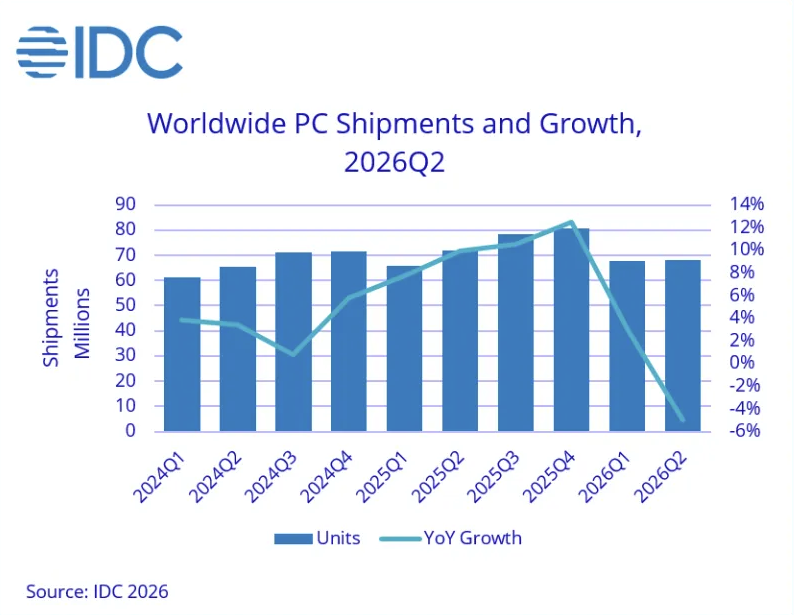
“The real story here is the disconnect between units and dollars: shipments are falling, but revenue is climbing,” IDC research director Jitesh Ubrani said.
He warned that the memory shortage is not expected to ease until early 2028, with vendors already preparing for further price hikes into 2027.
That could have major implications for the PC upgrade cycle, particularly as consumers and businesses weigh up new AI-capable laptops and desktops at higher price points.
The biggest Windows PC vendors were hit hard.
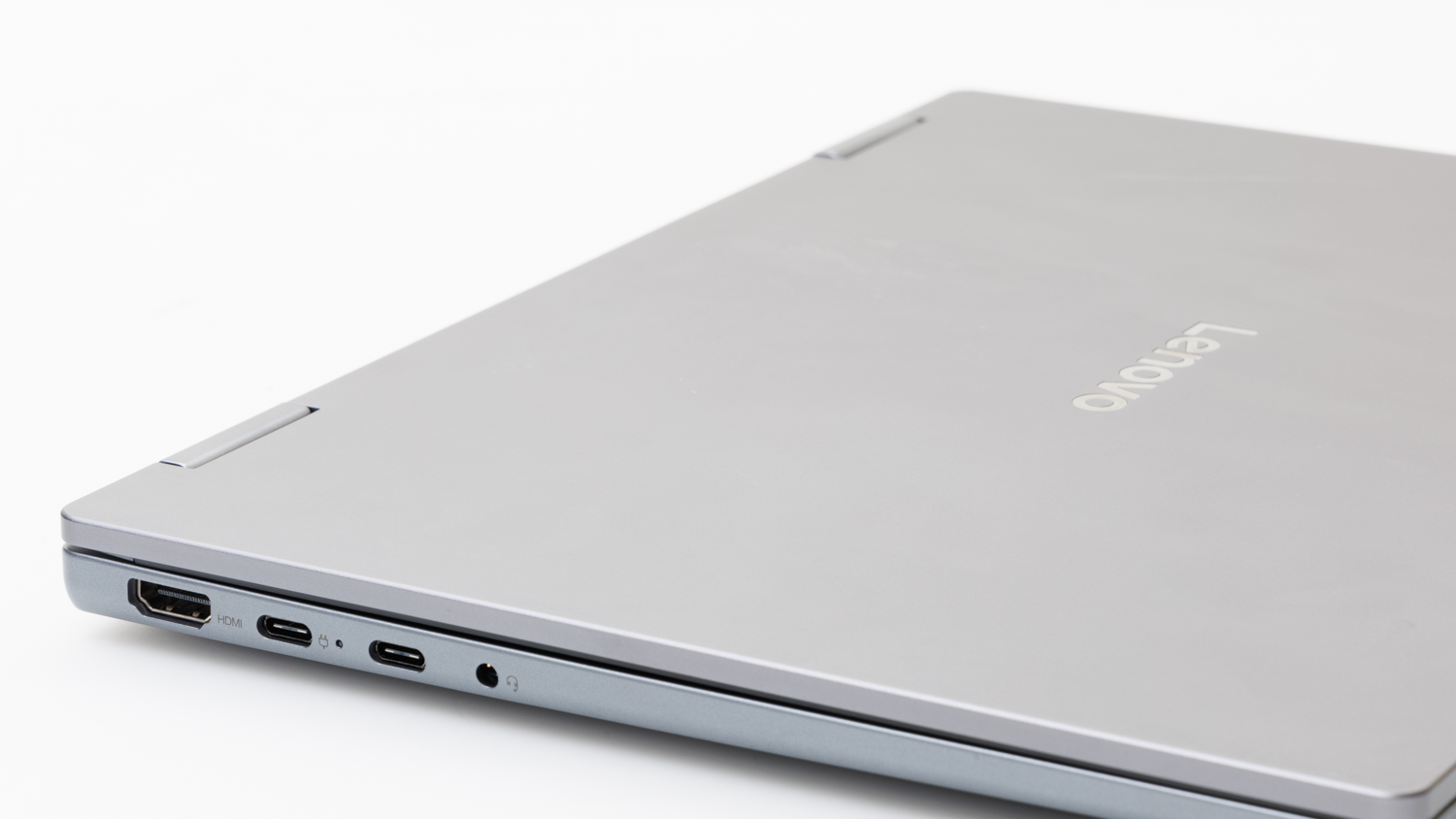
Lenovo remained the global market leader with 24.4% share, despite shipments falling 2.1%. HP dropped 9%, while Dell fell 5%. ASUS was broadly flat, with shipments up just 0.2%.
Apple was the clear exception. Mac shipments rose 10.1% year-on-year, lifting Apple’s global PC market share from 8.5% to 9.9%.
IDC said Apple’s gain coincided with strong demand for the MacBook Neo, the company’s new budget laptop, although Apple has also raised Mac pricing in line with broader industry pressure.
The result leaves the largest PC makers in a stronger position than smaller rivals, as companies such as Apple, Lenovo, Dell and HP use their scale and supplier relationships to secure scarce memory stock.
For Australian retailers, the trend points to a tougher second half of 2026, with higher wholesale prices likely to flow through to laptops and desktops on shelves.
IDC expects growth to slow further as existing inventory runs down and the next wave of component price rises begins to bite.