New Electronic Nose Could Help Future Fridges Detect Spoiled Food
 April Ossington
19 Jun 2026
April Ossington
19 Jun 2026
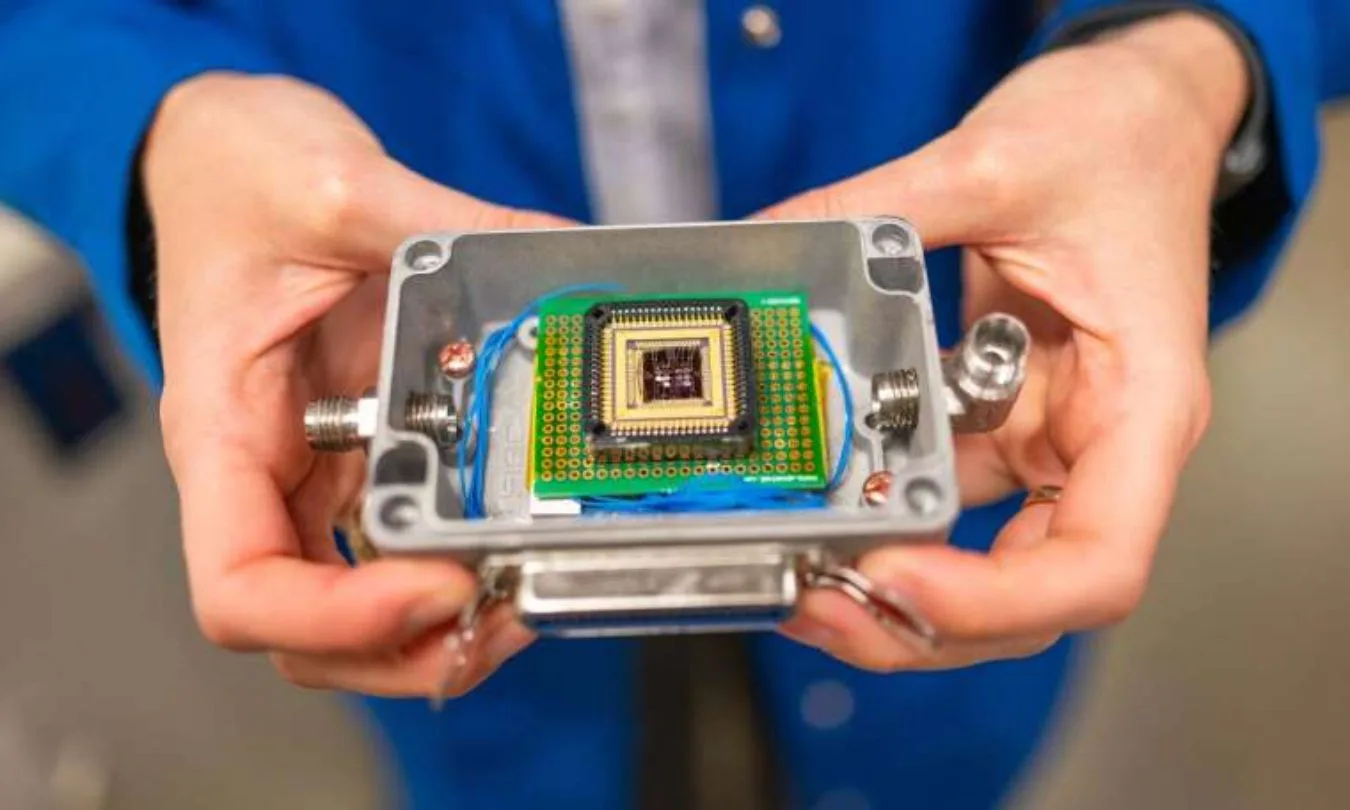
Researchers at the University of California, Berkeley have developed a sensor system capable of identifying gases linked to food spoilage and common allergens with greater consistency than traditional smell-based checks.
The technology relies on a specialised gas-sensing chip containing 16 individual sensors. Rather than depending on a single measurement, the system analyses how a variety of sensing materials react to airborne compounds released by different foods. Those reactions are converted into electrical data, which is then interpreted using machine-learning software.
Determining whether food remains safe to eat is often far from straightforward. Products such as milk, eggs, poultry, fruit and nuts can begin to deteriorate before obvious visual or odour-related warning signs appear. The Berkeley team’s approach aims to provide a more objective method of detecting those changes.
During testing, researchers trained the system using a broad range of food items, including strawberries, blueberries, bananas, peanuts, walnuts, hazelnuts, cashews, chicken, milk and eggs. Samples of chicken, milk and eggs were also analysed at different stages of freshness after being left at room temperature for 24 and 48 hours.
Instead of relying on a single sensor to identify contamination or spoilage, the chip creates a detailed pattern of responses across its sensor array. Software then compares those patterns against previously learned data to determine the likely source of the detected gases.
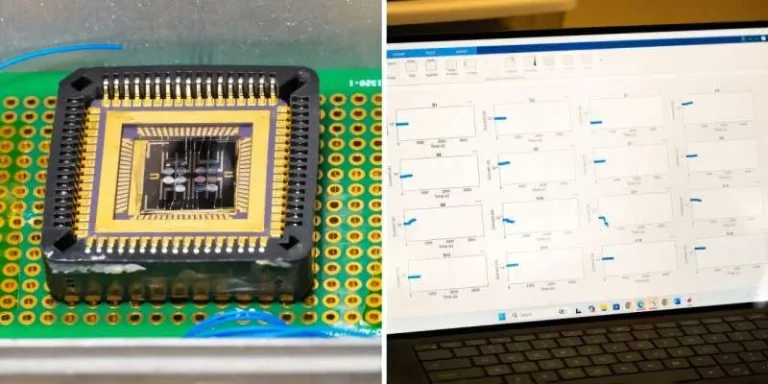
One notable aspect of the design is the use of carbon nanotubes. Unlike conventional metal-oxide sensors, which typically require elevated temperatures to function, the Berkeley system operates at room temperature. This allows for a wider variety of sensing materials to be incorporated while also simplifying manufacturing.
The researchers believe the technology could eventually find a home inside smart appliances. While modern connected refrigerators can track inventory and monitor temperature settings, they currently lack the ability to directly assess the chemical condition of stored food. A built-in gas sensor could provide early warnings when food begins to spoil or when allergen contamination is present.
Such a capability could prove particularly useful in households looking to reduce food waste or improve food safety. Rather than relying solely on printed expiry dates or subjective smell tests, consumers could receive real-time information about the condition of items stored inside their refrigerator.
Although the technology has shown promising results in controlled conditions, further testing will be required before it reaches commercial products. One challenge involves determining how accurately the system can identify individual gases when multiple foods are stored together and odours become mixed.
The team has already produced a portable version that can connect to an iPhone application, although that prototype was not included in the published research. Future studies will focus on evaluating how effectively the technology performs in more complex real-world environments, where overlapping scents and crowded storage conditions present a far greater challenge than laboratory testing.