LG Not The Best OLED TV Claim Experts Following Major Shootout, So Who Is?
 David Richards
29 Jul 2025
David Richards
29 Jul 2025

For the past two decades, one of the most respected and rigorous TV evaluations in the world has been held annually at Value Electronics in New York.
It’s here that every year industry experts gather to judge the very best televisions in a carefully controlled environment, where units are calibrated for peak performance and subjected to a series of intensive tests.
The judges are experts in their field and during this last weekend shootout a shock winner emerged in the OLED category, and it was neither LG nor Samsung.
How the Shootout Works
The goal of the TV Shootout is simple: compare the best TVs on a level playing field. All units are sourced from regular retail stock, not special “review-tuned” models provided by manufacturers, ensuring fairness and real-world accuracy.
Each TV is meticulously calibrated and evaluated using both high- and low-quality content, including test patterns designed to measure specific performance aspects such as colour, contrast, motion handling, and black levels. Categories tested included both SDR (Standard Dynamic Range) and HDR (High Dynamic Range) content, with additional testing in bright room conditions using out-of-the-box settings.
This year, LCD TVs were excluded from the competition, narrowing the focus entirely to 65-inch OLED models:
LG G5 OLED (OLED65G5WUA)
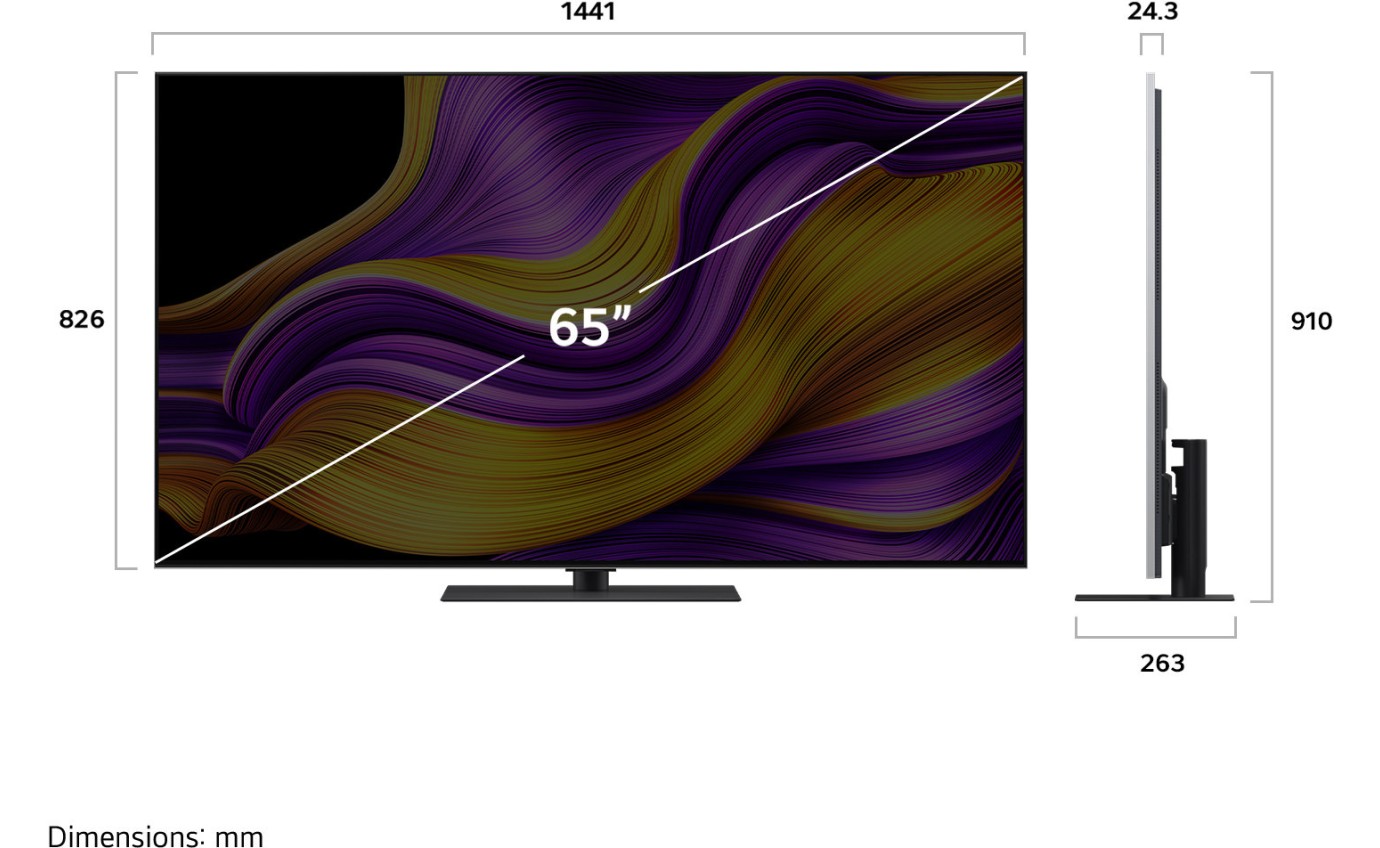
Panasonic Z95B OLED (TV65Z95BP) (not available in Australia)
Samsung S95F QD-OLED (QN65S95F)
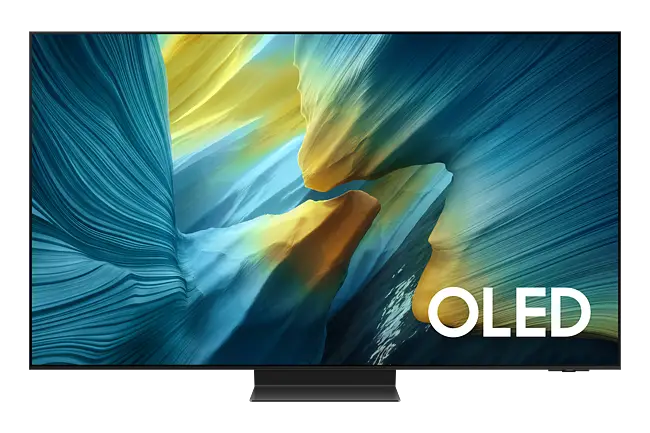
Sony BRAVIA 8 II QD-OLED (K65XR80M2)
Despite all using OLED technology, these TVs vary significantly in performance due to differing panel technologies and processing systems.
Panel Tech in Play
Samsung and Sony’s models feature the latest-generation QD-OLED panels from Samsung Display, utilizing blue OLED pixels and a Quantum Dot layer for vibrant colours and boosted brightness. Observers noted that these panels showed significant improvements in brightness and colour gamut over previous generations and compared favourably to traditional W-OLED panels.
The Judging Panel
The expert panel included TV reviewer Chris Boylan from Ecoustics, along with professionals in film production, content creation, video compression, and authoring. They assessed each model in over a dozen test categories, scoring from 1 to 5 in 0.5-point increments.
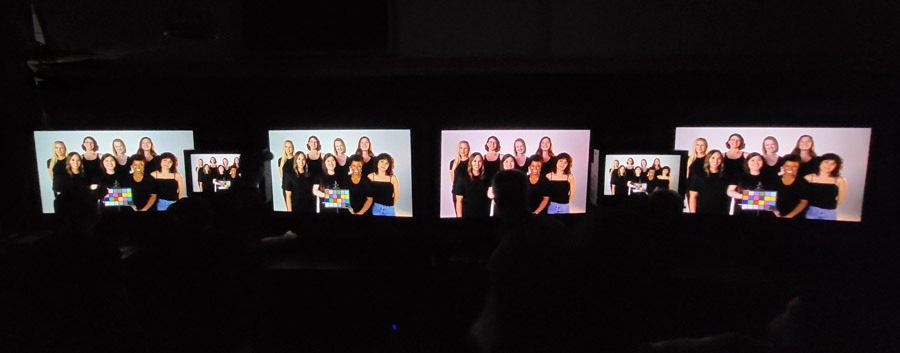
LG G5, Panasonic Z95B, Samsung S95F and Sony BRAVIA 8 II OLED TVs compete in the 2025 Value Electronics TV Shootout (note: smaller displays are Sony’s BVM-HX3110 professional monitors used as reference). Ecoustic Image.
The Contenders
Sony BRAVIA 8 II OLED TV
Distributed by Melbourne-based Audio Active and available via JB Hi-Fi in Australia, the BRAVIA 8 II posted the lowest peak brightness but excelled in nearly every other metric. Judges praised its exceptional colour accuracy, saturation, and video processing—especially in SDR mode under subdued lighting. Chris Boylan noted that while Sony markets the BRAVIA 9 MiniLED as its flagship, the BRAVIA 8 II delivers better overall performance aside from peak brightness.
Samsung S95F OLED TV
Samsung’s S95F, featuring a glare-reducing matte finish, performed well in bright room and out-of-the-box categories. The matte screen helps minimize reflections, a key advantage in sunlit spaces common in Australian homes. While it may slightly affect black levels, the trade-off for reduced glare made it a strong contender for daytime viewing.
LG G5 – Bright but Flawed
LG’s G5 impressed with its excellent peak brightness and perfect blacks but underperformed in areas like colour saturation—particularly at low luminance. Judges noted that colours such as yellow and red appeared washed out in dim scenes. Shadow detail was another area of concern, which ultimately impacted its overall score.
Panasonic Z95B – Strong Showing, But Not Sold in Australia
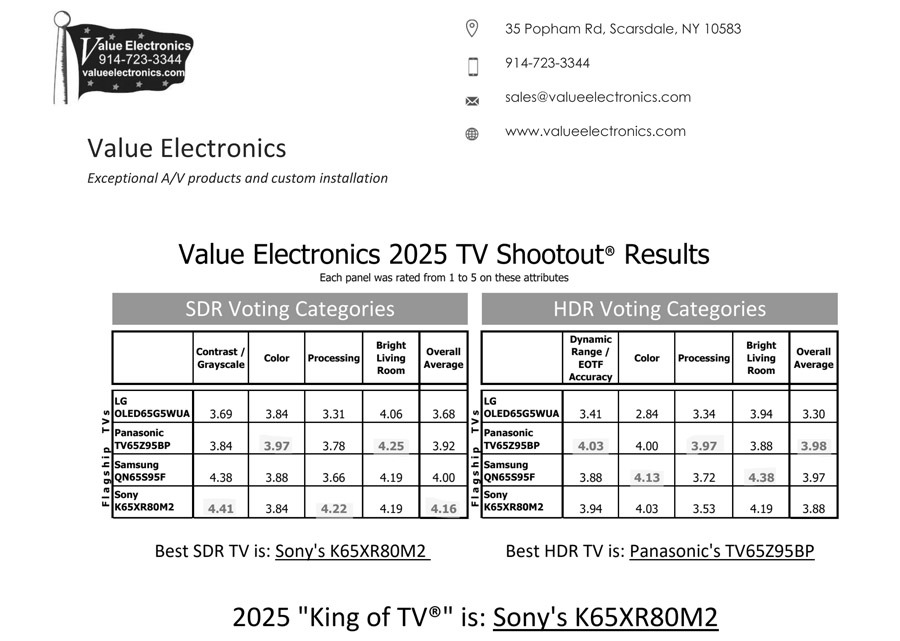
Although not available locally, Panasonic’s Z95B performed strongly in HDR tests and took home the highest overall HDR score. However, it was Sony’s consistency across both SDR and HDR testing that gave it the edge.
Final Results
After tabulating scores across all categories:
HDR Winner: Panasonic Z95B
SDR Winner: Sony BRAVIA 8 II
Overall, Winner: Sony BRAVIA 8 II
As a result, Sony’s BRAVIA 8 II was officially crowned the “King of TV” for 2025.
Extra Features: Sony Leads the Pack
Scoring focused purely on picture performance, excluding factors like aesthetics, sound quality, and interface usability. But Sony offers two exclusive features that set it apart from rivals:
Sony Pictures Core – A premium video-on-demand platform offering near-disc quality streaming of select titles.
DTS:X / IMAX Enhanced on Disney+ – The only TV brand currently supporting dynamic IMAX audio mixes via Disney+, offering a home theatre-like experience unmatched by LG, Samsung, or Panasonic.
These extras make the BRAVIA 8 II an especially compelling choice for movie lovers seeking cinematic experiences at home.
A Word of Caution on Privacy
One concern raised during the event was LG’s WebOS platform, which tracks every power-on event and compiles detailed user data for sale to third parties, including government bodies. While this wasn’t factored into judging, it may be a consideration for privacy-conscious consumers.