Is Microsoft Getting Ready To Dump Xbox? Speculation Mounts After Fourth Straight Quarter Of Decline
 David Richards
03 Aug 2026
David Richards
03 Aug 2026

Speculation is mounting that Microsoft, a Company raking in record billions from cloud services and AI, is weighing up the sale of its problem plagued Xbox operation, a division that is going backwards despite close to US$100 billion spent buying up gaming studios over the past decade.
The move could hurt several retailers who sell Xbox consoles in Australia.
ChannelNews understands that there are people inside Microsoft who favour selling the troubled business, seeing Xbox as a needless distraction from the core enterprise, cloud and AI operation that management is now betting the Company on.
Right now, Microsoft is jettisoning staff and studios, cancelling projects and taking impairment charges in an effort to arrest a massive slump in demand for its Xbox offering, with jobs also cut in Australia as part of the global cull.
Fourth Straight Quarter Of Decline
Late last week, Microsoft revealed a fourth consecutive quarter of decline for the Xbox business, with a 10% slump in Xbox content and services revenue, the line that includes Game Pass subscriptions, and a 13% fall in hardware sales.
Total Xbox revenue came in at US$4.98 billion for the quarter, the lowest since early 2024, and for the full fiscal year the division shed US$1.7 billion in revenue, down 7% to US$21.8 billion, with hardware revenue collapsing 29% across the year as consumers walked away from a Series X console now priced at US$750.
The rot set in years before Microsoft went on its buying binge, with the problem so bad that the Company long ago stopped disclosing console sales numbers altogether.
Xbox chief Asha Sharma has been talking up a “reset” of the business, while CEO Satya Nadella spruiks an imminent return to growth, but analysts see it differently, with every new announcement out of the division looking like more proof that Xbox is sliding closer to an even bigger disaster than the one it is currently facing.
A Rounding Error For Microsoft
The brutal reality for gaming fans is that the Xbox implosion barely moved the needle on Microsoft’s overall results.
The Company posted quarterly revenue of US$90 billion, up 18%, and net income up 31% to US$35.8 billion, powered by cloud revenue growing 27% and Azure passing the US$100 billion mark, the same cloud services that recently smacked Australian businesses and consumers with price rises.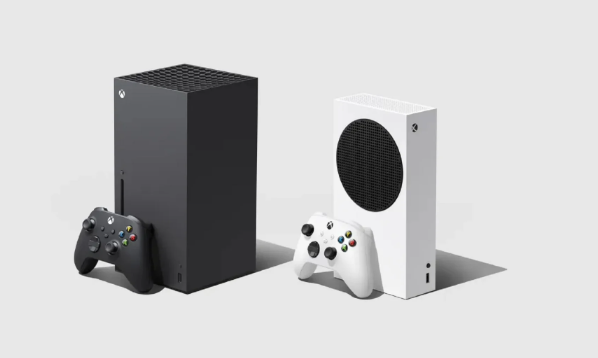
UK-based industry observers claim that all of the distress in the gaming division over recent months, including the severance bill for thousands of sacked Xbox staff, could have been wiped out on Microsoft’s bottom line by a handful of better than expected days in the Company’s gigantic cloud and enterprise businesses.
Xbox was not alone in delivering poor results, with the Windows business also enduring a torrid quarter, but that too was essentially a rounding error against the numbers flowing through cloud and AI.
For a management team obsessed with data centres rather than gaming consoles, selling Xbox simply gets rid of a problem the Company does not need.
The Sharma Question
Quite a few commentators now believe that Sharma’s real mission is to slim the division down and truss it up as an attractive package to put on the market.
There have already been reports of internal discussions at Microsoft about more dramatic options, including spinning off the Xbox division entirely as the financial pressure mounts.
Any sale would need to overcome some very major problems along the way.
Xbox may be unhealthy, but it still drives billions of dollars of revenue every quarter on the back of major acquisitions such as Activision Blizzard, and offloading it would signal a costly strategic retreat.
Realistically, Microsoft would probably have to accept a sale price tens of billions lower than what it paid for Activision Blizzard, ZeniMax and its various other acquisitions, a humiliating climbdown no matter how much “refocusing on our core objectives” corporate verbiage it is couched in.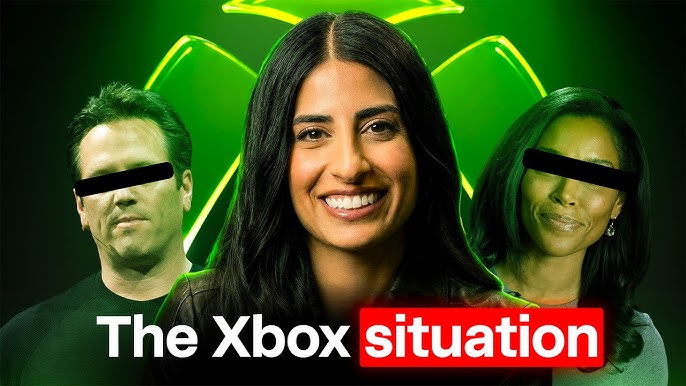
A sale would also shrink quarterly revenues by a few %, which does not square with the growth story a Company like Microsoft needs to reaffirm on every earnings call.
Who Buys It? The China Option
Then there is the question of who has US$40 to US$50 billion to spend, and that shopping list narrows quickly to Chinese Companies with access to big gaming markets.
Major tech firms including Amazon and Google have scaled back their gaming ambitions in recent years and are unlikely to be in the market for a deal of this size, while Tencent, a natural candidate only a few years ago, is now slowing its gaming investments and pulling back from parts of the business.
Untangling Xbox’s hardware and software operations from the rest of Microsoft would also be messy, but with management fixated on winning the AI war, few inside Redmond appear likely to lose much sleep over waving goodbye to a console business that has been bleeding for years.