HP Staff & Consumers Set To Face The Full Effect Of HP AI Blowtorch Move
 David Richards
27 Nov 2025
David Richards
27 Nov 2025
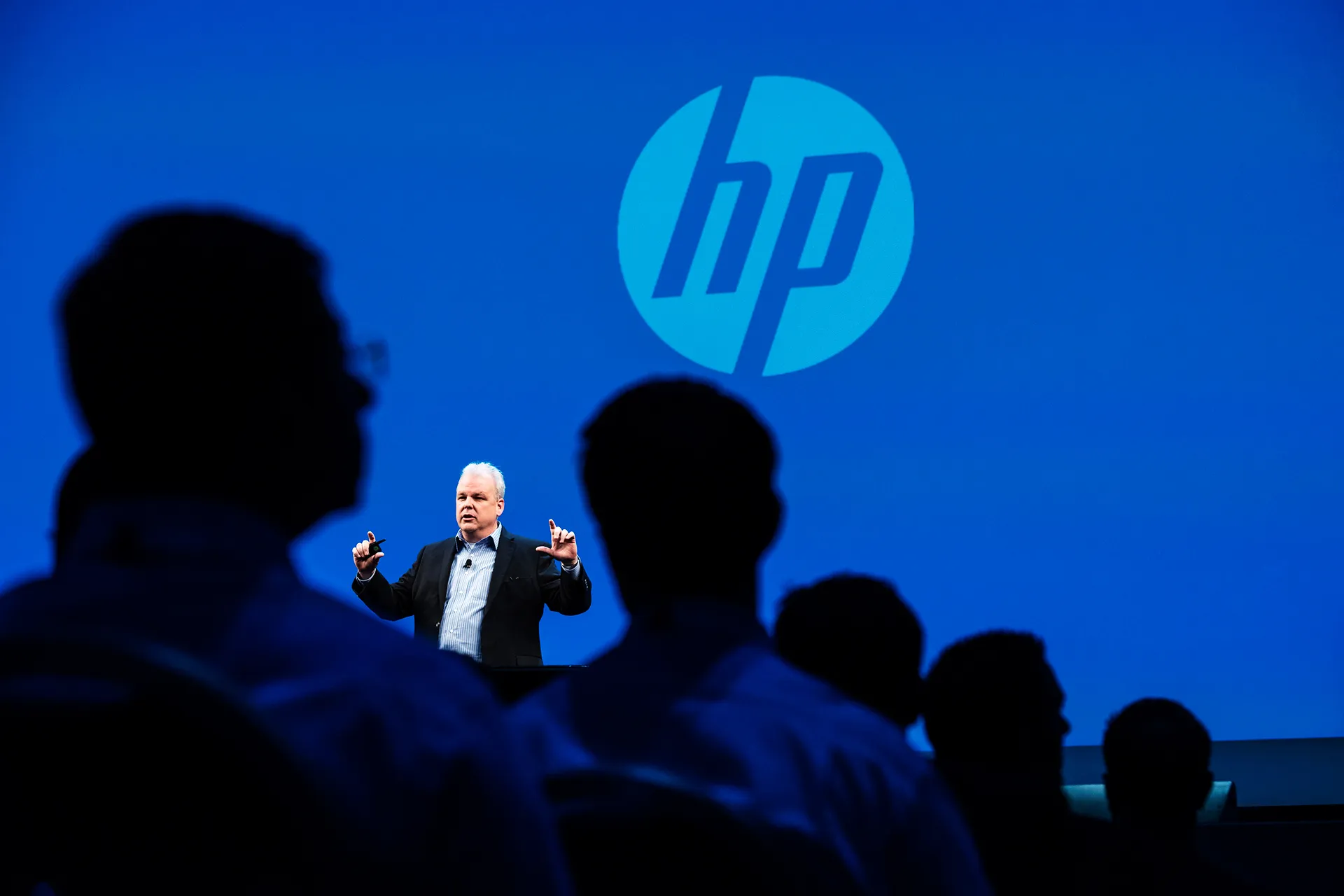
PC manufacturer HP is preparing to lay off staff in Australia while increasing notebook prices and reducing memory configurations in its PCs, a move its global CEO claims is necessary to “maintain its competitive edge.”
The cuts announced overnight, form part of a global restructure that will see up to 6,000 employees—around 10% of the workforce—lose their jobs, including within the Australian division. The company has cited the rapid adoption of artificial intelligence as a key driver behind the decision.
In 2024, HP shipped 53 million units, securing 20.2% of global PC market share. In the latest quarter, HP reported a profit of US$795 million down from US$906 million a year earlier in what analysts are describing as a “significant fall”.
AI at the Centre of HP’s Restructure
Chief Executive Enrique Lores said the restructuring plan aims to accelerate the company’s transition to AI-driven operations, spanning product development, software engineering, customer support, and internal processes.
He confirmed that while jobs will be lost, HP will increase investment in AI technologies and integrate them more deeply into its product portfolio.
Insiders say the US company’s push toward internal AI automation is reducing “the minimum need” for human labour across several business areas.
Economic and Industrial Pressures in Australia
Observers claim the move toward AI adoption by major companies is being shaped partly by union-driven wage pressures in Australia. Unions, backed by both federal and state Labor governments, have been advocating broad wage increases across multiple sectors, including retail—an approach critics say prioritises payouts over supporting business profitability.
ACTU Secretary Sally McManus recently welcomed the Fair Work Commission’s decision to raise wages for around 3 million workers by 3.5% from 1 July, noting that the outcome was achieved with strong support from the Albanese Government.
Survey Warns of Risks from Rapid AI Deployment
A national survey by Professionals Australia, titled AI at Work, paints a concerning outlook for employers now introducing AI as a cost-cutting measure during a period of inflation and rising expenses.
More than 2,000 professionals across engineering, science, technology, architecture, and pharmacy participated in the study—the largest of its kind in Australia. The findings warn that without expert oversight, the rapid rollout of AI could turn “Australia’s greatest opportunity into a crisis,” undermining public trust and the productivity gains automation promises.
HP’s Long-Term View on AI
Lores said AI will fundamentally reshape the way HP operates over the next 10 to 20 years.
“I think any work is going to be impacted by AI, and we need to take advantage of it as a company,” he said.
HP expects to incur more than A$1 billion in restructuring costs, including approximately US$250 million in the current fiscal year when most cuts will occur. The company anticipates A$1.5 billion in annual savings by the end of fiscal 2028.
PC Business Under Pressure
The company, which has lost its position as the world’s #1 PC manufacturer, is facing rising costs in its personal systems division. A surge in AI-related demand from data centres is driving up memory chip prices.
To offset these pressures, HP plans to raise PC prices, source parts from lower-cost suppliers, and reduce memory configurations. Despite these measures, the company still expects a 30% hit to earnings per share for the current fiscal year.
“As you can see, it is a very significant number, and this is net of all the actions that we are already putting in place,” Lores said.
Demand for AI-enabled PCs has continued to ramp externally, reaching over 30% of HP’s shipments in the fourth quarter ended Oct. 31.
The decision by HP to reduce the size of memory in a notebook is due in part to global memory chip price surge brought on by rising demand from AI data centers that will push up costs and pressure profits at consumer electronics makers such as HP, Dell and Acer, Morgan Stanley analysts have warned.
Those wanting more memory will have to pay for the luxury.
Big Tech’s push to build out AI infrastructure has triggered price increases for dynamic random access memory and NAND — two commonly used types of memory chips — amid high competition in the server market.
An AI sign with a circuit board design at a conference, blurred person in foreground.
Demand for AI-enabled PCs has continued to ramp externally, reaching over 30% of HP’s shipments in the fourth quarter ended October 31.
Lores said that HP expects to feel the impact in the second half of fiscal 2026, with higher price increases. HP has enough inventory in hand for the first half.
Financial Outlook
In the latest quarter, HP reported a profit of US$795 million down from US$906 million a year earlier.
Fourth-quarter adjusted earnings were 93 cents, slightly above estimates of 92 cents.
Revenue rose 4.2% to US$14.64 billion, beating expectations of US$14.5 billion. Personal Systems revenue grew 8% to US$10.35 billion, offsetting a 4% decline in printing revenue to US$4.27 billion.