Harvey Norman Profits Surge 16.5% As Franchise Engine Powers $466m Half-year Result
 David Richards
27 Feb 2026
David Richards
27 Feb 2026

Harvey Norman has posted a sharp 16.5% jump in first-half profit, with the retail giant leaning heavily on its franchise network and property empire to drive earnings growth in a challenging consumer environment, despite the lift their shares fell 5.7% at the opening of the market.
The retailer reported profit before tax of $466.31 million for the six months to December 31, up $66 million on the previous year. Earnings before interest and tax climbed 14.4% to $527.53 million, while total system sales rose 6.9% to $5.16 billion.
Behind the headline result lies a clear driver: franchisees.
Franchise model delivers margin lift
Aggregated Australian franchisee sales increased 4.8% to $3.50 billion, fuelling a 9.6% rise in franchise fee income to $471.84 million. Franchising segment profit before tax climbed 14.2% to $205.93 million, with margins expanding to 5.89% from 5.40% a year earlier.
The direct link between franchisee sales and franchise fee revenue again proved central to group profitability, with improved earnings contributions from Australian franchising operations singled out as a key factor in the half-year result.
Franchise revenue overall rose 8.8% to $588.30 million, reflecting higher fee income, rent and outgoings from franchisees, and interest income from franchisee financing facilities.

Harvey Norman is one business unworried by the AI revolution
However, costs within the franchising division also increased, rising 6.0% as tighter interest rate expectations drove a negative $6.77 million fair value adjustment on leasehold investment property assets — a swing of almost $12 million compared to the prior year.
Overseas retail and property bolster earnings
Company-operated retail stores delivered even stronger percentage growth, with sales rising 11.6% to $1.66 billion. The result was supported by a full six months of trading from stores opened in FY25, three new stores in Asia, and improved performance across New Zealand, Ireland, Slovenia and Croatia.
Overseas company-operated retail profit before tax jumped 35.6% to $92.09 million. The result was partially offset by expected establishment losses at the group’s UK flagship, which remains in its scaling phase.
Harvey Norman’s vast property portfolio again provided stability. The property segment posted profit before tax of $178.82 million, up 7.8%, aided by rental growth, low vacancy rates and $96.26 million in net property revaluation gains.
Excluding property revaluations and lease accounting impacts, profit before tax rose 20.1% to $372.79 million, underscoring stronger profit generation across its core retail, franchising and property operations.
Cost discipline sharpens operating leverage
The group tightened operating costs as sales expanded, with total operating expenses falling to 17.8% of system sales, down from 18.0% a year earlier. Global marketing spend also eased as a proportion of sales, declining to 3.8% from 4.0%.
For January 2026 alone, aggregated system sales were up 4.6% year-on-year, with comparable sales increasing 4.3%, suggesting momentum has carried into the second half.
The board declared a fully franked interim dividend of 14.5 cents per share, up 20.8% on last year’s 12 cents.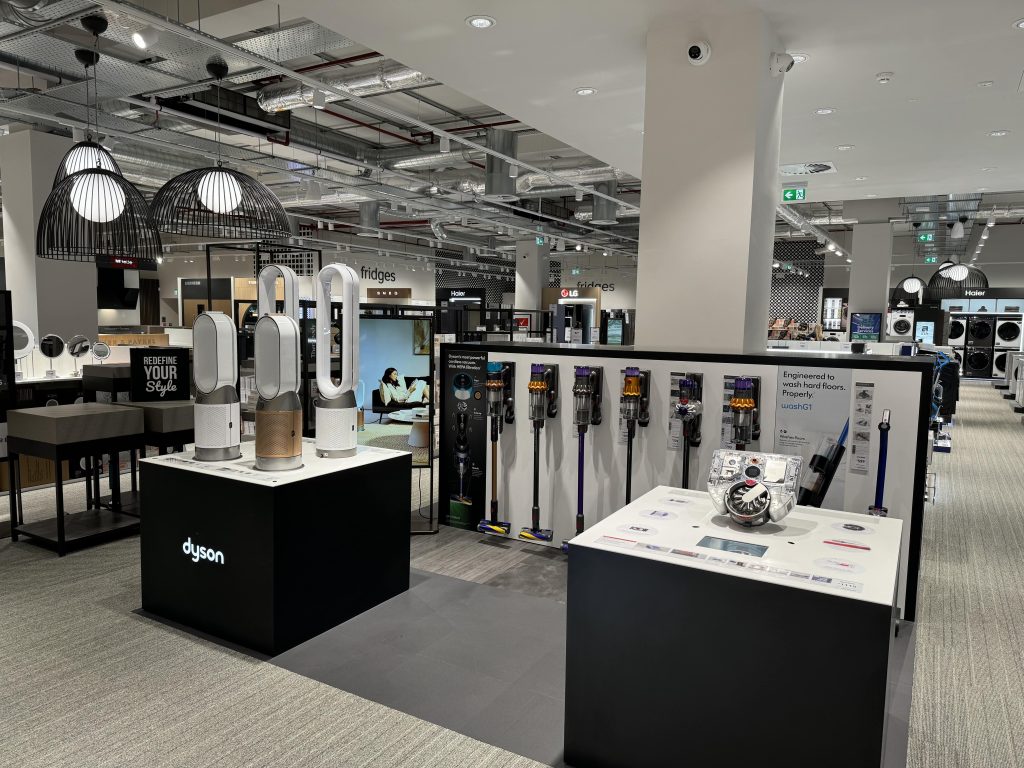
Balance sheet strengthens — but inventory weighs on cash flow
Total assets increased to $8.77 billion, driven by growth across the property and retail asset base. The group’s global freehold property portfolio now stands at $4.67 billion.
Net assets rose 4.9% to $4.95 billion, while net debt to equity remains low at 13.02%, reflecting conservative gearing and disciplined capital management.
Operating cash flows and cash conversion were slightly weaker during the half, largely due to increased inventory funding to support sales growth — particularly in premium technology categories — offsetting stronger cash receipts from company-operated stores and franchise fees.
Investment in brands and AI range
The franchisor continued to invest in brand promotion across Harvey Norman®, Domayne® and Joyce Mayne®, including targeted customer incentives such as bonus gift cards. It is also backing digital capability upgrades, in-store infrastructure and the rollout of a “Next Gen-AI” technology range across franchisees.
The result reinforces the central role of Harvey Norman’s franchise-led model and property-backed balance sheet in driving earnings growth, even as cost pressures and interest rate volatility remain in focus.