Fujifilm Gives Instax Mini Evo 2 A Major Upgrade With Touchscreen And Video Recording
 Dominic Bayley
28 Oct 2026
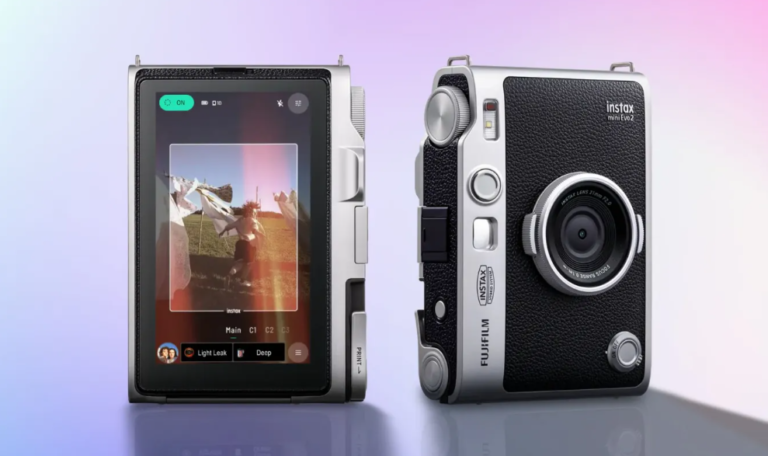
Fujifilm has unveiled the Instax Mini Evo 2, introducing a larger touchscreen, upgraded camera sensor and video recording capabilities to its popular hybrid instant camera range.
The new camera combines digital photography with instant film printing, allowing users to capture, preview and edit images before producing physical prints.
Priced at US$289.95 (approximately A$413), the Instax Mini Evo 2 is expected to launch by the end of November. Australian pricing and availability have yet to be confirmed.
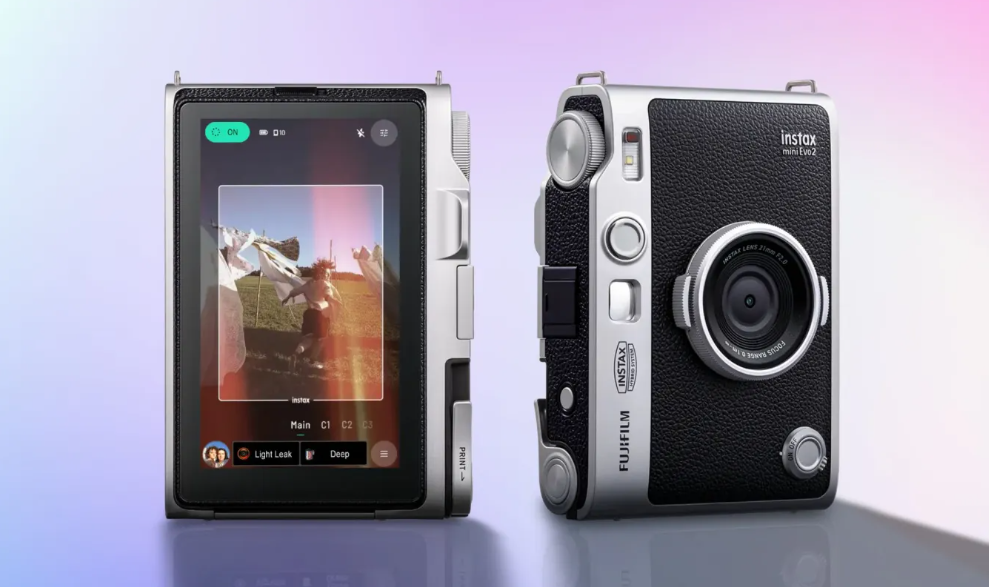
One of the biggest changes is the introduction of a 4.5-inch touchscreen, replacing the original Mini Evo’s 3-inch display and physical rear controls.
It marks the first time Fujifilm has incorporated a touchscreen into an Instax camera, providing a larger interface for framing photographs, reviewing images and selecting creative effects.
The camera retains 10 lens effects and 10 film effects, which can be combined to produce 100 different photographic styles.
Despite the shift towards touchscreen controls, Fujifilm has retained two physical dials and a traditional film-style print lever, preserving the tactile experience associated with the Instax range.
A new Expanded View mode also allows users to see more of the surrounding scene when composing photographs, although the additional area does not appear in the final image.
Another major addition is Immersive Movie, a new feature that records four seconds of video immediately before a photograph is taken.
It is the first time Fujifilm has introduced video recording to an Instax Evo camera.
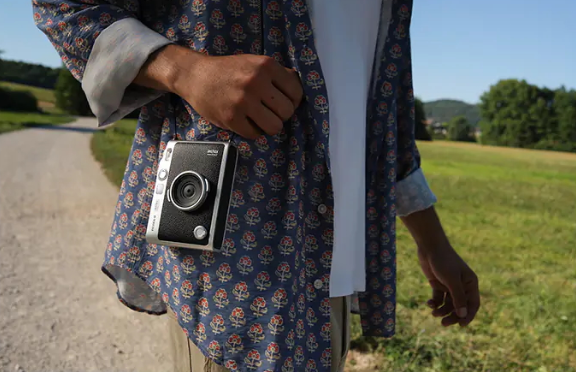
The feature captures footage at approximately 560 x 992 pixels and 24 frames per second, although audio recording is not supported.
Users will need to purchase a microSD card separately to store video clips, as the camera’s internal memory can accommodate only around 45 still images.
Fujifilm has also upgraded the imaging hardware, introducing a 16MP, 1/2.77-inch sensor that replaces the original model’s smaller 1/5-inch sensor.
The larger sensor is paired with a 21mm f/2.0 lens, potentially improving image quality and low-light performance.
Additional photography features include a dedicated macro mode, selfie mirror and manual adjustments for exposure, white balance and flash settings.
For instant printing, the Mini Evo 2 produces 600dpi images on Fujifilm’s familiar 2 x 3-inch Instax Mini film.
Users can choose between Rich and Natural print modes, offering different colour and tonal characteristics depending on their preferred photographic style.
The camera also supports USB-C charging, remote shooting and wireless printing of smartphone photographs through Fujifilm’s companion app.
The Instax Mini Evo 2 will initially be available exclusively in black, with instant film and microSD storage sold separately.
With its touchscreen interface, improved sensor and new video capabilities, Fujifilm is pushing the Instax Mini Evo range further into digital photography while retaining the instant printing experience that has made the series popular.