ASUS Launches Intel Arc Pro B70 GPU With Eye-Watering Price Tag To Rival NVIDIA RTX 5090
 Dominic Bayley
28 Oct 2026
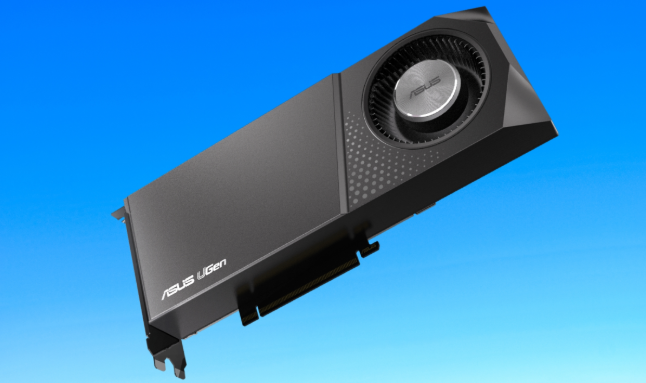
ASUS has launched its UGen Intel Arc Pro B70 graphics card in Australia, targeting AI developers and professional workstation users with a hefty $3,299 price tag.
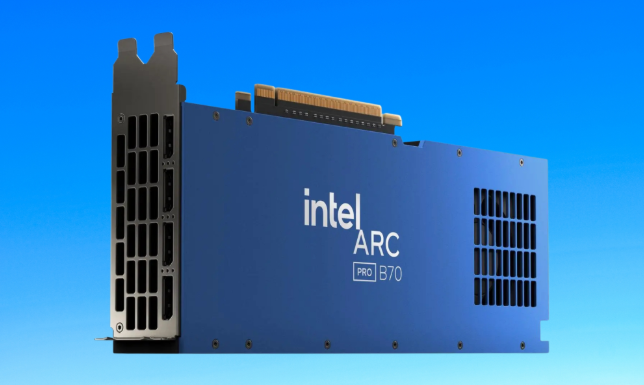
The pricing represents a significant premium over Intel’s own Arc Pro B70 graphics card, which launched in March 2026 with a starting price of US$949 (approximately A$1,350).
ASUS’s version is considerably more expensive than Intel’s original offering, placing it in the same price bracket as NVIDIA’s flagship GeForce RTX 5090.
NVIDIA’s RTX 5090 launched in Australia at $4,039, although the two graphics cards are designed for different purposes.
While NVIDIA’s flagship targets high-end gaming and demanding creative workloads, ASUS is positioning the UGen Arc Pro B70 as a workstation GPU designed for artificial intelligence, local AI inference and professional applications.
The card is based on Intel’s Xe2 architecture and features 32GB of ECC GDDR6 memory, 32 Xe2 cores and 256 XMX engines dedicated to accelerating AI workloads.
Its large memory capacity is one of the main selling points, allowing developers to run sizeable AI models directly on their computers rather than relying entirely on cloud-based processing.
This could appeal to businesses handling sensitive information or developers looking to reduce ongoing cloud computing costs.
ASUS has also equipped the GPU with a dual-slot blower-style cooling system designed for workstation environments.
The card carries a 310W power rating, substantially higher than the 230W rating of Intel’s reference Arc Pro B70.
That increased power allowance could provide additional performance headroom, although it also places greater demands on system cooling and power delivery.
Another feature is support for multi-GPU configurations, with ASUS promoting systems equipped with up to four Arc Pro B70 cards.
Such a configuration would provide a combined 128GB of graphics memory across the four GPUs, potentially making it attractive for demanding AI workloads.
However, four cards would cost $13,196 before accounting for the rest of the workstation hardware.
The combined memory would not necessarily function as a single shared 128GB pool, with usable capacity depending on the software and workload.
Despite the premium pricing, the Arc Pro B70’s substantial memory capacity could make it appealing to developers working with AI models that exceed the limits of conventional consumer graphics cards.
However, ASUS faces stiff competition from NVIDIA, which has established a strong position in AI computing through its CUDA software ecosystem and professional GPU offerings.
Intel’s ability to deliver reliable software support, compatibility and competitive AI performance will therefore be important in determining the card’s success.
For now, ASUS’s UGen Arc Pro B70 represents an expensive option for developers seeking substantial graphics memory and local AI processing capabilities.
Whether buyers are prepared to pay a premium approaching NVIDIA RTX 5090 territory will depend on how well Intel’s workstation GPU performs in real-world AI applications.