Apple’s Touchscreen MacBook Pro Could Change The Laptop Game, But Questions Remain
 Dominic Bayley
28 Oct 2026
Apple is preparing to enter the touchscreen laptop market, potentially bringing one of the biggest changes to its MacBook Pro lineup in years.
While Windows laptop manufacturers have offered touch-enabled displays for more than a decade, Apple has consistently resisted the technology, arguing that touchscreens are poorly suited to conventional laptop designs.
Former Apple CEO Steve Jobs famously dismissed touchscreen laptops as “ergonomically terrible” in 2010, arguing that vertical touch surfaces were uncomfortable to use. Tim Cook reinforced that position in 2012, comparing the idea of combining a laptop and tablet to merging a toaster with a refrigerator.
However, Apple now appears ready to reverse that long-standing philosophy, with rumours pointing to a redesigned MacBook Pro featuring an OLED touchscreen, a slimmer chassis and potentially an iPhone-style Dynamic Island.
The new models are expected to retain the familiar 14-inch and 16-inch display sizes, with Apple’s M5 Pro and M5 Max processors reportedly providing the computing power.
One of the biggest upgrades could be the switch to OLED technology, delivering deeper blacks, richer colours and improved contrast compared with existing MacBook Pro displays.
However, the upgrade could also push prices significantly higher.
The current 14-inch MacBook Pro with an M5 Pro processor starts at US$2,499, and adding an OLED touchscreen could make Apple’s premium laptops considerably more expensive.
Another rumoured change is the replacement of the existing display notch with a Dynamic Island cutout for the webcam.
Similar to the feature found on Apple’s iPhones, Dynamic Island could potentially provide interactive notifications, music controls, timers and other information without requiring users to switch between applications.
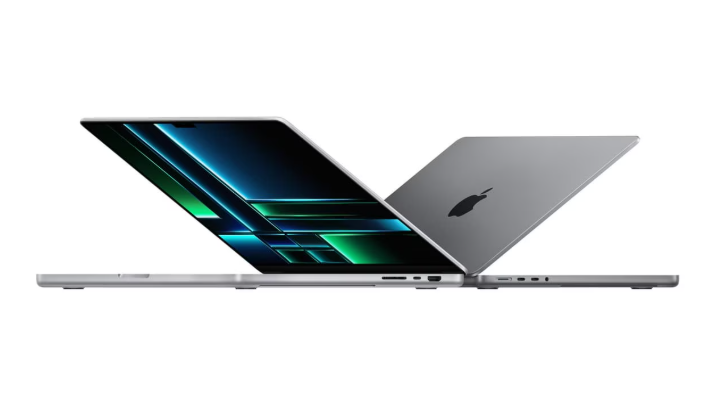
Apple is also reportedly working on a thinner and lighter MacBook Pro design, although that raises questions about whether the company can reduce the laptop’s dimensions without compromising cooling, battery life or performance.
Previous efforts to make MacBooks thinner resulted in controversial design decisions, including the butterfly keyboard mechanism and thermal limitations that affected some Intel-powered models.
Perhaps the biggest unknown is how Apple intends to implement touch controls.
Unlike convertible Windows laptops such as Lenovo’s Yoga range, which feature 360-degree hinges and can operate as tablets, Apple’s touchscreen MacBook Pro may retain a conventional clamshell design.
It remains unclear whether Apple will introduce a more flexible hinge, allowing the screen to fold backwards, or simply add touch functionality to its existing laptop format.
Support for the Apple Pencil is another unanswered question.
Stylus compatibility could make the touchscreen MacBook Pro particularly attractive to graphic designers, illustrators and other creative professionals who want to draw or edit directly on the display.
However, there has been no confirmation that Apple intends to bring Apple Pencil support to the Mac.
On the software side, Apple is expected to introduce touch-focused improvements through macOS 27, reportedly codenamed Golden Gate.
Rather than transforming the MacBook into an iPad, Apple is believed to be developing an interface that accommodates both traditional keyboard and trackpad controls and direct touchscreen interaction.
That could include larger touch targets, redesigned menus and gestures optimised for finger-based navigation while preserving the desktop capabilities that distinguish macOS from iPadOS.
Apple previously experimented with touch controls through the MacBook Pro’s Touch Bar, introduced in 2016 and discontinued in 2023.
Although the Touch Bar offered context-sensitive shortcuts and application controls, it never achieved widespread popularity, partly because it replaced familiar physical function keys with a changing digital interface.
A full touchscreen would represent a far more substantial change.
The rumoured OLED touchscreen MacBook Pro is expected to sit alongside Apple’s existing MacBook models rather than immediately replace them, potentially creating a new premium category within the lineup.
With Apple expected to reveal its next-generation MacBook hardware at its October 28 event, attention will be focused on whether the company can deliver something genuinely different from touchscreen Windows laptops.
Apple may be arriving late to the touchscreen laptop market, but its biggest challenge will be proving that touch can make the MacBook more useful without sacrificing the features that have made it successful.