COMMENT: Tech PR Companies Burson & Ogilvy Struggle In AI era As Parent Company Looks For Clients & Answers
 David Richards
25 Nov 2025
David Richards
25 Nov 2025

As the former CEO of Ogilvy PR in Australia, I learnt a lot from the men who built Ogilvy into an advertising powerhouse, sadly the Company that is now part of WPP who also owns Burson and Ogilvy PR appear to have not read the memo’s that made the Companies they now own great.
The men who ran Ogilvy from Maddison Ave in New York taught me how to win business build a brand and get results for clients.
There was nothing about woke or him her culture, or banning media Companies because they don’t toe some Chinese Companies party line, which is the modus operandi for both Ogilvy PR and Burson PR and several other PR Companies who believe that the trade and specialist media are there to kiss the backside of brands, to simply generate revenue for a media Company.
Then there are the journalists that are at the end of a PR Company string, with offers of free products and trips overseas with key relevant information held back from their readers because this could inflame a brand and their PR company which is the way that LG Electronics has taken to operating.
These same journalists are also failing to reseach what they are spruiking for PR Companies.
Kenneth Roman the former chairman/CEO of Ogilvy & Mather and Michael Ball an Australia the former Vice Chairman of Ogilvy and at one time my boss gave me a series of typed up memo’s on how to win clients and manage an office.
In one of them Kenneth Roman wrote “The best lessons in business—and in life—often come from the pulpit: admit your mistakes, say you’re sorry, and ask for help.”
As for new business Michael Ball wrote “The pursuit of new business is like the pursuit of sex, it’s often irrational, usually dangerous, inevitably expensive, terribly frustrating yet universally attractive”.
On one occasion I met Harold Burson in New York just before I sold my business to Ogilvy.
He told me that “My job is to manage the media, build a brand and controll the debate. But don’t ever fall out with the media because the pen is mightier than the sword”.
Today ChannelNews which both Burson and Ogilvy PR have tried to restrict information to is attracting over one million unique visitors a month and over 1.6M visits a month. While this audience is B2b they are also consumers with families and the capacity to buy a product that PR companies are trying to control the narative around. 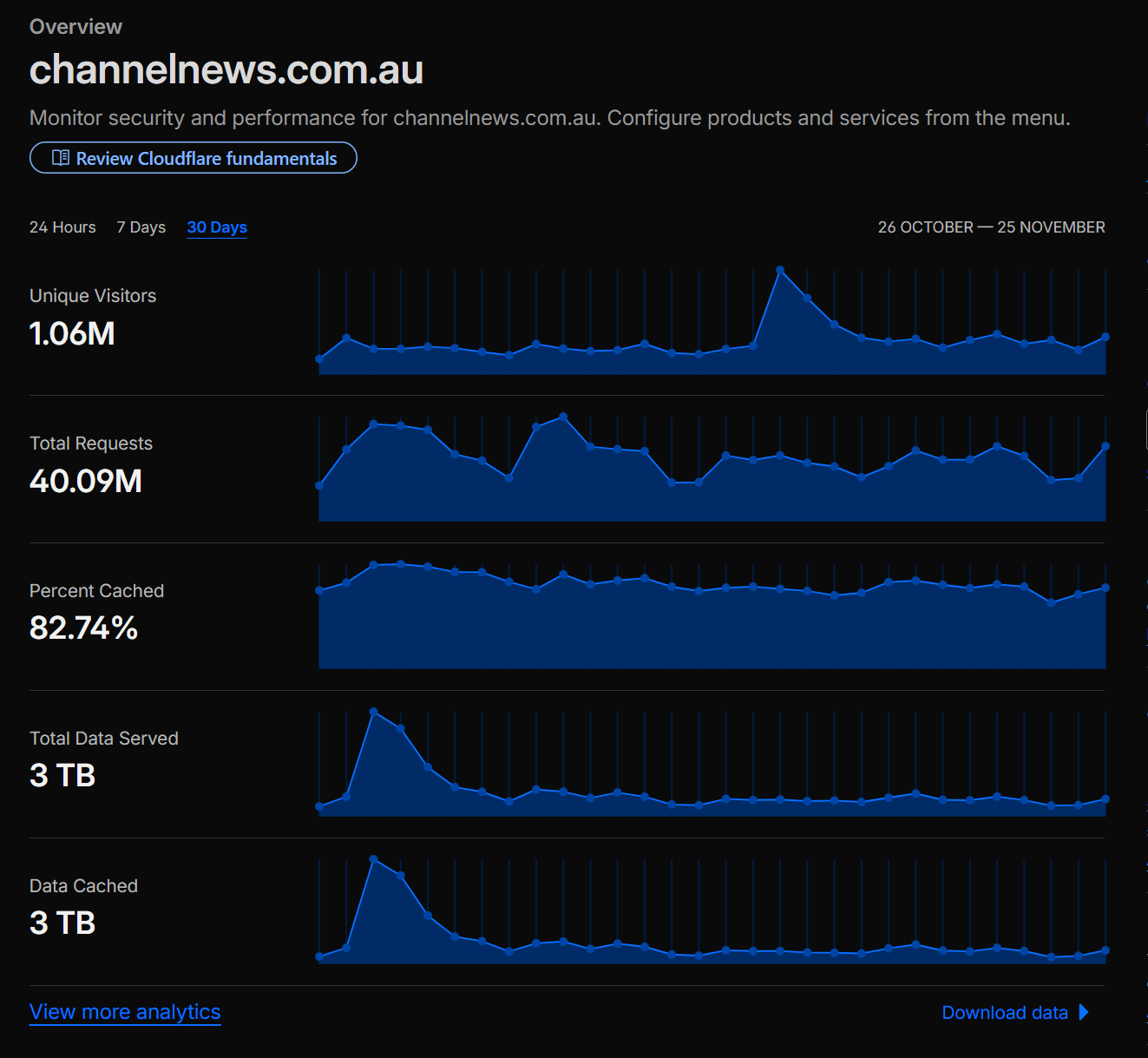
It’s a pity that those lessons I was taught are not being preached today at both Burson PR and Ogilvy PR as they sink into an AI era where winning new business and controlling a naritive is getting harder for woke inspired operators who have not realised that organisations such as ChannelNews believe that there is always two sides to a story, and often the downside is far more attractive at attracting eyeballs than some PR spin.
Despite recent attempts to expand their business and reposition themselves in the technology sector, major PR firms—particularly Burson and Ogilvy PR—are under mounting pressure as they continue to lose accounts and, more critically, revenue.
Burson has returned to promoting Chinese brand Huawei and its spin-off Honor in Australia, working alongside Chinese distributor Shenzhen Aisidi Company.
According to industry insiders, Honor approached several Australian distributors before settling on Aisidi, with many potential partners rejecting the deal due to what they considered highly unfavourable commercial terms.
Burson is also attempting to support another struggling client, LG Electronics, but their work has raised concerns within the industry.
The agency is known for attempting to sideline media outlets that do not align with the messaging of their Chinese clients or of LG—an approach that critics say mirrors the heavy-handed tactics of the Chinese Communist government when confronted with unfavourable commentary.
This comes against a backdrop of geopolitical tension.
Recently, China’s Ministry of Culture & Tourism and Ministry of Foreign Affairs warned Chinese citizens against travelling to Japan following remarks by Japan’s Prime Minister about Taiwan.
China also issued a “risk alert” for travel to the United States, citing comments by U.S. politicians and ongoing moves to ban Chinese-linked technologies—products often represented globally by Burson, including Huawei and Honor.
WPP’s Declining Performance and Agency Fragmentation
Burson and Ogilvy PR are owned by WPP, the global communications conglomerate. WPP’s PR operations have been experiencing steady declines:
Q4 2024: PR division revenue fell 5.3% year-on-year.
Q1 2025: Revenue dropped 6.6% like-for-like. Burson declined “mid to high single digits,” due largely to weak spending from clients such as LG and reduced budgets from Chinese brand Huawei—once a major account used to influence governments in Australia, the U.S., and the U.K. before multiple countries banned Huawei from supplying mobile network infrastructure.
Q2 2025: Revenue declines accelerated, with Burson performing worse than other WPP divisions.
Europe remains especially challenging for client spending, further weakening the group’s outlook.
WPP also owns Purple in Australia, a strategic communications agency, and previously merged PPR into BCW (which is now part of Burson).
Additional specialised agencies such as Bower House Digital are housed within the Ogilvy network.
Observers say WPP’s global cost pressures are forcing its agencies toward internal restructuring and prioritisation of higher-value integrated marketing services, rather than traditional stand-alone PR—now increasingly viewed as a commodity.
In 2024, Ogilvy PR lost the Samsung Australia account after less than two years. The decision was made by Samsung, whose Head of Communications today is Matea Rojas, who previously worked with Burson on the Huawei account.
AI’s Expanding Role and Its Threat to PR Agencies
Across the industry, artificial intelligence poses a significant threat to traditional PR models. Analysts warn that AI-driven marketing tools—developed by Meta, Amazon, and other tech giants—could substantially erode PR agency revenue in the coming years.
AI-powered tools are reshaping how organisations design, produce, and distribute campaigns, leaving legacy advertising agencies scrambling to remain relevant. WPP, Ogilvy PR, and Burson are all racing to expand their generative-AI capabilities.
At Brand Noise, the ChannelNews website is now attracting more than one million unique visitors per month, which means AI engines including ChatGPT, Gemini, and Copilot frequently scrape and reference ChannelNews articles as authoritative sources.
Last week, Burson staged the Australian launch of Honor, but excluded ChannelNews due to the outlet’s past negative reporting on Huawei, their global client.
A quick Google search highlights the central challenges around Honor’s Australian launch: concerns over national security, lingering distrust from its Huawei heritage, and questions about governance after Honor’s sale to a consortium tied to the Chinese Communist Party-controlled Shenzhen municipal government. Although Honor is technically spun off from Huawei, many of the same issues persist—mirroring the controversies that led to Huawei’s 5G ban in Australia.
WPP’s Stock Slump, Leadership Upheaval, and Acquisition Rumours
WPP’s stock performance has dramatically deteriorated—down 63% year-to-date—fuelled by client losses, weak revenue, and investor fears about AI’s deflationary impact on the industry.
To stabilise the business, WPP appointed Cindy Rose, a former Microsoft executive, amid speculation of potential takeovers.
The Times of London reported that Havas had entered early discussions about a possible acquisition or merger, while private-equity giants Apollo and KKR have also examined WPP’s assets.
Many industry observers point to former CEO Mark Read as a major factor in WPP’s decline, describing his tenure as a disastrous woke agenda period.
Under his leadership, agencies such as Ogilvy, Grey, and the once-dominant Burson Marsteller and Ogilvy PR have been reduced to “shells of their former selves.”
GroupM—once the world’s most powerful media buyers for big technology Companies—has steadily lost business to Publicis and IPG.
WPP has faced ongoing layoffs and a steady exodus of clients.
Further Downward Revisions and Market Reactions
WPP has twice downgraded its financial outlook:
It now expects like-for-like revenue less pass-through costs to fall 5.5%–6% for the year, worse than prior forecasts of 3%–5%.
Profit margin expectations have been cut to 13%, down from last year’s 15%.
In Q3, WPP reported a 5.9% decline in like-for-like revenue less pass-through costs—worse than analysts’ expectations. Shares fell 11% after the announcement.
New CEO Cindy Rose admitted the results were “unacceptable” but insists WPP is already implementing reforms, including leadership changes, a renewed partnership with Google, and an updated AI-powered marketing platform targeted at smaller clients.
However, client losses to rivals like Publicis and Omnicom continue to intensify.
Meanwhile, Omnicom is acquiring Interpublic Group, forming a new global leader in advertising and deepening WPP’s competitive challenges.
Despite WPP’s push to improve AI capabilities and streamline operations, management acknowledges that the numbers remain far from where they should with qwuestions raised as to whether WPP, Ogilvy PR and Burson will ever get back to where they were in the past.
David Richards was formerly the CEO of Ogilvy PR