Chinese Brand Lenovo Cranks Up ThinkPad Push Amid DeepSeek Concerns
 David Richards
19 Jan 2026
David Richards
19 Jan 2026
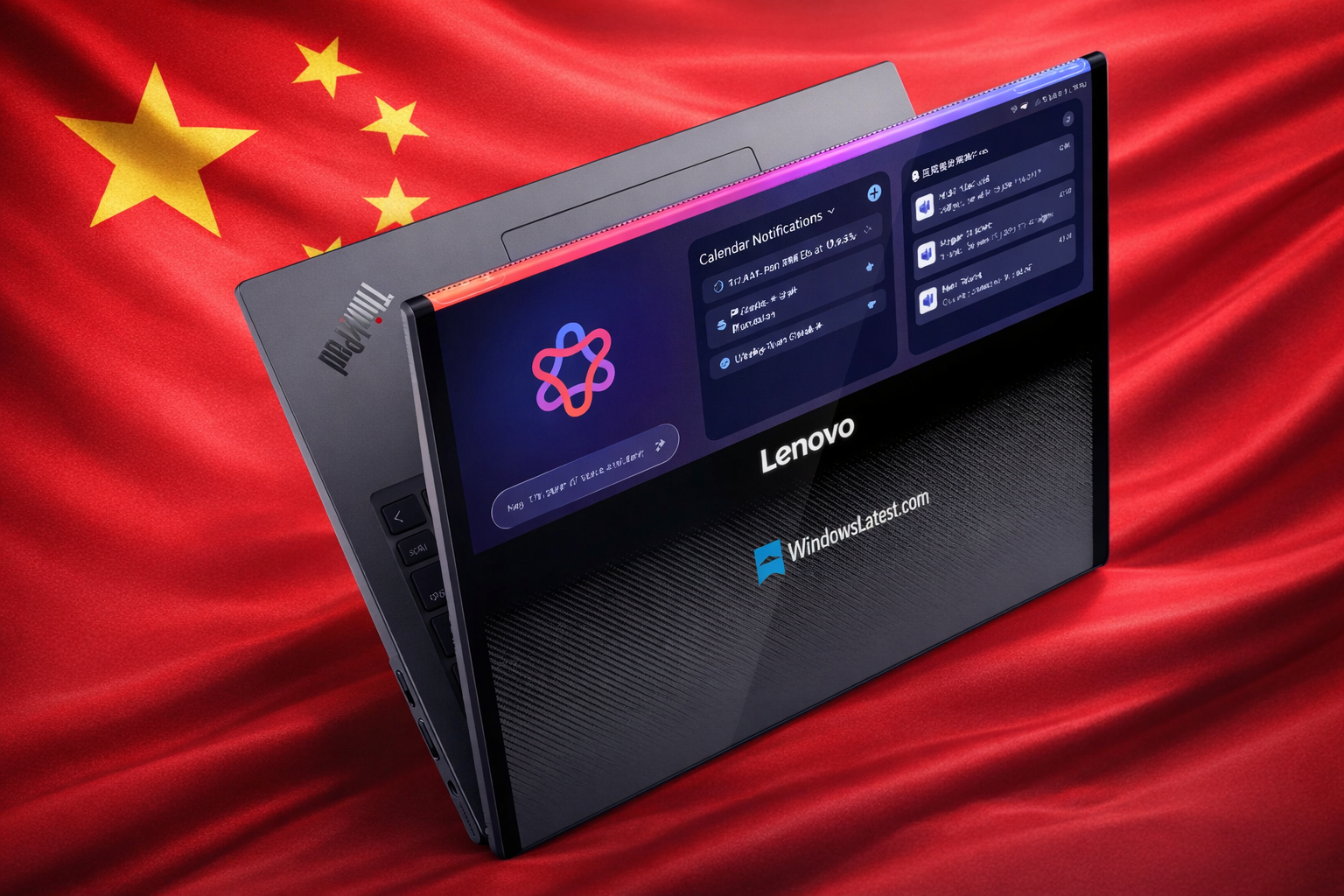
Chinese PC giant Lenovo is ramping up its ThinkPad marketing push in Australia, currently promoting “special deals” on its corporate website while also advertising “back to school” offers for its Lenovo-branded notebooks. Notably absent from this promotion is any reference to Lenovo’s Chinese ownership or its growing integration of Chinese-developed DeepSeek artificial intelligence software into their hardware.
At a recent PR event in Japan attended by Australian media, Lenovo’s Director of ThinkPad Development, Taka Katoh, did not disclose that DeepSeek AI software is available on Lenovo ThinkPad notebooks.
This omission has raised questions among observers, particularly as Lenovo becomes increasingly aggressive in embedding the software into its hardware ecosystem.
Lenovo’s origins and ownership structure remain contentious. The company was founded as an offshoot of the Chinese Academy of Sciences, a state-owned research institute, and its largest shareholder, Legend Holdings, is partly Chinese state-owned.
Critics argue these ties place Lenovo within the influence of the Chinese Communist Party (CCP), despite the company being publicly listed on the Hong Kong Stock Exchange and operating dual headquarters in Beijing and North Carolina.
According to several technology experts, Lenovo is now one of the most assertive notebook manufacturers integrating DeepSeek AI directly into its products.
DeepSeek, specifically the DeepSeek-R1 model, has been embedded into Lenovo’s proprietary personal AI assistant, Xiao Tian—also known in some regions as “Lenovo AI Now.”
Newer AI-enabled ThinkPads equipped with Intel Core Ultra or AMD Ryzen AI processors are designed to run DeepSeek models locally, allowing data processing without an internet connection.
Lenovo promotes this as a privacy-enhancing feature, using what it calls a “Hybrid AI” strategy that shifts tasks between on-device processing and cloud-based systems depending on complexity.
Even older ThinkPad models, such as the T480, T14, and X1 Carbon series, can run DeepSeek locally using third-party tools.
However, the growing use of DeepSeek has triggered serious security and policy questions. Australian State and Federal Governments are now being asked whether they should continue purchasing Lenovo notebooks, particularly after banning Huawei security cameras from federal and some state government buildings.
Concerns focus on national security, data privacy, and China’s intelligence laws. Under China’s National Intelligence Law and Data Security Law, Chinese companies are legally required to cooperate with state intelligence agencies if requested. DeepSeek’s privacy policy has previously stated that user data—including prompts, responses, and device information—is stored on servers in China, raising fears that sensitive data could be accessed by Chinese authorities.
Security researchers and organisations such as the Center for Internet Security (CIS) have warned of potential backdoors in DeepSeek’s code. Independent testing, including assessments by Cisco, found that DeepSeek-R1 failed to block harmful prompts related to cybercrime and misinformation that Western AI models typically restrict. The software has also been described as highly vulnerable to algorithmic “jailbreaking.”
At CES, one security expert told ChannelNews that integrating DeepSeek into Lenovo devices could effectively create a “gatekeeper” to information shaped by CCP values.
In early 2025, several countries—including Australia, South Korea, and Italy—banned or restricted DeepSeek on government devices. Despite this, Lenovo has continued integrating DeepSeek into its notebooks and Motorola smartphones, prompting claims that the company is prioritising cost efficiency over long-term user security.
In the United States, concerns over Lenovo hardware have already resulted in action. Several U.S. states, including Georgia, along with federal agencies, have banned or suspended contracts with Lenovo, labeling it a “prohibited supplier” due to alleged ties to the CCP and the People’s Liberation Army.
In Australia, Lenovo remains a major supplier to state education departments and federal agencies, including organisations within the National Intelligence Community (NIC)—the 10 agencies responsible for safeguarding Australia’s security and sovereignty under the leadership of the Office of National Intelligence.
Observers are now questioning whether a Federal Royal Commission should examine the broader ecosystem of relational software linking local law enforcement with national security organisations, and whether Lenovo’s expanding AI footprint introduces unacceptable risk.
As one federal observer put it, DeepSeek may represent an entirely new layer of exposure for Lenovo PC users—one that governments can no longer afford to ignore.