BREAKING NEWS: Sony Cedes Control of Its TV Business To TCL
 David Richards
21 Jan 2026
David Richards
21 Jan 2026

Sony, the company that once defined television itself, has effectively surrendered control of its global TV business, handing majority ownership to China’s TCL Electronics in a sweeping strategic shift that underscores how far Japan’s electronics giants have fallen in the modern display war.
Late Tuesday, Sony Group confirmed it is carving out its television and home audio operations into a new joint venture in which TCL will hold a controlling 51% stake, leaving Sony Group with 49%.
The new company will assume full responsibility for product development, industrial design, manufacturing, sales, logistics, and global distribution — a move that transforms what was once a supplier relationship into a de facto takeover.
The announcement comes just weeks before an intensifying global battle over next-generation RGB television technology, and months after Sony quietly registered the trademark “True RGB”, signalling its intent to re-enter the premium TV fight with a radically new display architecture.
A Strategic Retreat Disguised as a Partnership
Under the deal, signed via a Memorandum of Understanding on January 20, 2026, TCL will run the entire television operation worldwide, while Sony contributes brand equity, image-processing technology, and audio expertise. Binding agreements are expected by March 2026, with the joint venture slated to begin operations in April 2027, aligning with the start of Japan’s financial year.
The company will operate globally under the Sony and Bravia brand names — a critical detail that masks a deeper reality: Sony will no longer control the manufacturing or operational backbone of its own televisions.
Executives familiar with the deal say the logic is unavoidable. Sony has struggled for more than a decade to generate sustainable margins in a brutally competitive TV market dominated by Chinese scale and South Korean panel technology. By partnering with TCL — which owns CSOT, one of the world’s largest display panel manufacturers — Sony avoids the enormous capital costs of modern panel fabrication while retaining a premium presence at retail.
In effect, Sony keeps the badge. TCL gets the factory.
CES Silence, B2B Strength, and an Australian Footnote
Notably absent from Sony’s strategy was any major television launch at CES 2026, where rivals aggressively showcased RGB Mini LED prototypes and next-generation backlighting systems. Sony’s absence only fuelled speculation that the company was preparing a structural reset rather than a conventional product cycle.
Sony does, however, retain strength in premium and B2B display segments, including professional monitors and projection systems. In Australia, Audio Active — which also distributes Sony’s professional projectors — currently holds rights to Sony’s premium television offerings, a relationship expected to continue under the new structure.
True RGB: Sony’s Technological Last Stand
The most significant technological output of the Sony-TCL alliance is expected to be True RGB LED backlighting, a system Sony trademarked in late 2025 and is widely believed to underpin its 2026 flagship models, likely branded as the Bravia 9 II.
Unlike traditional Mini LED televisions — which rely on blue LEDs filtered through phosphor or quantum dot layers to create white light — True RGB fundamentally changes the architecture:
Direct RGB emission: Individual red, green, and blue LEDs form the backlight itself.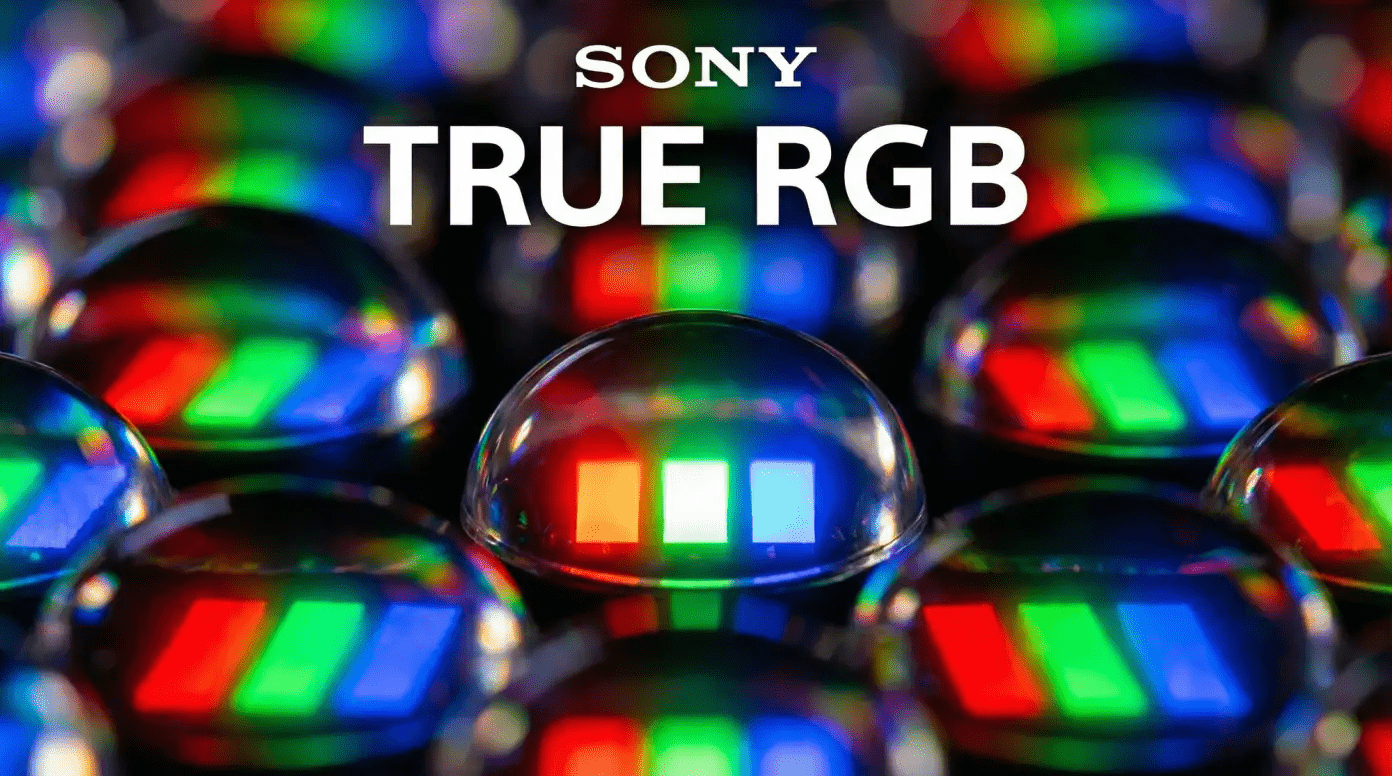
No colour filters: Eliminates light loss and colour contamination common in filtered systems.
Extreme performance: Brightness exceeding 4,000 nits, vastly improved energy efficiency, and colour coverage approaching the BT.2020 standard.
Professional-grade fidelity: Performance edging closer to reference mastering monitors such as Sony’s own BVM-HX3110.
TCL, already a leader in QD-Mini LED technology, brings the industrial muscle — including CSOT’s panel fabs — while Sony contributes its image-processing crown jewel: the XR Processor, along with advanced dimming algorithms capable of controlling more than 90,000 LEDs with OLED-like precision.
Industry analysts say the goal is clear: challenge OLED dominance while undercutting it on brightness, longevity, and cost.
Déjà Vu: Echoes of Sony’s Samsung Gamble
This is not Sony’s first attempt to survive through partnership. In 2004, Sony entered a joint venture with Samsung — S-LCD Corporation — to secure LCD panel supply during the industry’s shift away from CRTs and plasma.
The deal eventually collapsed, forcing Sony to abandon plasma technology altogether. While Samsung emerged stronger, Sony lost its manufacturing independence — a pattern now repeating, critics say, with China replacing South Korea as the power broker.
Then, as now, Sony needed panels. Its partner needed scale.
A Brutal Global Shake-Out
Sony’s retreat reflects a broader collapse of Japanese dominance in televisions.
Once-iconic brands have steadily exited the market:
Sharp fell under Foxconn control in 2016.
Toshiba sold its TV business to Hisense in 2018.
Hitachi withdrew from domestic TV sales the same year.
Panasonic exited manufacturing across Japan, India, Vietnam, Brazil, and Europe by 2022.
Meanwhile, Chinese giants TCL and Hisense are squeezing South Korean leaders LG and Samsung, with margins evaporating across the sector.
Analysts had long warned that Sony faced three options: reinvest heavily, partner, or walk away. The joint venture suggests Sony chose survival over sovereignty.
From Hardware to IP Empire
Sony’s transformation has been years in the making. As television profits shrank, the company repositioned itself as a global entertainment and intellectual property powerhouse, pouring money into music rights, film, gaming, anime, and character franchises.
Revenue from Sony’s display segment — including TVs and projectors — fell 10% to 597 billion yen ($3.8 billion) in the year ended March 2025, dragging down the electronics division’s profitability. By contrast, Sony has expanded aggressively in music catalogues, anime production, and gaming partnerships, including recent stakes in Bandai Namco Holdings.
Televisions, once Sony’s crown jewel, are now peripheral.
“A Powerful Platform” — But at What Cost?
Sony Corp. CEO Kimio Maki framed the partnership as a technological leap forward.
“By combining both companies’ expertise, we aim to create new customer value in the home entertainment field, delivering even more captivating audio and visual experiences to customers worldwide,” he said.
TCL Electronics chairperson Du Juan called the venture “a powerful platform for sustainable growth,” highlighting the merger of Sony’s brand and processing expertise with TCL’s scale and manufacturing prowess.
But behind the optimism lies a stark reality: control of one of Japan’s most iconic consumer electronics businesses has shifted decisively to China.
As the RGB TV war accelerates and brands battle for technological supremacy, Sony will still be on the screen — just no longer behind it.