ASUS Goes All-In on AI Mini PCs with New Ryzen and Intel-Powered Desktops
 Joe Gallop
14 Jan 2026
Joe Gallop
14 Jan 2026
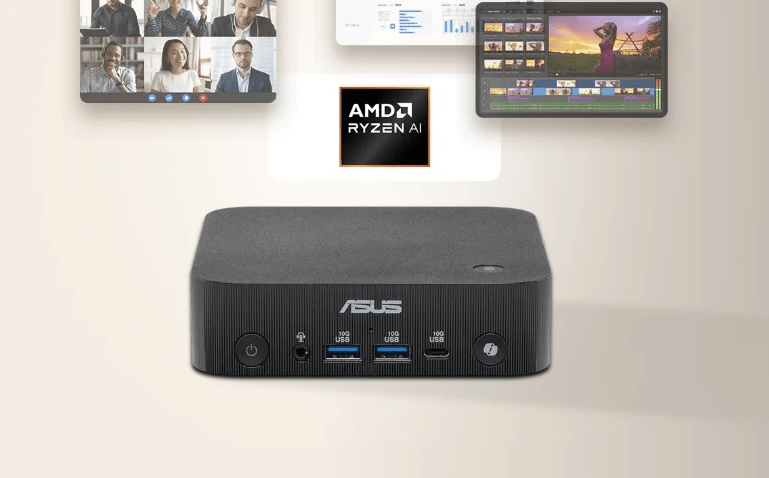
ASUS used CES 2026 to double down on compact, AI-ready desktops, unveiling two new mini-PCs aimed at business and professional users: the AMD-powered ExpertCenter PN55 and the Intel-based NUC 16 Pro.
The ExpertCenter PN55 (pictured above) is ASUS’ latest Copilot+ mini-PC and a refresh of last year’s PN54.
It’s built around AMD’s new Ryzen AI 400 ‘Gorgon Point’ processors, with options ranging from Ryzen AI 5 430 up to the flagship Ryzen AI 9 HX 470. These chips run in the 40–45W range and integrate an XDNA 2 NPU capable of up to 55 TOPS, designed to accelerate Windows 11 Copilot features and local AI workloads.
Despite its 130 x 130 x 34 mm footprint and 0.55 kg weight, the PN55 is well equipped.
It supports DDR5-5600 memory (up to 32 GB according to ASUS’ configs, though the platform itself can go higher), PCIe 4.0 NVMe storage up to 2 TB, Wi-Fi 7, Bluetooth 5.4 and up to dual 2.5 GbE. Ports include USB4 with DisplayPort 2.1, HDMI 2.1, dual DisplayPort 1.4, and a front-mounted Copilot button, plus a fingerprint reader. ASUS says it has passed military-grade durability testing.
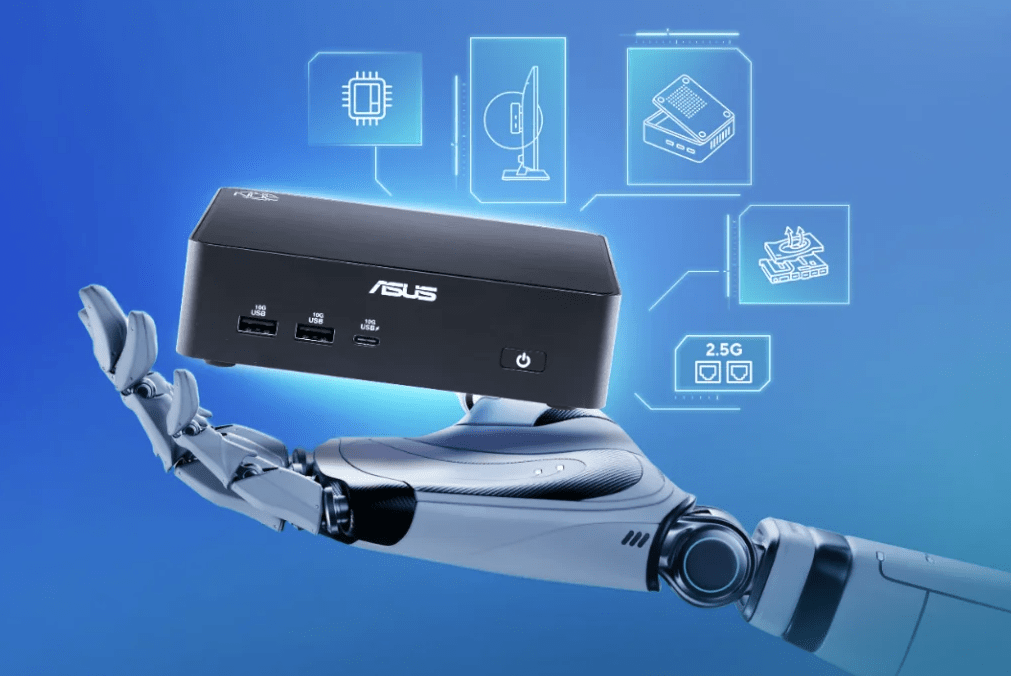
Alongside it, ASUS also introduced the NUC 16 Pro (pictured above), a more powerful and slightly larger 0.7-litre system based on Intel’s latest Core Ultra processors, topping out at a 65W Core Ultra X9 388H. It features Intel’s NPU 5 with up to 180 platform TOPS, positioning it for heavier local AI inference and automation tasks.
The NUC 16 Pro offers more headroom for memory and storage, with up to 128 GB of DDR5 (or 96 GB LPDDR5x on soldered models) and dual M.2 slots including one PCIe Gen 5. Connectivity is similarly modern, with Wi-Fi 7, dual 2.5 GbE, Thunderbolt 4, HDMI 2.1 and DisplayPort 2.1, and support for up to four 4K displays. It also carries MIL-STD-810H certification.
Pricing and Australian availability for both systems are yet to be announced, but with AMD’s Ryzen AI 400 platform expected to hit the market in late January and Intel’s Panther Lake systems close behind, ASUS is clearly positioning itself early in the 2026 AI PC race.