AI Robot Dog Uses Conversation To Guide Visually Impaired Users
 April Ossington
10 Apr 2026
April Ossington
10 Apr 2026
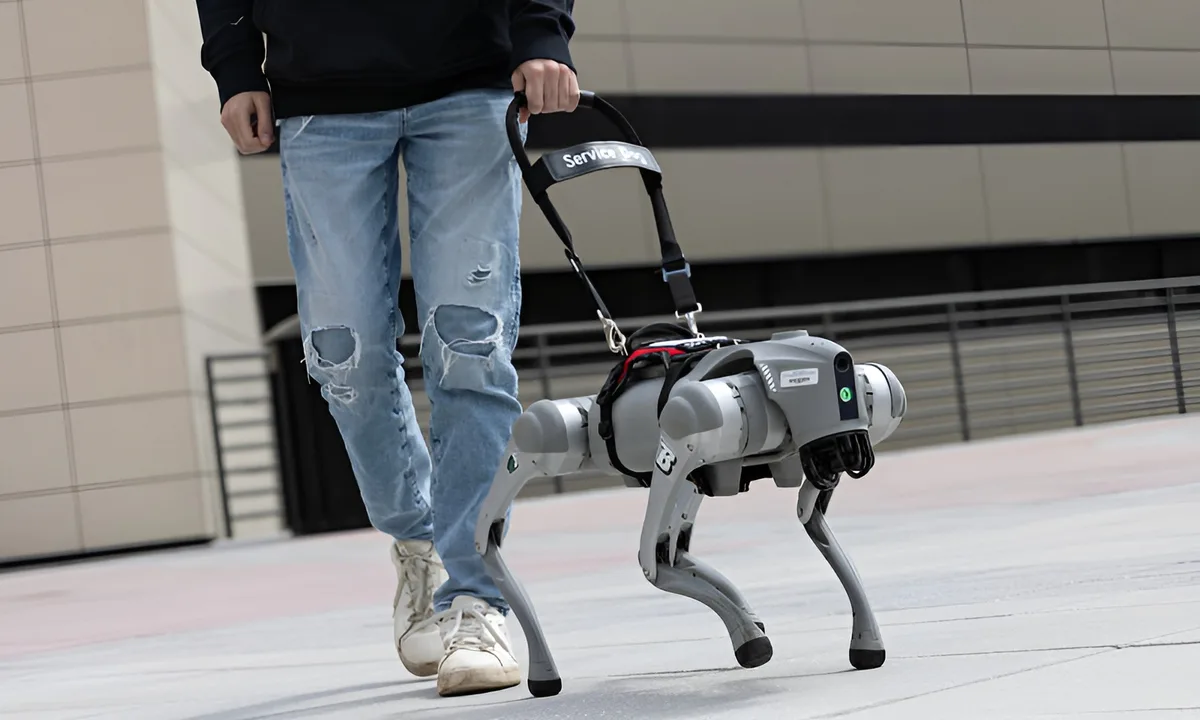
Robotic guide dogs have been explored before, but a new project is taking the concept further by adding conversational intelligence. Researchers at Binghamton University have developed an AI-powered robot designed to assist visually impaired users with indoor navigation while also describing the environment in real time.
The system uses voice interaction supported by a large language model, allowing it to respond more naturally than traditional assistive devices. Instead of following basic commands, the robot can explain route options, estimate travel times and provide spoken updates during movement.
As users travel, the robot describes surroundings such as corridors or obstacles, helping build a clearer sense of space. This added layer of feedback is intended to improve awareness rather than simply guiding from one location to another.
Early testing involved a small group of visually impaired participants navigating a complex indoor setting. Feedback indicated that users valued both the route explanations and the ongoing narration, suggesting the combination made navigation feel more controlled and informative.
The project highlights how conversational AI could expand the role of assistive technology beyond simple navigation tools.
Featured photo by Jonathan Cohen from Binghamton University.