Will Chinese Owned Motorola Be Able To Seriously Take On Samsung?
 David Richards
12 Jan 2026
David Richards
12 Jan 2026
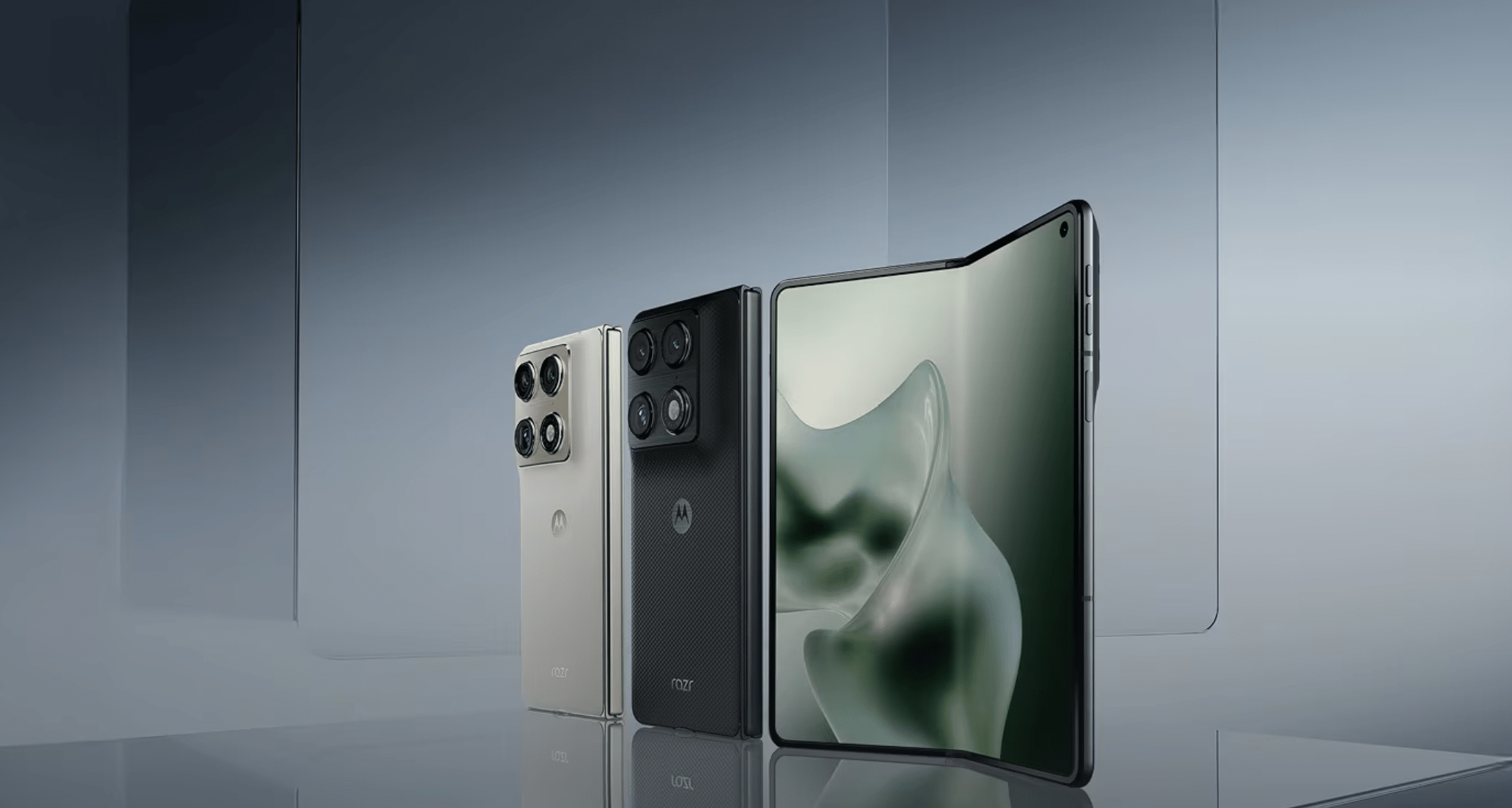
New Motorola Razr Fold
Last week at CES, Chines brand Motorola watched the global smartphone battlefield shift rapidly. Samsung took centre stage by parading its triple-screen Galaxy Fold, to attendees, while ASUS confirmed its exit from the gaming mobile phone market altogether. For Motorola, the show also marked an important moment, as the company quietly previewed what appeared to be a near-final version of its next Razr Fold — a signal that it intends to compete more aggressively in the premium foldable space with multiple model devices.
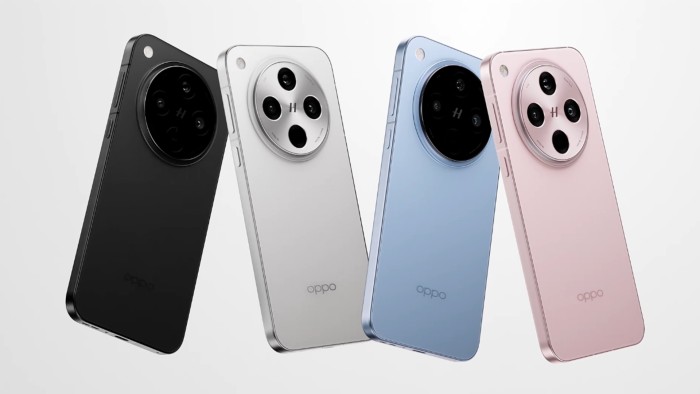
Oppo Smartphones
Behind the scenes, structural changes among rivals underscored how competitive the market has become. BBK Electronics, the Chinese conglomerate that owns OPPO, announced a restructuring of its smartphone portfolio, bringing Realme back under the OPPO banner as it sharpens its focus on taking on Samsung and Apple globally.
The move is designed to streamline operations and reduce costs, particularly as OPPO continues to expand its presence in markets such as Australia.
Motorola is also closely watching Xiaomi, which has recently established operations in Australia. Xiaomi’s arrival adds further pressure to an already crowded Android market and increases competition for both Samsung and Motorola at the carrier and retail level.
While BBK Electronics has yet to confirm whether it will relaunch Realme in Australia following its earlier failure, the growing footprint of Chinese smartphone brands is widely seen as a direct challenge to Samsung’s dominance. Motorola management has been upfront about its intentions, telling ChannelNews that it already has a plan in place to target Samsung’s market share in Australia as Motorola pushes further into the premium segment.
“They have the most to lose,” Motorola Mobility management said, referring to Samsung’s current market position.
New General Manager at Motorola Australia Praveena Raman (seen below) has not said why she chose to ban the distribution of information about the new Motorola premium smartphones to Australian journalists including those attending CES.
The Company also tried to stop Australian journalists getting a hands on with device despite journalists from multiple Countries being given access to both press kits and hands on.
The move was not seen as a good one ahead of Motorola’s push into the premium market with some saying she got poor advice from Zeno their Edelman owned PR Company.
Motorola management at CES acknowledges, however, that the fight is uneven. Samsung enjoys unmatched brand clout and deeply entrenched relationships with mobile carriers. Motorola has also lagged behind both Samsung and Apple in marketing investment in Australia, a gap that has limited brand visibility despite competitive hardware.
Industry analysts at CES warned that the broader smartphone market is expected to soften in 2026, adding another layer of difficulty for all manufacturers. Samsung, despite its scale and brand strength, is already feeling margin pressure. Unlike Motorola, Samsung benefits from manufacturing many of its own components, a factor that has historically boosted profitability.
Even so, Samsung’s mobile business is projected to deliver lower-than-expected fourth-quarter profits. Brokerage estimates from Meritz Securities, Daishin Securities and SK Securities suggest Samsung’s mobile experience (MX) and networks divisions will post a combined operating profit of between US$960 million and US$1.23 billion for Q4 2025 — a notable decline from the US$1.45 billion recorded in Q4 2024.
This downturn highlights an industry-wide problem Motorola is also preparing for: rising component costs. Memory pricing, in particular, has surged sharply. DRAMeXchange reports that the average contract price for DDR4 8Gb DRAM climbed to US$9.30 in December 2025, up from just US$1.35 a year earlier — the highest level since tracking began in 2016. The shift of capacity toward high-bandwidth memory for AI servers is squeezing smartphone manufacturers across the board.
Samsung’s own shipment volumes reflect a cooling cycle, with Q4 smartphone shipments estimated at 59 million units, down 3–4% quarter-on-quarter as momentum slowed for the Galaxy Z Fold7 and Flip7. Still, strong demand earlier in the year for the Galaxy S25 and Z Fold7 drove solid full-year results, with operating profit for Samsung’s MX and networks divisions expected to rise 24.5% year-on-year to US$9.07 billion.
It is precisely this premium success that Chinese Company Motorola that is owned by Lenovo now sees as an opportunity.
With Samsung facing unprecedented cost pressures and a potential pricing dilemma ahead of the Galaxy S26 launch, Motorola believes there is room to challenge incumbents with competitively priced premium devices.
At CES 2026, Samsung co-CEO Roh Tae-moon warned that rising component costs would inevitably affect pricing. Yet reports suggest Samsung may be forced to freeze prices under competitive pressure from Apple .
For Chinese brand Motorola Mobility, who has spent close to a decade flogging cheap phones in Australia, the message is clear: as the market tightens and costs rise, even the strongest players are vulnerable — and that creates an opening the company is trying to exploit.
ChannelNews has been told that Motorola is looking at a launch in Australia ahead of the February launch of Samsung’s new Galaxy S25 Ultra and related models.