Vapour-Chamber Cooling Belatedly Embraced By Apple
 Nigel Bowen
10 Sep 2025
Nigel Bowen
10 Sep 2025

With the recent release of the iPhone 17 Pro and Pro Max, Apple has finally jumped into the vapour-chamber cooling game.
It’s a long-overdue move, given Android flagships have relied on this tech for years.
Vapour-chamber cooling, first adopted in high-performance PCs more than a decade ago (and earlier in aerospace and defence systems), uses a phase-change cycle.
A vapour chamber is a thin, sealed metal chamber, often made of copper or aluminium, filled with a liquid, usually de-ionised water, that absorbs heat by vapourising it. The vapour is then transported across the chamber, where it condenses.
That process continues to play out, which cools the device.
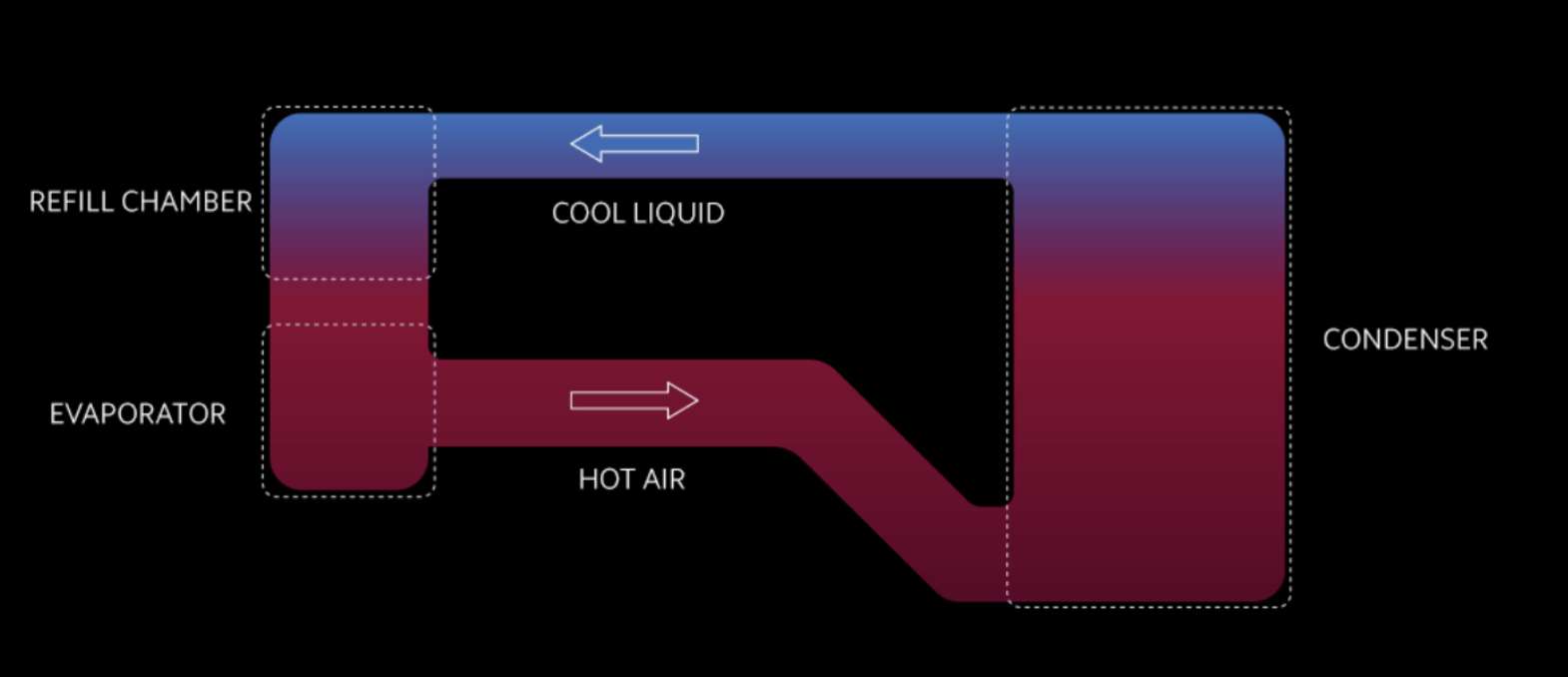
Devices are cooled through a modern-day version of steam power
The more innovative phone manufacturers now pack these vapour chambers into ultra-thin layers, which are sometimes just a millimetre thick, to wick away heat from powerful processors.
Vapour chambers are often combined with graphite layers, copper heat sinks, or even active fans to boost performance.
Vapour chamber technology isn’t standing still, any more than the other technologies used in smartphones are.
For instance, Xiaomi’s experimental ‘Loop LiquidCool’ vapour chamber uses microvalves to expand condensation surface area.
That noted, cost and complexity remain hurdles. Vapour chambers remain relatively pricey, which is why manufacturers have hesitated to include them in budget or even mid-range phones.
Premium phones are another matter.
Samsung has steadily scaled up its use of vapour chambers, with the Galaxy S23 series introducing larger units.
Reports suggest the Galaxy S25 Ultra now boasts significantly bigger chambers than its predecessors, though exact figures remain unverified.
Gaming-centric smartphones have gone even further.
Asus’s ROG Phone line, Nubia’s RedMagic range and Vivo’s flagship models all boast advanced vapour-chamber setups. Ones that combine multi-layer systems with active fans.
Even some budget-tier brands are now joining the party.
For instance, the Infinix GT 30 Pro, a mid-tier gaming phone, is reported to feature a sophisticated six-layer vapour-chamber cooling system.
With Apple’s belated adoption, vapour-chamber cooling is now firmly mainstream.
It’s becoming standard kit in premium smartphones and is steadily moving downmarket.
Expect further vapour chamber advances as manufacturers chase thinner designs and sustained peak performance.