The Big Audio Sell Off: How China Is Quietly Buying the World’s Western Sound Brands
 David Richards
04 May 2026
David Richards
04 May 2026
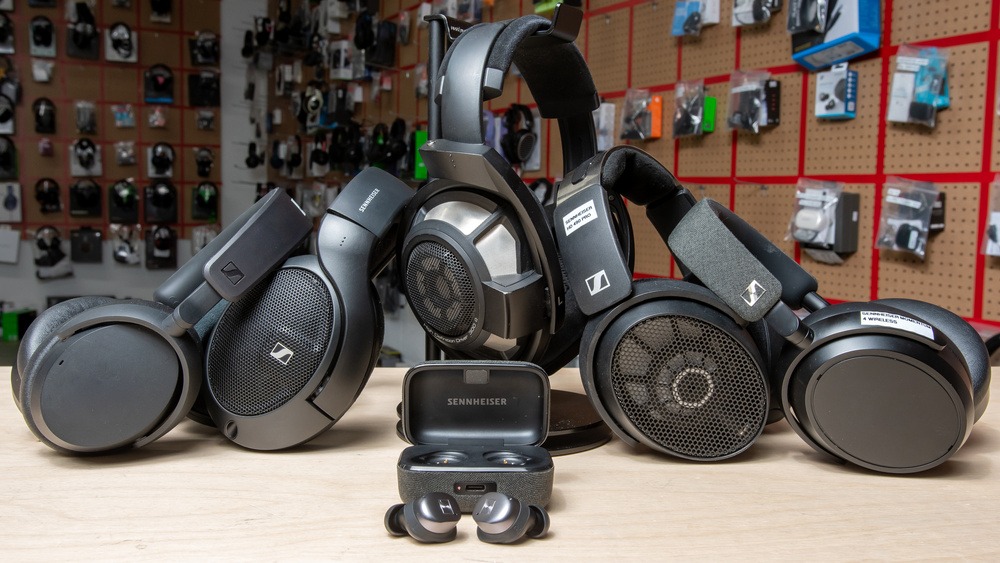
From KEF to Beyerdynamic, KEF to Dynaudio, the West’s most storied hi-fi names are falling into Chinese hands.
This is the story of who’s buying, why they’re selling, and what it means for the future of audio.
A Century of Craftsmanship, a Single Transaction
On the morning of June 5, 2025, a transaction was completed in the German city of Heilbronn that would have been unthinkable to the engineers who first handcrafted headphones there more than a century ago.
Beyerdynamic — a brand synonymous with German precision, a company that had remained in family hands since its founding — was sold to Cosonic Intelligent Technologies, a Chinese electronics manufacturer headquartered in Shenzhen.
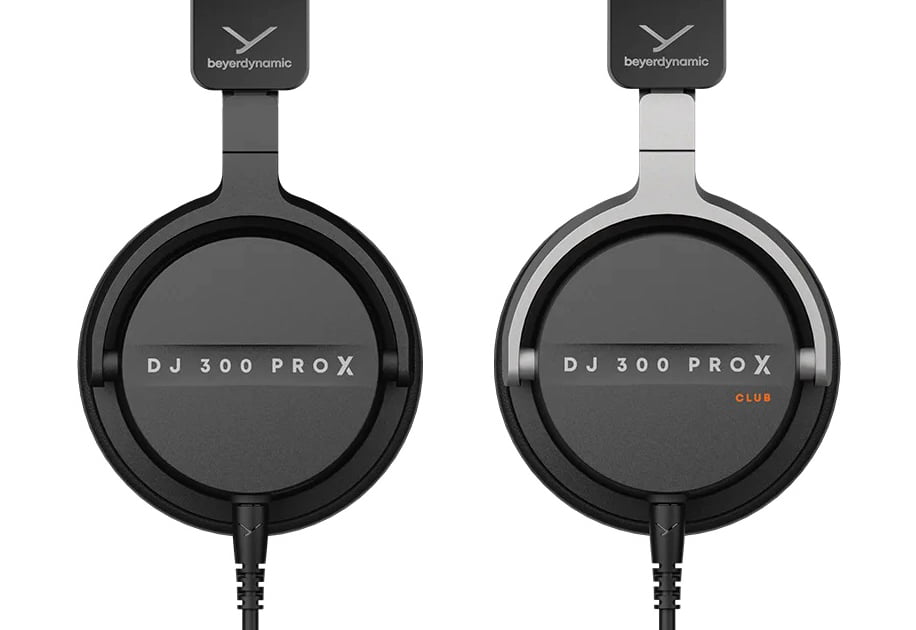
The reported price: approximately A$200 million.
The buyer: a company most consumers have never heard of, despite the fact that it manufactures headphones and electronics for some of the world’s biggest names, Philips, JBL, Beats, Audio Technica, products that fill the shelves of retailers like JB Hi-Fi every day.
Cosonic itself is fully owned by Jiahe Intelligent Technology Co., Ltd., a company listed on the Shenzhen Stock Exchange, making Jiahe the ultimate power behind the acquisition with Cosonic acting as the holding vehicle.
In a single stroke, one of the last great independent German audio houses passed from the hands of the family that built it into the portfolio of a Chinese electronics conglomerate.
Beyerdynamic’s leadership moved quickly to reassure its customers.
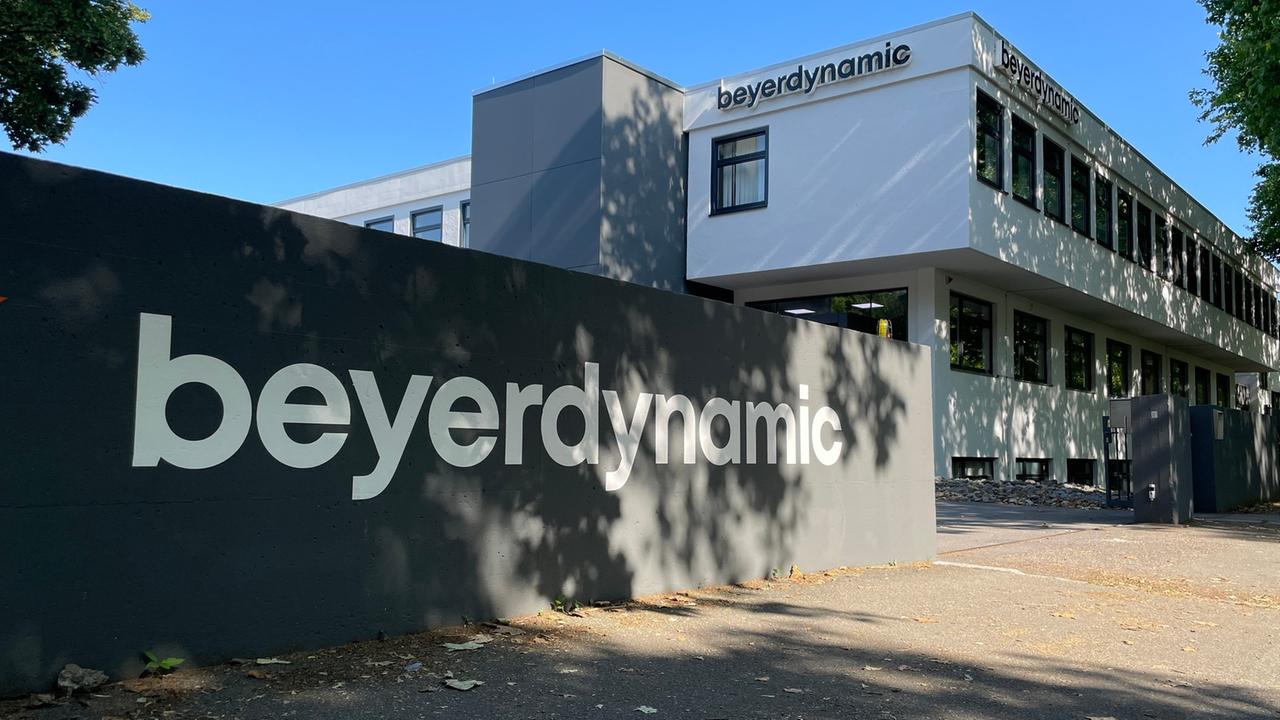
The Heilbronn production facility, where 85% of the company’s headphones and microphones are still handcrafted, would remain central to operations, they said.
The “Handmade in Heilbronn” designation — a mark of pride and a powerful marketing asset, would be preserved.
Cosonic, for its part, appears to understand the commercial value of that heritage.
But the question hanging over the industry is the same one that has been asked every time a beloved Western audio brand has changed hands in recent years: for how long?
A Pattern Decades in the Making
The sale of Beyerdynamic was not an isolated event.
It was the latest chapter in a story that has been unfolding, largely beneath the radar of mainstream media, for more than three decades.
In 1992, Gold Peak, a Hong Kong-based battery manufacturer, acquired British speaker icons KEF and Celestion.
To many in the industry, it seemed an unlikely match: a company best known for powering portable radios buying one of Britain’s most respected loudspeaker brands. But it was an early signal of what was to come.
Five years later, the International Audio Group IAG, was founded by twin brothers Michael and Bernard Chang (pictured below).

Their company, now headquartered in Shenzhen, became one of the most aggressive consolidators in the global audio industry. Through IAG, the Changs have assembled an extraordinary portfolio of heritage Western names: Wharfedale, Quad Electroacoustics, Leak, Mission, Audiolab, Tag McLaren, Castle Acoustics, and even the celebrated Japanese marque Luxman.
Each brand had been struggling under the weight of Western manufacturing costs and a rapidly fragmenting market. IAG provided what they could not provide themselves: Chinese manufacturing scale, global supply chain efficiency, and patient capital.
Today, IAG is one of the most powerful forces in global hi-fi. Its brands are sold in dozens of countries. Its factories in China produce products that carry British and European pedigrees. And it has done so largely without public controversy, because the brands it acquired have, by most accounts, maintained the quality that made them famous.
The model has since been widely replicated.
The Sennheiser Question
Perhaps no pending transaction has generated more anxiety in audio circles than the potential sale of Sennheiser’s consumer division.
The story of how the German headphone giant’s consumer products ended up on the auction block is itself a cautionary tale.
In 2021, Sonova Holding AG, a Swiss medical company specialising in hearing aids and cochlear implants, acquired Sennheiser’s consumer division for approximately A$300 million. The deal included around 600 employees and production facilities in Germany, Ireland, Romania, and the United States.
The logic, at the time, appeared to make sense: both companies operated in the audio space, and there was hope that Sonova’s expertise in acoustic technology could be leveraged across hearing care and consumer electronics. The reality proved far more complicated.
Then, out of the blue, on March 23, 2026, Sonova announced its intention to divest the consumer Sennheiser business, just four years after buying it. The company acknowledged the challenges it had encountered, noting the limited overlap between consumer audio and hearing care in terms of marketing channels.
Customers browsing for true wireless headphones, it turned out, showed little interest in hearing aids. The consumer audio market had also been brutally competitive, with margins compressed by Chinese competitors offering premium-seeming products at dramatically lower price points.
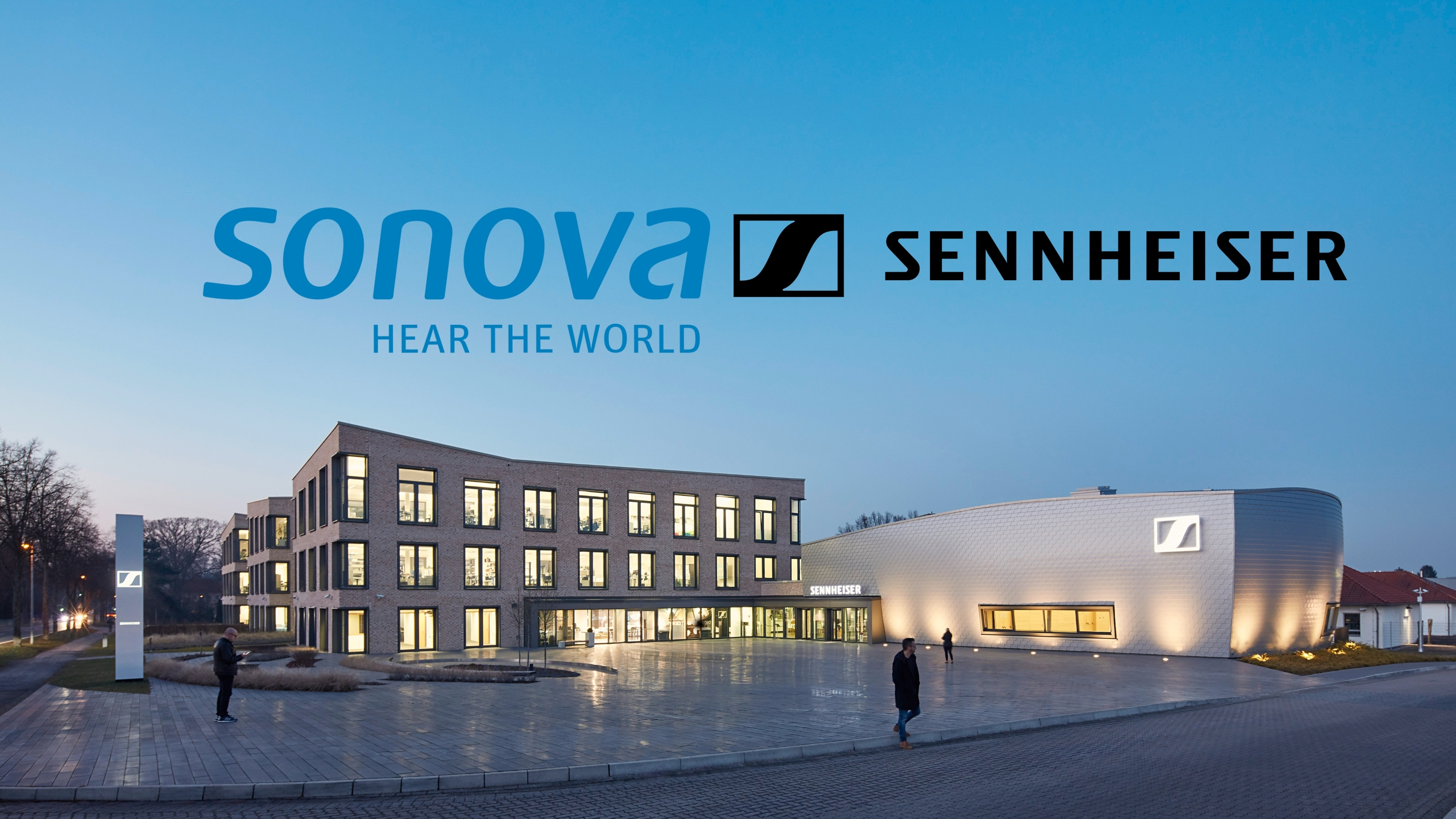
Now, the Sennheiser consumer brand, one of the most recognised names in audio history, is effectively for sale, and Chinese buyers are believed to be among those circling.
The Sennheiser family has retained control of the professional microphones and studio gear divisions, and any transfer of the consumer licence would require their approval.
But if that approval is granted, another legendary Western name could be absorbed into the expanding portfolio of Chinese audio ownership.
The Scale of Chinese Manufacturing: A Force Without Precedent
To understand why Chinese companies are so well-positioned to acquire Western audio brands, it is necessary to understand the sheer scale of China’s audio manufacturing infrastructure.
Some industry analysts claim that as many as 80% of all audio brands today are manufactured in China — a figure that is contested, but which points to a genuine and dramatic shift in where the world’s audio products are physically made. The Pearl River and Yangtze River Delta regions have become the global centres of audio component manufacturing, producing everything from precision speaker drivers to wireless earbuds to the amplifier boards that end up inside products carrying European and American logos.
Enping, a single city in Guangdong Province, has been officially designated China’s “City of Microphones.” It is home to more than 400 audio manufacturers. The concentration of expertise, tooling, and supply chain infrastructure in that single municipality exceeds what most Western countries can claim for their entire audio industries.
The consequences of this are felt throughout the global supply chain. As Headphonesty has reported, drivers, amplifier boards, and capacitors from companies like Cosonic regularly travel through global supply chains before emerging in products bearing Western brand names. The “Made in Germany” or “Designed in Britain” label on a box may accurately describe where a product was engineered or assembled — but the components inside frequently originated in China.
GoerTek, one of the largest acoustic component manufacturers in the world, employs approximately 37,000 people building acoustic hardware for phones and tablets. In December 2014, it acquired Dynaudio, the 37-year-old Danish loudspeaker company that once held a prominent presence among Australian retailers. The acquisition was a harbinger of what was coming for Danish audio more broadly.
The Danish Connection
Denmark has produced an outsized number of globally recognised audio brands relative to its population of six million people. Dynaudio, Jamo, B&O — Danish engineering and design sensibility have long commanded premium prices in international markets.
But Danish audio heritage has proven no more immune to Chinese acquisition than its British or German counterparts.
Jamo, the Danish speaker brand founded in 1968, passed to Cinemaster and Rayleigh Lab in 2024. Dynaudio, as noted, was acquired by GoerTek a decade earlier.

The pattern in each case is strikingly consistent: a heritage brand with strong consumer recognition but financial pressures finds a Chinese buyer willing to pay a premium for the brand equity, and, crucially, willing to maintain the production facilities and engineering teams that give the brand its credibility. R&D stays in Denmark, Germany, or Britain. Manufacturing benefits from Chinese supply chain scale and cost structures. The brand lives on, and consumers, for now, at least, may barely notice the change.
Beyond Audio: The Jeweller Who Bought a Hi-Fi Legend
Not every acquisition has followed the classic Chinese audio manufacturer playbook. The acquisition of MBL, the German high-end audio brand whose omnidirectional speakers are regarded as among the finest in the world, came from a direction almost no one anticipated.
Chow Tai Seng, a company that holds a 40-50% share of the global lab-grown diamond market, acquired MBL after the revered German manufacturer entered insolvency. Its subsidiary, United Audio, had already been serving as MBL’s Chinese distributor before the deal closed, giving it intimate knowledge of the brand’s value and customer base. The company reportedly considered, and passed on, acquiring two additional French audio brands that had recently encountered financial difficulties.
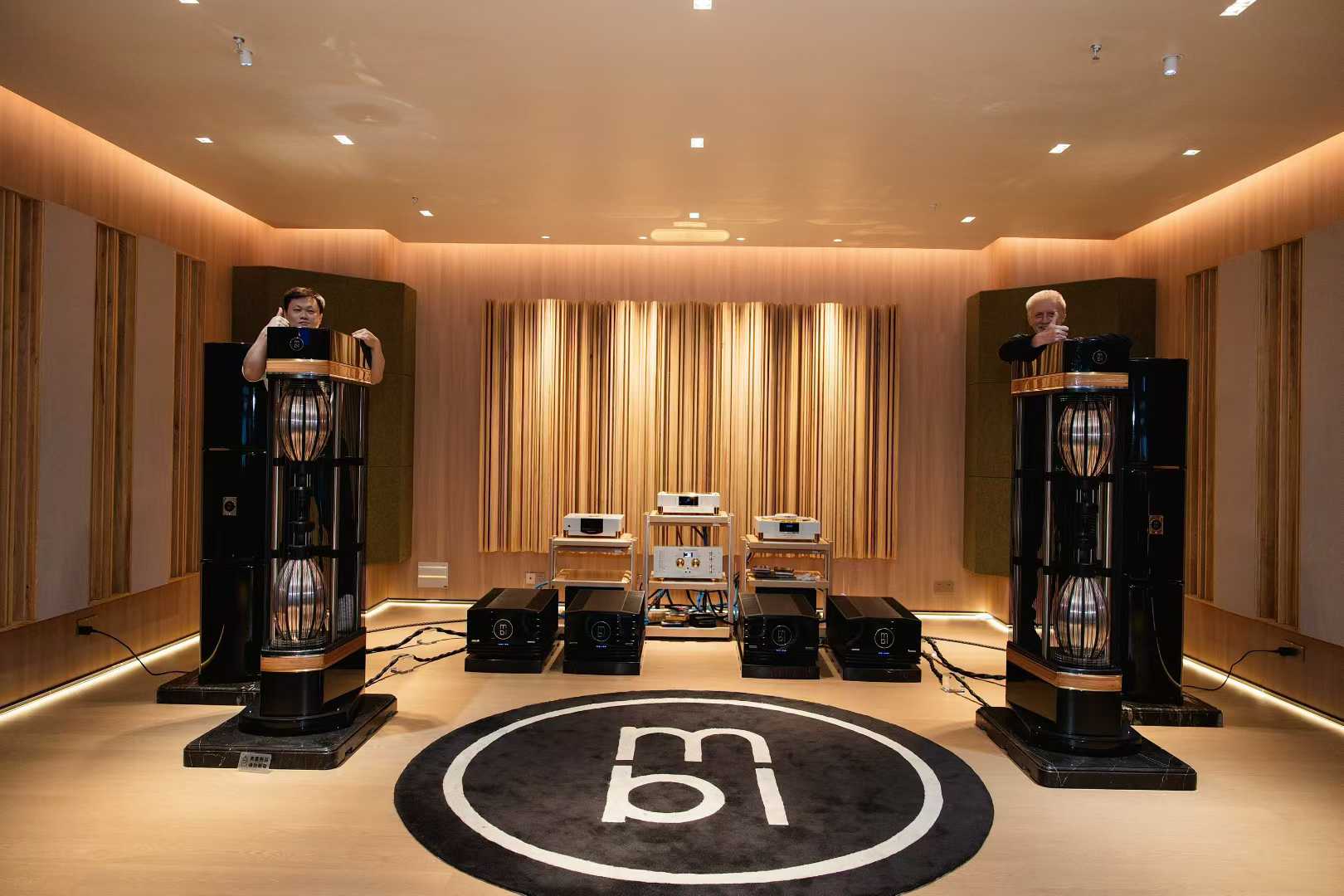
The MBL deal illustrates a broader truth about what is happening in premium audio: the buyers are not always audio companies. Chinese capital, in many forms, is flowing into Western audio brands, because the brands themselves carry value that far exceeds what their struggling balance sheets might suggest.
The China Hi-Fi Show Circuit: A New Power Centre
The shifting ownership of Western audio brands has been accompanied by a parallel shift in where the industry’s most important conversations are taking place.
For decades, the Munich High End show was the undisputed centre of the global hi-fi universe. International brands launched products there; distributors made deals there; the press gathered there. That monopoly is now being challenged, from the east.

China now hosts a circuit of audio exhibitions that is drawing international brands and distributors in growing numbers. The Shanghai International Audio & Video Show, established in 1993, has grown into a comprehensive industry exposition with a strong reputation across Asia and beyond. The Shanghai Top Audio Show, widely considered China’s premier audio exhibition, draws over 200 exhibitors to 120 rooms at the Oriental Riverside Hotel each July, most converted into immersive listening spaces. The Shenzhen International Audio Show, held each August, focuses heavily on portable audio and draws brands including HIFIMAN, FiiO, Moondrop, SMSL, Cayin, Sony, and Stax.
The Guangzhou exhibition alone attracts approximately 1,000 brands,,with Chinese brands accounting for 30-40% of exhibitors. European and American brands still, by most accounts, lead in prestige. But the ground is shifting.
“Chinese brands are already capable of competing with the best European and American brands,” observers at these events increasingly note. The organisers of Chinese shows are now marketing directly against Munich, positioning their events not as regional alternatives but as genuine global rivals.