Snapdragon X2 Elite Benchmarks Hint At A Tighter Race With Apple Silicon
 April Ossington
10 Feb 2026
April Ossington
10 Feb 2026
Qualcomm’s next-generation Snapdragon X2 Elite laptops are still some time away from store shelves, but early performance figures are beginning to paint a clearer picture of where the chip stands against Apple’s latest silicon. Fresh benchmark data suggests Qualcomm may be narrowing the gap, particularly in multi-core workloads, even if Apple continues to dominate in single-core speed.
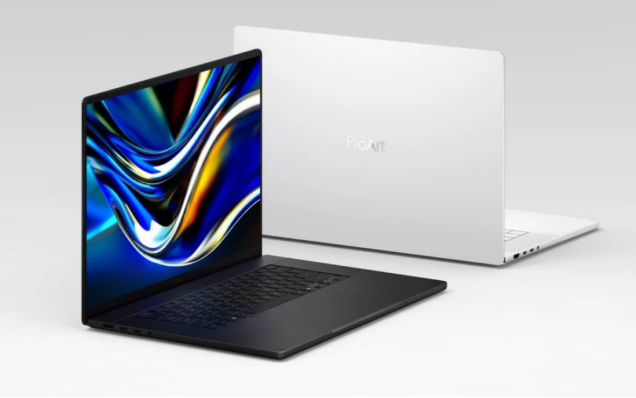
The results come from preliminary testing carried out on a pre-production Asus Zenbook, with benchmarks shared by YouTube channel Hardware Canucks. Asus provided access to the machine so a series of processor and productivity tests could be run on a system powered by the Snapdragon X2 Elite.
It is worth stressing that this hardware was far from final. The laptop was running early firmware and unfinished drivers, and the silicon itself had not yet reached its final form. As a result, the figures should be viewed as an early snapshot rather than a definitive verdict on the chip’s real-world performance.
Even with those caveats, the numbers are eye-catching. The Snapdragon X2 Elite was tested at a 31W power level, only 5W higher than Apple’s M5, which was limited to 26W for the purposes of comparison. Despite the modest difference, Qualcomm’s new processor managed to outperform Apple’s chip in three out of five benchmarks, while delivering a substantial uplift over the first-generation Snapdragon X Elite.
In creative workloads such as Blender and HandBrake, the X2 Elite completed tasks more quickly than the M5, highlighting its strength in sustained, multi-threaded scenarios. Apple, however, continues to hold a clear advantage when it comes to single-core performance. In Cinebench 2024’s single-core test, the M5 achieved a score of 200, compared with 146 for the Snapdragon X2 Elite, making Apple’s chip roughly 37 per cent faster in that specific test.
The balance shifts in the multi-core results. Here, Qualcomm’s processor posted a score of 1,432, comfortably ahead of the M5’s 1,153 and far beyond what the original Snapdragon X Elite could deliver. This points to meaningful progress in Qualcomm’s PC ambitions, particularly for workloads that can take advantage of many cores.
Performance, however, is only part of the story. Battery life remains a major unknown, as no runtime testing was shared alongside the benchmarks. Qualcomm has claimed the X2 Elite offers 43 per cent better efficiency than its predecessor, but until consumer laptops arrive with polished software and final hardware, it remains difficult to judge how those gains will translate into everyday use.