Smartphone Slump Hits High-Margin Accessory Sales As Global Shipments Fall 20%
 David Richards
13 Oct 2026
David Richards
13 Oct 2026
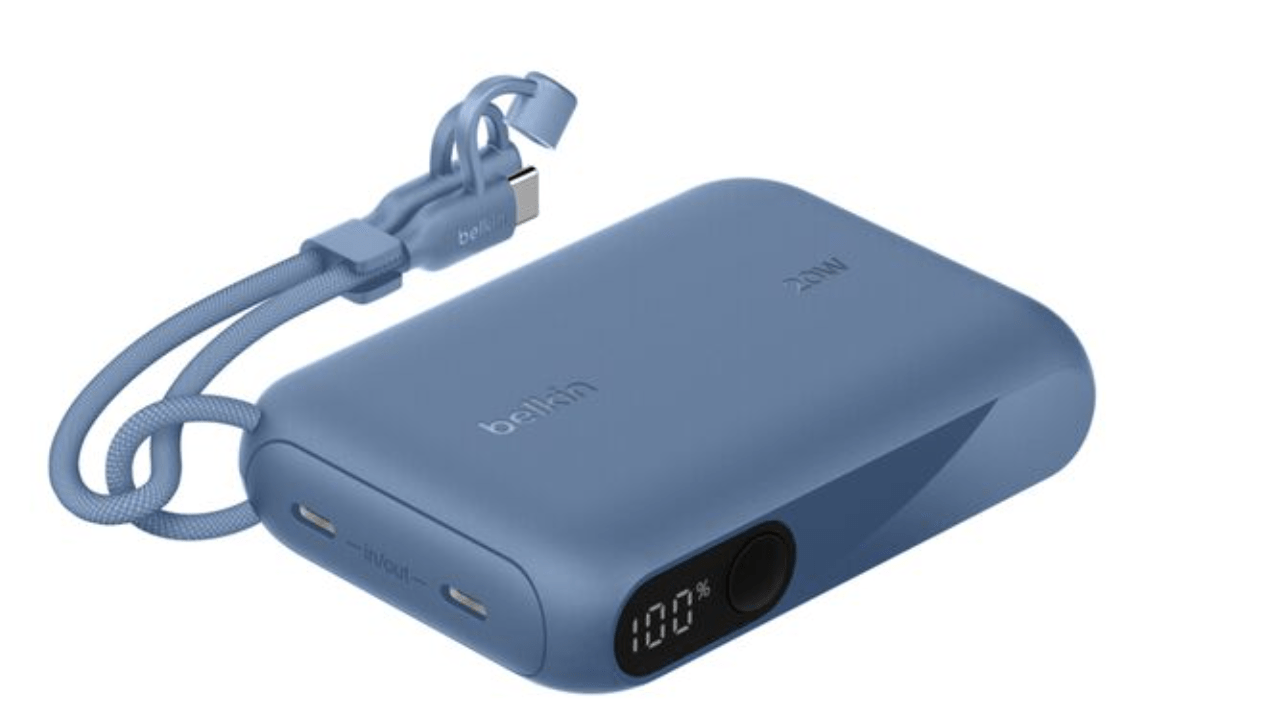
Australian retailers face a double hit to revenue and profit after global smartphone shipments fell 20% in the September quarter, dragging down sales of the cases, screen protectors and chargers that deliver their richest margins.
Counterpoint Research this week reported that global smartphone shipments fell 20% in Q3 2026 compared with Q3 2025, the lowest third-quarter level since 2012, according to preliminary estimates from its Market Monitor service.
The research firm blamed the collapse largely on soaring DRAM and NAND memory costs, component shortages and higher retail prices.
Counterpoint also pointed out that smartphone retail prices have risen 20% so far in 2026.
For JB Hi-Fi, Harvey Norman, The Good Guys and Officeworks, along with carriers Telstra, Optus and Vodafone, the fallout extends well beyond handsets.
Accessories Carry The Margin
Retailers ChannelNews spoke to said smartphones are not simply a major hardware category but the main driver of add-on sales, which deliver far stronger gross margins than the increasingly competitive handset category.
Apple, the market’s biggest draw, typically gives retailers margins below 5%, according to retail sources, leaving accessories to do the heavy lifting on profit.
The greatest exposure sits with products tied directly to new models, particularly protective cases and screen protectors.
Research firm Mordor Intelligence estimates protective cases accounted for 26.11% of the global mobile accessories market in 2025.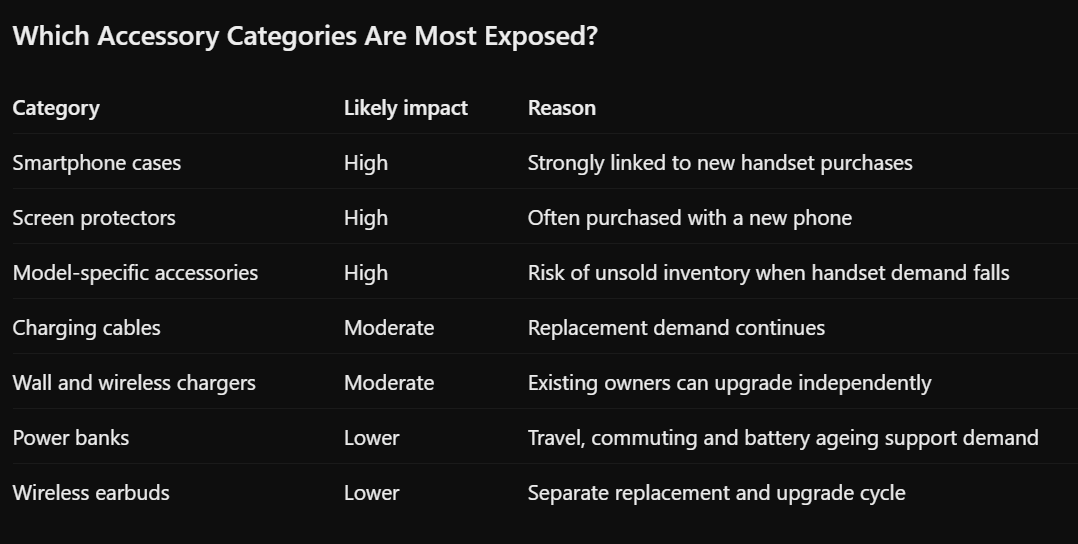
Inventory Risk
Suppliers including Cygnett, Belkin and OtterBox must forecast demand for individual iPhone and Galaxy models months ahead of launch.
If handset shipments fall short, retailers can be left holding cases and screen protectors for models that are not selling in expected volumes, leading to discounting, stock write-downs, reduced reorders and pressure on distributors.
The brands most exposed in Australian retail channels are Cygnett, Belkin, OtterBox, Tech21, PanzerGlass and ZAGG, particularly across cases, screen protection and charging.
There is, however, no public brand-by-brand data yet showing which suppliers have suffered the steepest revenue declines.
Carriers Exposed
Telstra, Optus and Vodafone face an additional problem because handset sales are tied to upgrades, contract renewals and in-store accessory purchases.
Industry insiders said a slower upgrade cycle means fewer chances to sell accessory bundles, insurance, device protection and premium charging gear.
At the same time, online marketplaces are selling cheap accessories direct to consumers, creating two simultaneous pressures: fewer handset-driven sales and lower accessory prices as shoppers trade down.
Australia Holding Up Better
Local data suggests Australia may not follow the global pattern exactly.
Telsyte research published in August found Australian smartphone sales rose 1% in the first half of 2026 to 3.87 million units. However, the firm forecast full-year sales of 8.4 million, down 3%, with the decline concentrated in the second half.
Telsyte also found 56% of smartphones sold in Australia in the first half cost more than A$1,000.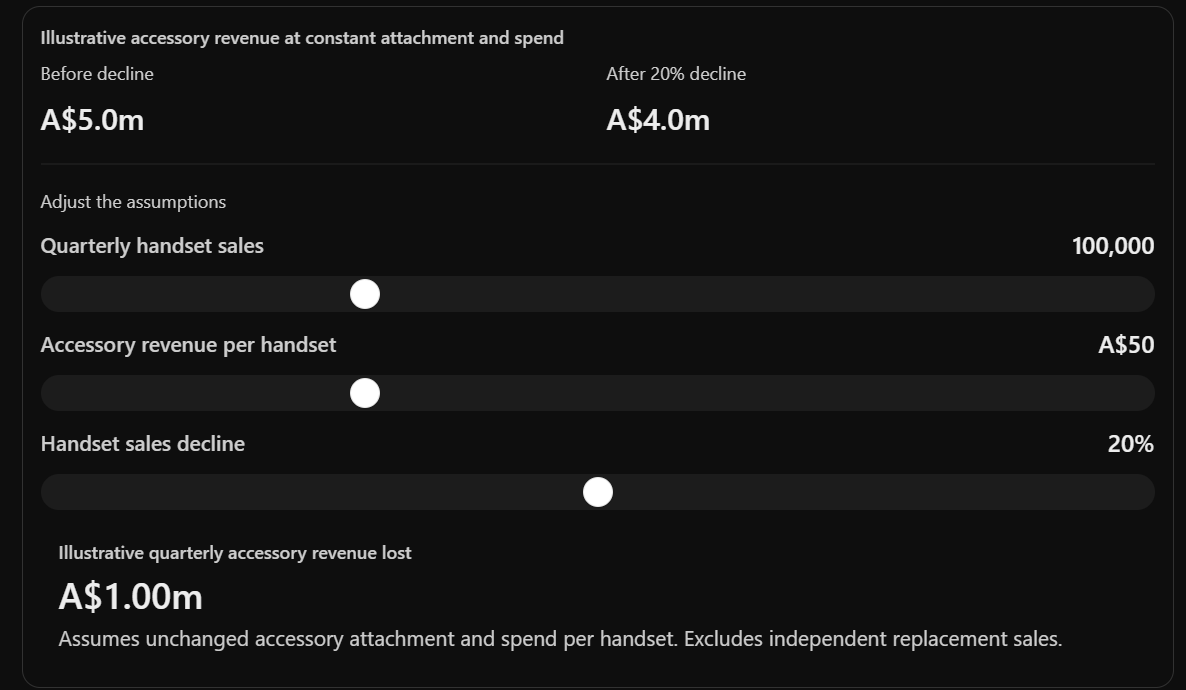
Shift To The Installed Base
The downturn is expected to accelerate a move by suppliers towards products not tied to the latest launch, including power banks, multi-device charging stations, Qi2 wireless chargers and travel accessories.
Consumers holding on to phones for longer may also need replacement cables, chargers, cases and battery support, partly offsetting lost new-handset sales.
Analysts ChannelNews spoke to said the Counterpoint figures are a serious warning for the accessory industry but do not establish that the accessory market itself has collapsed.
The key indicators to watch, they said, are accessory attachment rates, average selling prices, stock write-downs and second-half accessory revenue.