70% of Aussies Trust AI to Manage Smart Homes as Market Set to Top $11 Billion
 Emma Wheaton
12 Oct 2026
Emma Wheaton
12 Oct 2026

Battery storage, rising energy costs and smarter appliances are driving growth as Australian households invest more in connected home technology.
Australia’s smart home market is forecast to exceed $11 billion in 2026, following a surge in demand for household battery storage, energy management systems and connected appliances, according to new research from technology analyst Telsyte.
The Telsyte Australian Smart Home Market Study 2025–2029 found the market more than doubled to $7.7 billion in 2025, largely driven by the Federal Government’s Cheaper Home Batteries Program and the growing drive for households to manage energy costs.
Smart home adoption is also continuing to expand, with 86% of Australian households owning at least one smart home product as of June 2026, up 10 percentage points since 2024.
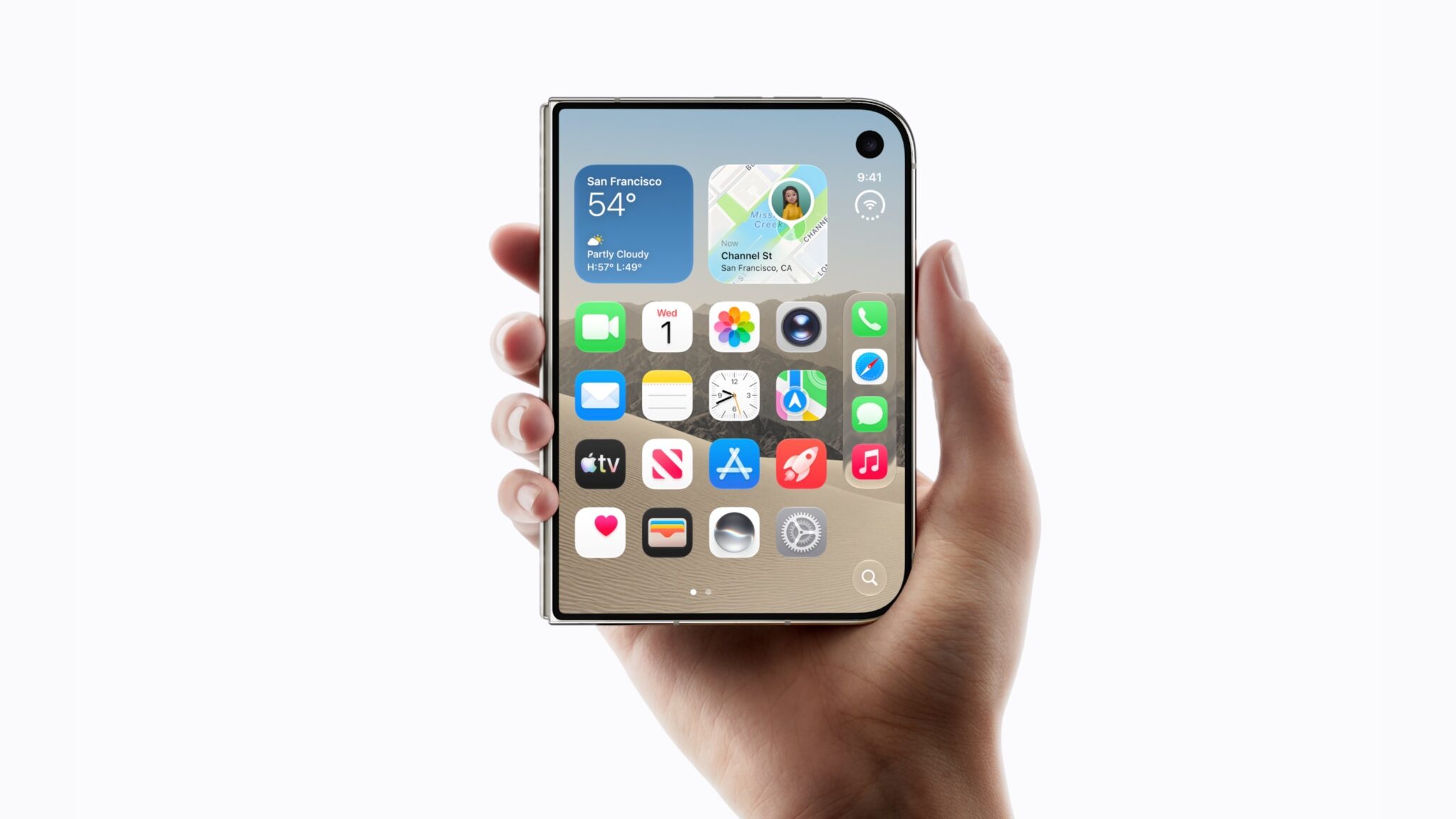
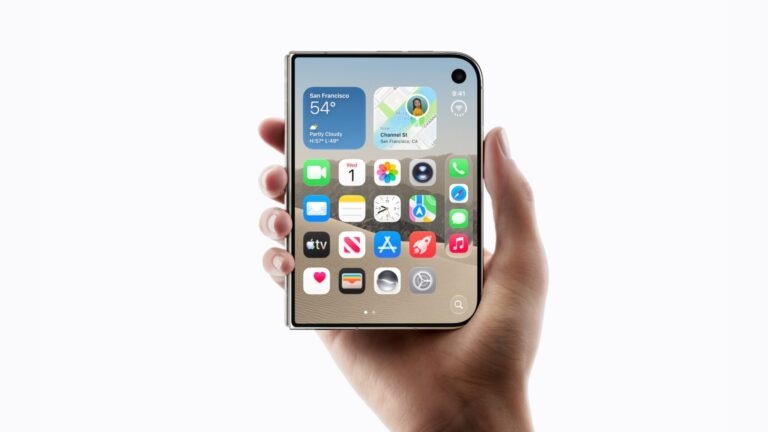
However the launch of a new Apple Home Hub is not necessarily going to work with Foad Fadagh the Managing Director of Telsyte claiming that Apple could well face a series of challenging issues.
He singled out personalisation as just one issue in a home, that in the past has led to problems for Companies such as Google, and Amazon with their “Hey Alexa” devices failing to deliver the personalisation for individuals whether it be music, mood lighting or other automation processes that have to managed.
“Who owns the device and settings” is an issue.
He also singled out past failures and the strength of Apple’s AI offering Siri.
“Siri has improved but the problem is that following the growth of AI people have become less comfortable with technology in the home and their lives”.
“The market for products attached to a home automation environment have become lumpy with past experiences set to be an issue” for Apple and the overall home hub market going forward he claimed.
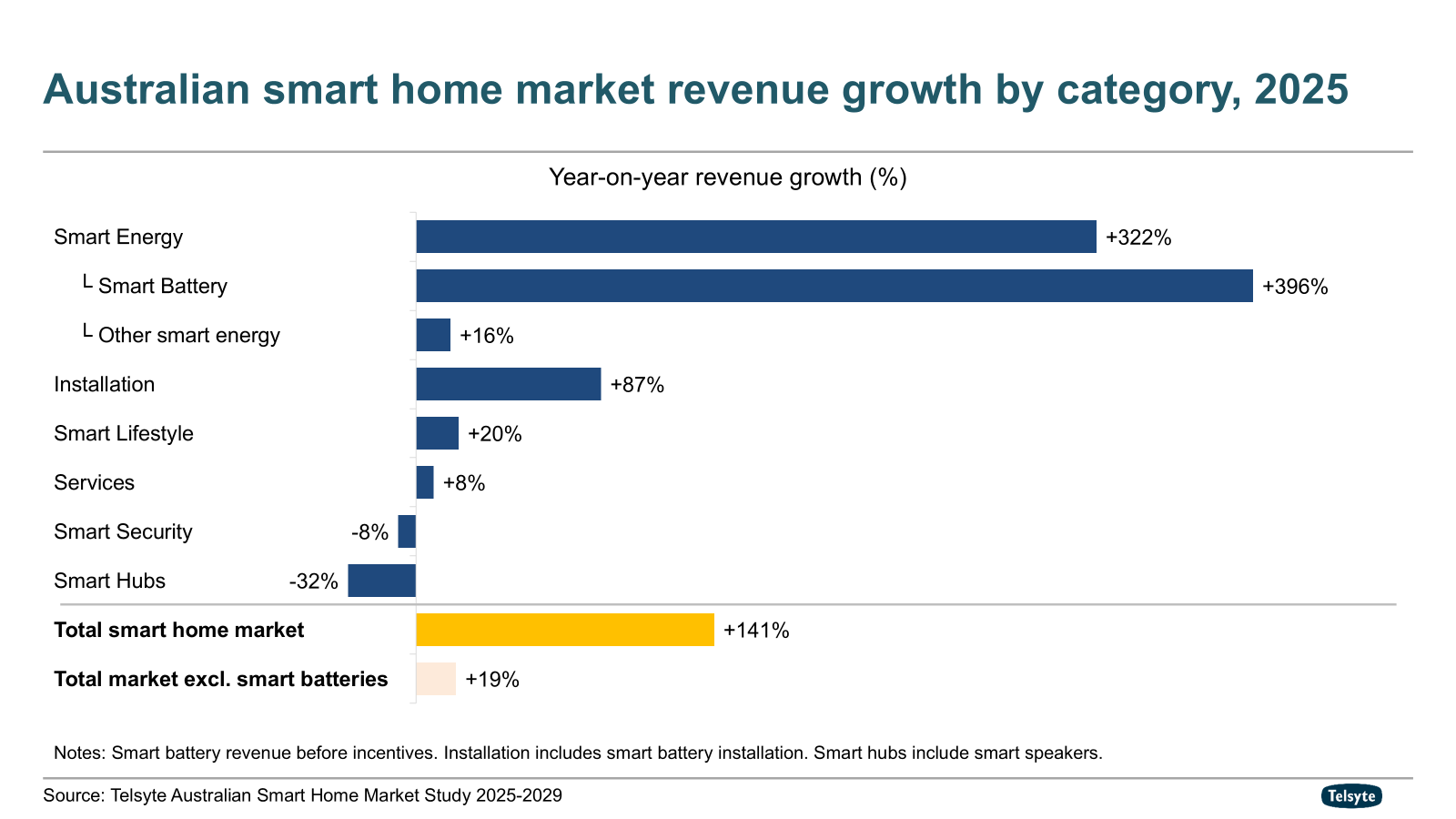
The big growth area in homes is Energy products, smart appliances and security cameras wh to the increase, highlighting the growing role of connected technology in everyday household management.
Battery storage accounted for approximately two-thirds of smart home market revenue in 2025, with battery revenue increasing 396% year-on-year following the introduction of the federal battery incentive program.
Even excluding smart batteries, the market grew by 19% during the year, pointing to a broader demand for connected household products.
Telsyte expects battery storage’s share of the market to peak in 2026 before dropping to just over half by 2029, with changes to the government’s rebate structure expected to influence purchasing patterns.
The research also found that more than a third of households without solar or battery storage were interested in installing the technology, suggesting further growth potential.
Despite cost-of-living pressures, Australians are setting aside more money for smart home technology.
The proportion of households with a dedicated smart home budget increased from 44% to 71% over two years. Among those, the average budget rose by more than $1,300 to more than $3,500 in 2026.
However, 58% of respondents said they felt more financially stretched than a year earlier, and 69% were actively seeking to increase their income or reduce expenses.

Saving money and managing rising costs remained the leading smart home priorities, followed by energy management.
Telsyte forecasts the smart lifestyle segment will grow at a compound annual growth rate of 21% through to 2029, the highest of any smart home category.
The segment includes smart appliances and household robots such as robotic vacuum cleaners, window-cleaning devices and robotic lawn mowers.
As manufacturers expand connected features across cooking, cleaning and climate control, competition is increasingly expected to centre on how well the products work together, rather than their individual device specifications.
However, it remains a challenge, with Telsyte finding that 67% of smart home adopters had experienced difficulty getting devices to work together. Only one in seven Australians knew of Matter, the cross-brand connectivity standard.
The study found 70% of Australians believed AI could manage a smart home better than they could, up from 58% in 2024.
Potential applications include energy optimisation, security monitoring, appliance diagnostics and automated comfort settings.
Nevertheless, more than three in five respondents were uncomfortable with AI making decisions in their homes without their prior knowledge, with similar concerns about systems making mistakes.
Telsyte senior analyst Alvin Lee said consumer confidence would depend on appropriate safeguards.
“Households will hand AI the keys when privacy and security safeguards are in place,” Lee said.
The findings suggest Australia’s smart home market is moving beyond individual connected devices towards integrated systems that combine appliances, energy storage, security and automated household management.