UPDATED: Samsung To Watch Owners: Hand Over Your Health Data For AI Training Or We Delete It
 David Richards
13 Jul 2026
David Richards
13 Jul 2026
After we recently claimed that Samsung Health users are being put under a brutal spotlight, either bow to Samsung’s AI demands or face losing their health data altogether Samsung has responded claiming that wwe were wrong, despite media worldwide picking up on the same issue.
Just days out from the launch of a new Samsung watch and premium smartphone range at the Company’s Galaxy Unpacked event in London on July 22, the South Korean Companyclaims that old data will be kept and not destroyed.
They also claim that AI searching of previous health data is optional and that only data generated via their AI operation will be deleted.
Previously it was claimed that if owners of a Samsung Watch don’t consent to allowing the South Korean Company to access their health records, Samsung will simply delete their history.
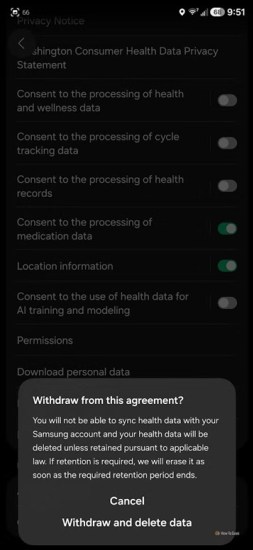
Users opening the Samsung Health app are being confronted with a notice titled “Consent to the Use of Health Data for AI Training and Modelling”.
If owners consent, the global Company will collect their health and wellness data, medication data, health records, and cycle, running and swimming tracking data. Menstrual cycle tracking information is also swept up in the data grab.
Management claim that the health data collected and processed “will be used for AI training and modelling, including human review, to improve Samsung Health, including algorithms to analyse health conditions and our AI features.”
The reference to “human review” means that actual Samsung staff or contractors may be eyeballing data drawn from what is among the most sensitive information a consumer generates.
The Catch If You Say No
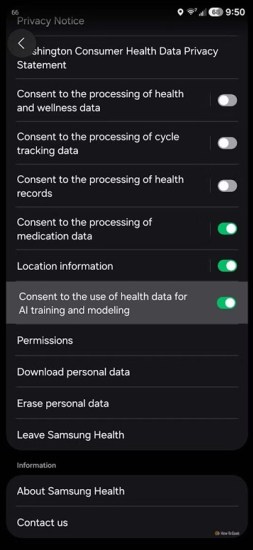
Users who don’t accept the demands of Samsung can withdraw consent by going to Samsung Health settings, then the Privacy menu, and disabling the “Consent to the use of health data for AI training and modeling” option.
As soon as they do, users get a message warning that they won’t be able to sync their health data with their Samsung account and that it will be deleted unless Samsung is required by law to retain it. 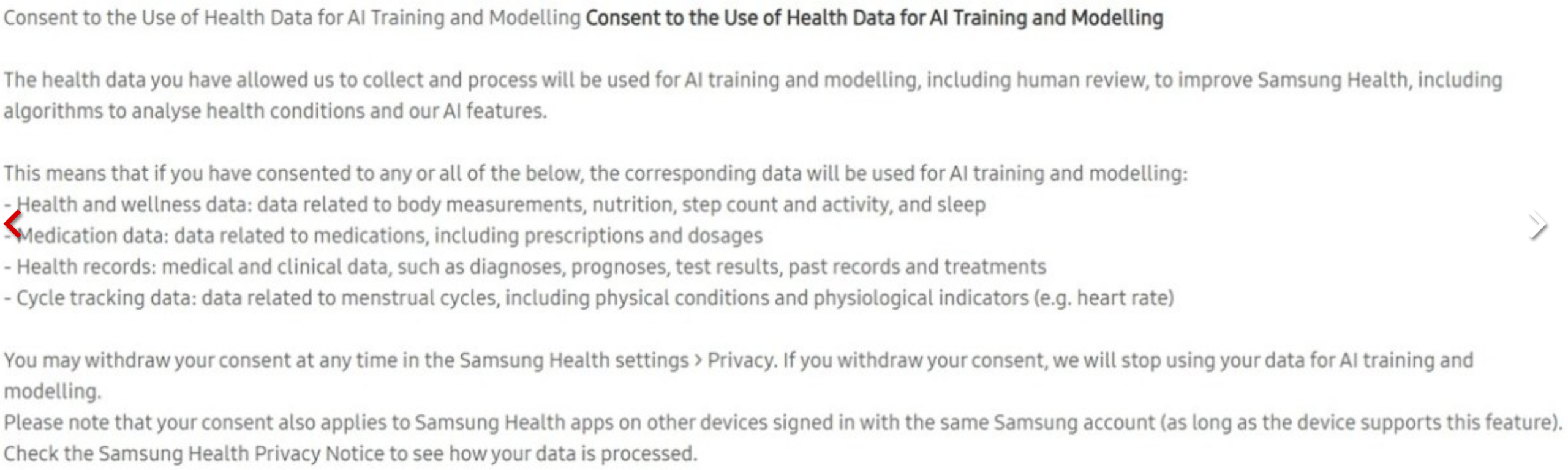
In effect, refusing consent kills the core syncing functionality that makes a Galaxy Watch useful, and wipes years of accumulated fitness and health history in the process.
Timed To A Major Hardware Launch
The timing is no accident. Samsung last month revealed a major Samsung Health update in which AI will recommend workout plans, analyse sleep data for problems, and assess users’ nutritional choices.
Those AI features are set to debut on the new Galaxy Watch 9 series expected at the July 22 Unpacked event in London, alongside the Galaxy Watch Ultra 2, the Galaxy Z Fold 8 and Z Flip 8 foldables, and possibly Samsung’s first smart glasses.
The features are expected to roll out to older wearables over time.
Building those AI coaching features requires vast quantities of real user health data, which is precisely what Samsung is now demanding from its installed base of watch owners.
Not The First Time
This is not the first time Samsung has strong-armed Samsung Health users. In early 2025, European users complained they were forced to accept a “Consent to the processing of health data” notice, including sharing with third parties and transfers to foreign countries, or have all of their data deleted.

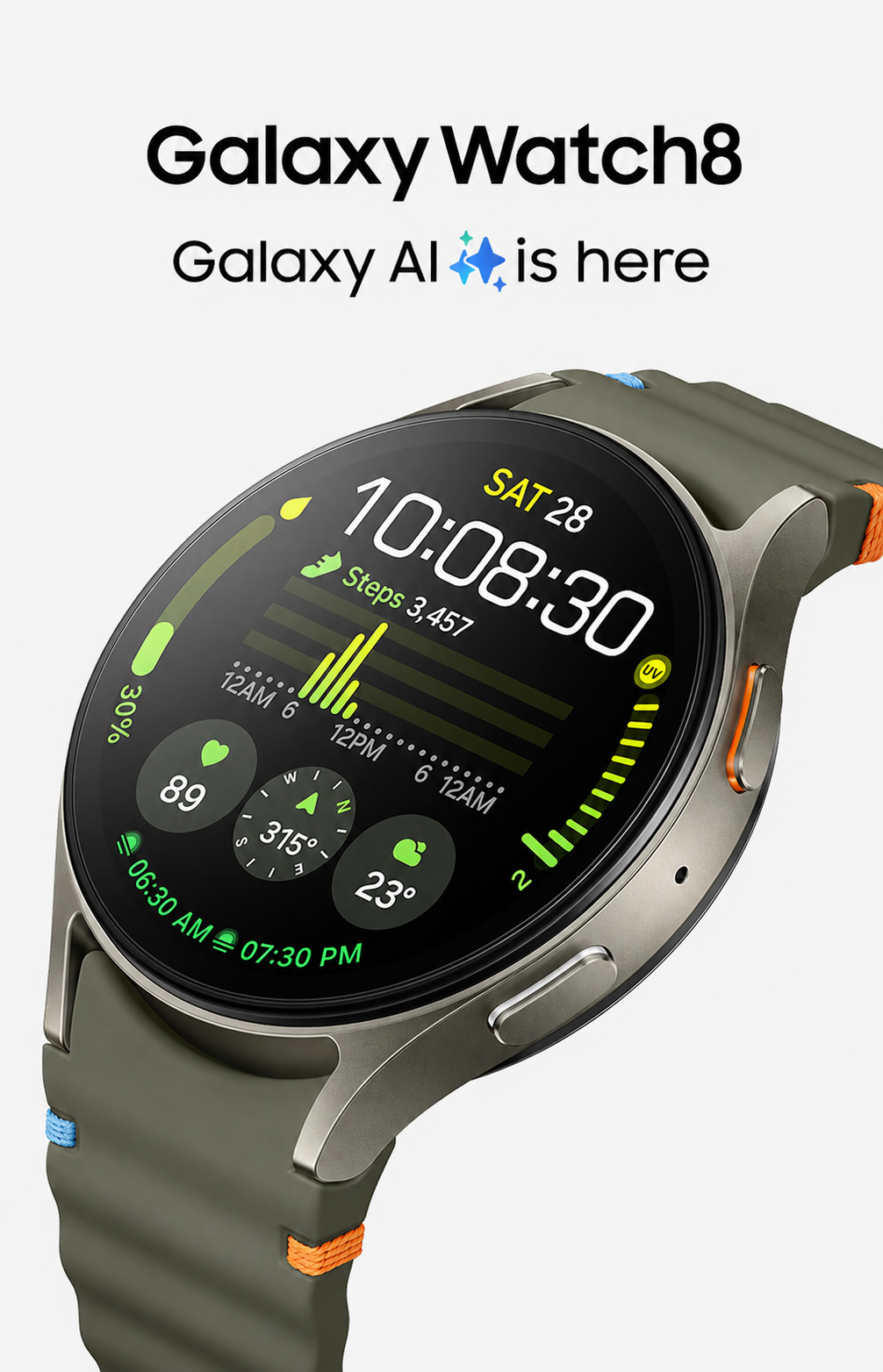
Samsung Galaxy Watch Ultra (Image: Supplied by Samsung)
At the time, users on Samsung’s own community forums claimed the approach breached European GDPR rules, which require that consent for processing sensitive health data be freely given and that users be able to withdraw consent without suffering a penalty. Deleting a customer’s entire health history when they say no, critics argue, is the definition of a penalty.
One frustrated Galaxy Watch owner on Samsung’s own forum wrote that the Company was “begging us to switch to Apple products.”
The Bigger Data Question
Samsung Australia has not commented for this story, however the move opens up a wider debate about what happens to the data that the likes of Samsung and LG Electronics are collecting from TVs, washing machines, refrigerators and mobile devices.
Both Companies operate large advertising businesses built in part on data harvested from their smart TVs, with automatic content recognition technology tracking what owners watch and that information shared with advertising partners.
In Australia, health information is classified as sensitive information under the Privacy Act, attracting a higher bar for collection and consent than ordinary personal data, which raises questions about how a “consent or we delete everything” model sits with local privacy regulators.
Some observers are claiming that the Korean brand is “blatantly forcing users to provide their health data for AI training”, a move that may not be appreciated by millions of Samsung Health users worldwide.