Samsung Showcases Next Generation Displays With Self Emitting Quantum Dots And Built In Health Sensors
 April Ossington
06 May 2026
April Ossington
06 May 2026
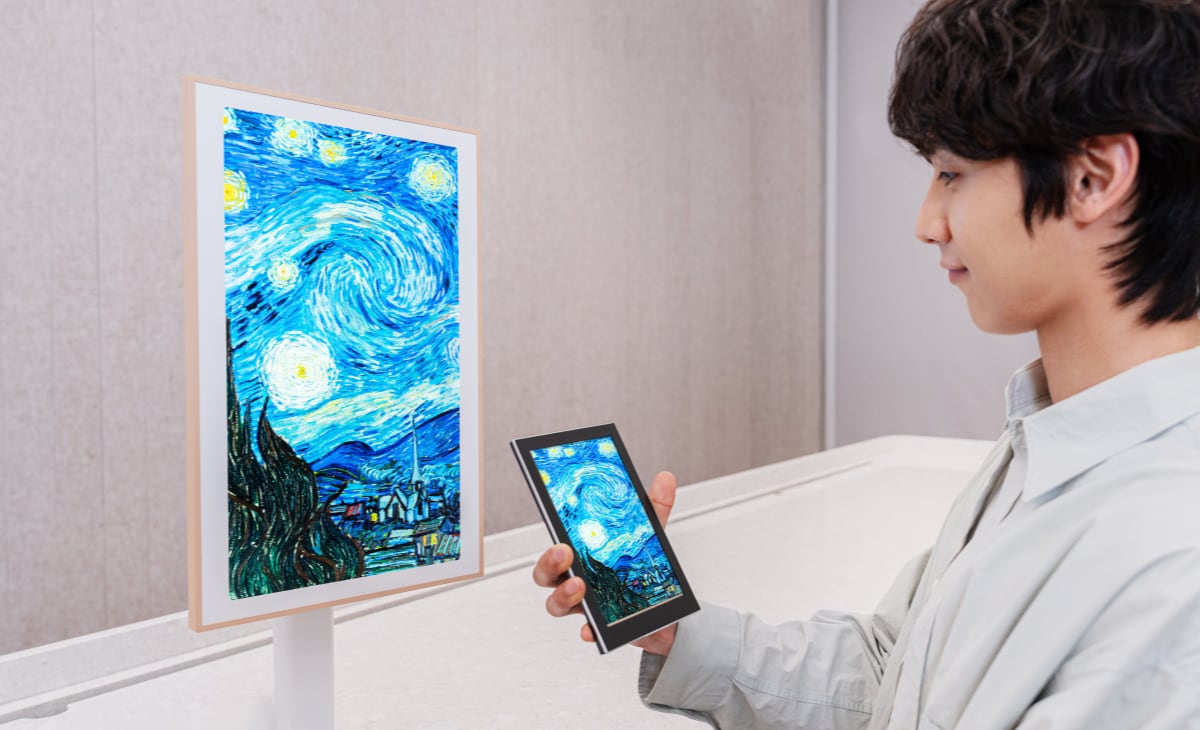
Samsung has revealed a wave of new display technologies at Display Week 2026 in Los Angeles, highlighting advances that could reshape both televisions and smartphones in the coming years.
Among the most notable developments is progress in EL-QD, a next-generation display approach also referred to as NanoLED or QDEL. The technology moves away from traditional OLED and LCD designs by allowing quantum dots to produce light directly when powered, removing the need for a separate light source.
Samsung Display presented updated prototypes that show clear improvements over earlier versions. An 18-inch panel reached 500 nits of brightness, while a smaller 6.5-inch version achieved 400 nits. These figures represent gains of 25 per cent and 33 per cent respectively compared with last year’s prototypes. The company also indicated that power efficiency has improved, although the panels remain in the development stage.
Industry expectations suggest this type of display could become commercially available later in the decade, potentially offering a lower-cost alternative to OLED while maintaining strong colour performance and efficiency.
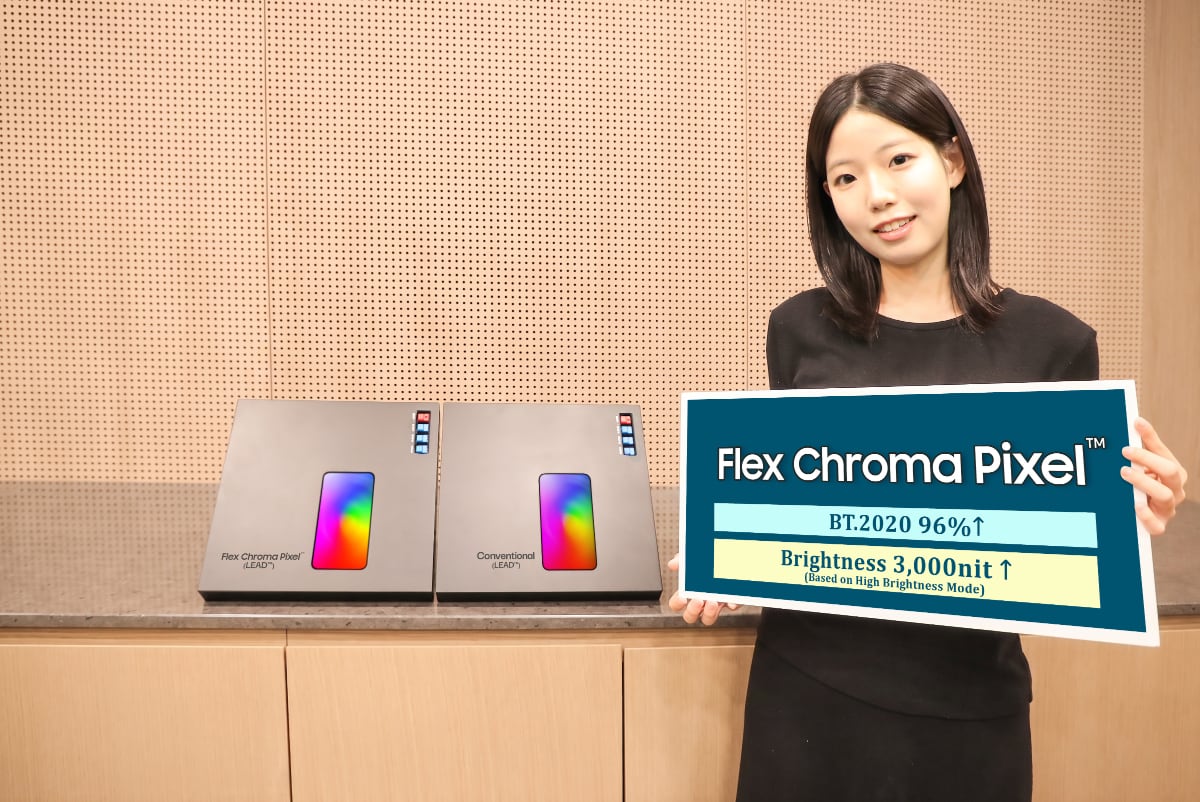
Photo by Samsung Display
Alongside this, Samsung also introduced new OLED innovations aimed at smartphones. A prototype display using Flex Chroma Pixel technology is capable of reaching up to 3000 nits of brightness and covering 96 per cent of the BT.2020 colour space, a significant step up from the roughly 70 per cent coverage seen in most current devices. The improvement is expected to enhance outdoor visibility and deliver more accurate colour reproduction for high dynamic range content.
Another area of focus is health tracking integrated directly into displays. Samsung unveiled a 6.8-inch Sensor OLED panel that combines display pixels with organic photodiodes, allowing it to measure biometric data such as heart rate and blood pressure. Users can place a finger on the screen, with the panel detecting blood flow using reflected light to generate readings.
Achieving this level of functionality without sacrificing display quality has been a technical challenge, as both sensing and visual elements share the same layer. Samsung has increased resolution to 500 pixels per inch, which is about 33 per cent higher than earlier versions and aligns with current premium smartphone standards.
The company also demonstrated a new privacy feature linked to this technology. Rather than blocking the entire screen when viewed from an angle, the system can selectively conceal sensitive information such as health data while leaving the rest of the display visible.
Further developments included a stretchable micro-LED panel with a resolution of 200 pixels per inch, representing a 67 per cent increase from the previous generation. Samsung suggested potential applications in automotive displays, where screens could change shape to present information more intuitively.
While there is no confirmed timeline for when these technologies will reach consumers, the pace of progress indicates that several of these innovations could appear in future flagship devices. Together, they point to a broader shift in how displays are used, extending beyond visual output into areas such as health monitoring and adaptive interfaces.