RBA Issues Stark Warning For Retailers As ACTU Declares War On Suppliers & Retailers
 David Richards
10 Feb 2026
David Richards
10 Feb 2026
The Reserve Bank of Australia has issued a stark warning for the economy, and retailers are likely to be among the hardest hit. Rampant government spending by Labor at both the federal and state levels is now filtering through the economy, weighing on growth and intensifying cost pressures across the retail sector, the warning comes as unions go after wage rises warning of strikes ahead.
New RBA forecasts show the economy is expected to grow by just 1.6% in the year to June 2028 — a historically weak outcome.
For retailers, this slowdown comes at the worst possible time, as unions escalate demands for wage increases of more than 4%, with union actions supported — and in some cases partially funded — by the federal Labor government.
The RBA’s downgrade has also raised fresh concerns about the already deteriorating health of the federal budget.
Slower economic growth reduces government revenue while spending commitments continue to expand, creating a growing fiscal imbalance.
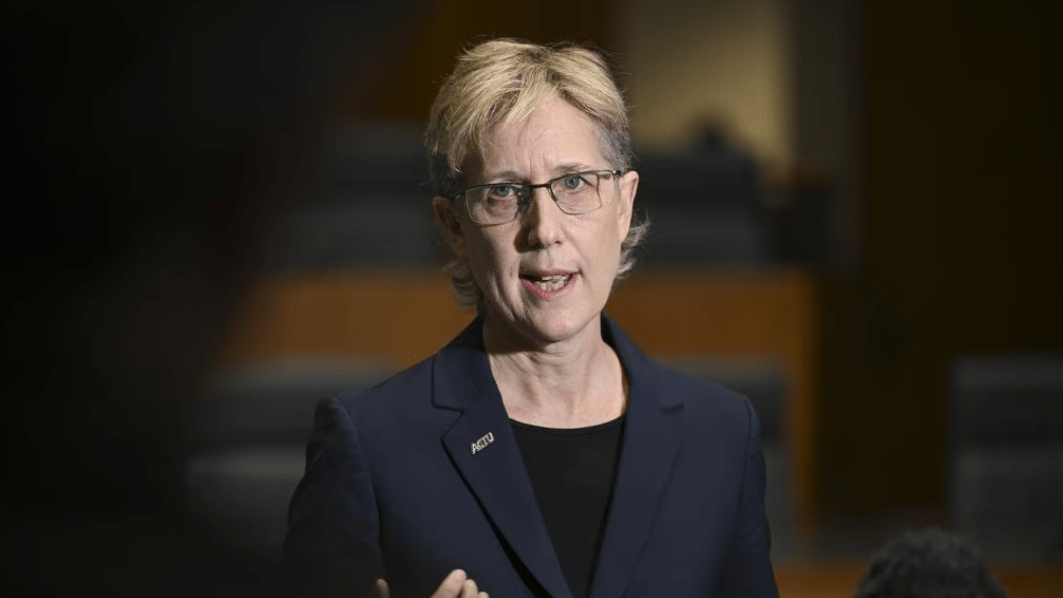
ACTU Secretary Sally McManus
Retailers and suppliers are now facing mounting pressure from the ACTU to deliver above-inflation pay rises. ACTU secretary Sally McManus has warned that if these demands are not met, strike action will follow.
“There will be strike action if we can’t get wages that will keep us ahead,” Ms McManus said, adding that workers need at least a 4% pay rise just to “keep up”.
What Ms McManus did not acknowledge is the role government spending has played in driving inflation — or the close relationship between unions and the Labor government, which critics argue has contributed to inflationary pressures now hurting workers and businesses alike.
RBA Governor Michele Bullock has clearly outlined the link between government spending, inflation and interest rates in testimony to Parliament’s economics committee. Economists warn that the RBA’s forecasts represent the weakest medium-term growth outlook in Australia’s modern history — a trend that threatens living standards and puts further strain on the federal budget.
Prime Minister Anthony Albanese and Treasurer Jim Chalmers — dubbed “Jimflation” by critics — have strongly denied claims that Labor’s spending contributed to the RBA’s decision to raise interest rates. Albanese has repeatedly argued that inflation is easing due to what he describes as “responsible economic management,” pointing to low unemployment and rising real wages.
However, there has been little acknowledgement of the growing crisis facing small businesses, many of which are closing stores or entering administration under the weight of rising wages, higher borrowing costs and falling consumer demand.
Ms McManus has confirmed unions will “unashamedly” campaign across the workforce this year, putting the labour movement on a collision course with retailers and suppliers already cutting staff, investing in automation and raising prices to offset rising costs.
Retailers such as Amazon and major Australian chains are accelerating investment in AI and automation to reduce headcount in administrative and distribution roles. Analysts warn the latest union push will only hasten job losses as revenues slow and average selling prices decline.
Ms McManus has argued that wage increases should not be tied to productivity trade-offs, claiming workers are owed a “productivity debt” of $18,000 — the gap between wage growth and productivity gains over the past two decades.
“The issue for 2026 is wages, wages, wages,” she said, adding that workers are now more prepared to strike than ever before.
IFM Investors chief economist Alex Joiner told the AFR that the RBA’s growth downgrade poses a serious threat to fiscal sustainability.
“GDP growth is what grows the pie,” he said. “If the pie grows more slowly, living standards don’t improve at the pace Australians are used to. From a fiscal perspective, lower trend growth is a clear risk to budget sustainability.”
At Senate Estimates, the Parliamentary Budget Office could not confirm the Coalition’s claim of a $57 billion budget blowout. However, it did confirm that 60% of its downward budget revisions were due to higher government spending, with the remaining 40% attributed to weaker tax revenues later in the decade.
Economists say the Albanese government will need to address Australia’s productivity slowdown in the upcoming May budget. Treasurer Jim Chalmers has flagged a so-called “productivity package,” though details remain unclear.
Joiner noted that policy levers previously used to support growth — particularly strong immigration — may now be nearing their limits.
Meanwhile, analysts warn that while AI won’t replace retail businesses outright, it will replace retailers who fail to adapt. The winners, they say, will be those that move faster, personalise better, automate warehouses, run leaner operations and make smarter, lower-risk decisions.