Premium TV Market Being Reset As Chinese Brands Take On LG & Samsung Who Are Losing Momentum
 David Richards
10 Feb 2026
David Richards
10 Feb 2026
Chinese TV Brands Push Into Premium Market as Samsung, LG Lose Momentum
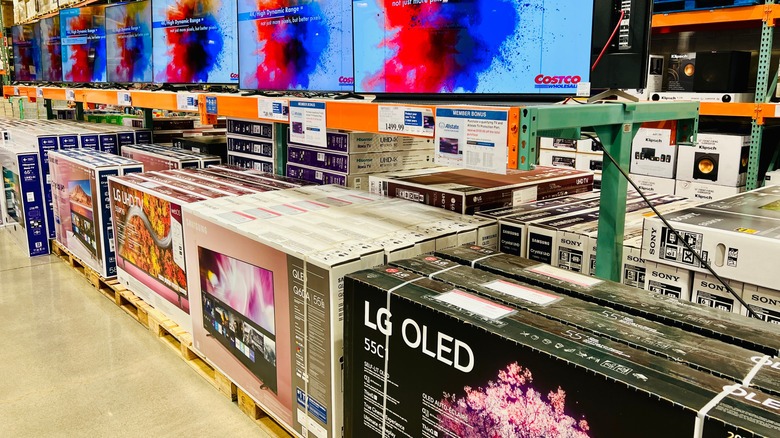
Chinese television manufacturers TCL and Hisense are rapidly moving upmarket, seizing an opportunity created by slowing growth at Samsung and LG Electronics and reshaping competition at the lucrative premium end of the global TV market.
LG’s inability to grow share in high-end televisions, combined with softening Samsung sales, has opened the door for brands such as TCL and Hisense to expand beyond their traditional value positioning. Researchers say the shift is also triggering a reset across the lower end of the TV market, where Chinese brands are stepping back from aggressive price competition to pursue higher margins.
According to industry analysts, Chinese manufacturers are deliberately pivoting away from entry-level televisions and targeting premium buyers, with TCL in particular ramping up efforts following the signing of a joint venture with Sony.
TCL is now positioning itself to compete head-to-head with Samsung and a struggling LG, which has long dominated OLED technology but is facing pressure from new RGB mini-LED LCD panels that offer premium performance at a lower manufacturing cost.
Market tracker Counterpoint Research said TCL and Hisense accounted for 12% and 11% of global TV shipments respectively between January and November last year, each gaining one percentage point year on year.
Both brands are now betting heavily on premium models enhanced with artificial intelligence, a move analysts describe as a direct threat to the Korean incumbents.
In Australia, the impact is already visible.
Retailers that once positioned TCL and Hisense primarily as budget options are increasingly replacing them with value brands from the likes of Tempo, while TCL and Hisense reposition themselves higher up the price ladder with what analysts call “affordable premium” offerings.
Samsung currently holds 16% of the premium TV market globally, while LG accounts for about 9%, a figure expected to decline further in 2025.
Counterpoint noted that while both companies managed to hold their ground, their lack of growth stood out in a global TV market showing little sign of a meaningful rebound.
TCL’s momentum has been particularly striking.
In November alone, its market share climbed to 16%, narrowing the gap with Samsung to just one percentage point.
Shipments rose 22% year on year, driven by aggressive expansion in price-sensitive regions where affordability remains a key purchasing factor.
Separate data from Omdia showed that in the third quarter of 2025, the combined market share of TCL, Hisense and Xiaomi who recently set up a subsidiary in Australia reached 31.8%, overtaking the 28.5% held collectively by Samsung and LG.
Xiaomi has recently established its own Australian subsidiary, intensifying competition in the local market.
ChannelNews has been told that Chinese brand Dreame and Xiaomi are both in discussions with retailers in Australia with a view to launching a TV offering this year, both are looking at product in the ‘affordable premium’ market.
The battle is no longer solely about price.
TCL has repositioned its mini-LED lineup toward higher-end segments while accelerating the rollout of AI-enabled features, directly challenging categories long dominated by Korean brands.
Industry veterans say the pattern is familiar. Samsung and LG themselves displaced Japanese rivals by entering markets with competitively priced products, steadily improving quality and eventually building premium global brands. Chinese manufacturers now appear to be following the same trajectory — but at a much faster pace.
Financial pressure is already evident. Samsung’s video display and digital appliances divisions recorded a combined operating loss of about US$137 million last year, while LG’s media entertainment solutions division posted losses totalling roughly A$730 million. Both companies responded by cutting prices and increasing marketing spend in Australia, with limited impact as local TV sales continue to struggle.
Looking ahead, Samsung is strengthening its premium AI-powered models for 2026 while reinforcing its mid-range portfolio, briefing retailers on new products showcased at CES 2026. LG, meanwhile, is leaning more heavily on its proprietary TV operating system, using viewer data to generate advertising and content-related revenue as a path back to profitability.
Analysts say the competitive landscape is becoming increasingly complex, shaped by OLED versus mini-LED technology, uneven AI and internet-of-things ecosystems, supply-chain capabilities and the uncertain fallout from ongoing US-China trade tensions.
“Chinese brands are undoubtedly gaining share, but the next phase of competition will centre on ecosystem dominance — spanning AI, platforms and content,” said an industry source who requested anonymity.
“Whether Samsung and LG can adapt quickly enough will decide what comes next.”