OPINION: Microsoft’s Consumer Record Exposed Again As Gaming Turmoil Deepens & Leadership Shake-Up Exposes Broader Failures
 David Richards
24 Feb 2026

OPINION: The abrupt departures of Phil Spencer — the long-time face of Xbox and architect of the $69 billion Activision-Blizzard acquisition — and Sarah Bond, widely seen as his successor, have triggered what industry observers describe as a defining moment for Microsoft’s consumer ambitions. For critics, the upheaval confirms a long-simmering concern: that Microsoft’s enterprise-driven culture is ill-suited to the hit-driven, emotionally charged world of consumer technology.
As of February 2026, Microsoft appears to be retreating from its once-bold “everywhere is an Xbox” strategy.

Microsof’ts Phil Spence
The expansive vision of Xbox across consoles, PCs, cloud, and mobile now looks increasingly like a company scrambling to stabilize its core console business.
A Leadership Shock That Spooked the Market
The appointment of Asha Sharma, an executive from Microsoft’s CoreAI division with no prior gaming experience, has intensified unease within both Wall Street and the gaming community. While Microsoft frames the move as a forward-looking integration of AI and gaming, critics see it as evidence that Xbox risks becoming a proving ground for AI-driven monetization experiments rather than a creative powerhouse.
Investors have reacted swiftly. Microsoft shares have fallen 23.7% over the past six months, with an additional 3.6% drop following the leadership announcement. The selloff underscores investor anxiety over losing seasoned gaming leadership at a time when the division is already under pressure.
Hardware Stalls, Subscriptions Plateau
On the ground, the competitive picture looks grim.
While Nintendo’s latest hardware continues to post strong retail performance in key markets, Xbox console sales remain sluggish. In several global regions, analysts report that Xbox is being outsold by significant margins, further eroding its once-solid second-place position behind Sony.
Game Pass, once hailed as the “Netflix of Gaming,” has also lost momentum. Subscriber numbers have plateaued at 34 million — well below internal growth projections. Industry insiders suggest the service may be cannibalizing full-price sales of major releases, including blockbusters like Call of Duty: Black Ops 6, complicating the economics of Microsoft’s massive acquisition strategy.

Ill fated Microsoft Zune
The subscription-first gamble that was meant to redefine gaming economics now faces uncomfortable questions about sustainability and margin pressure.
A Familiar Pattern of Consumer Missteps
For many analysts, the current Xbox turbulence fits a broader historical pattern. Microsoft has repeatedly struggled to translate its enterprise dominance into enduring consumer success.
Zune arrived too late to challenge Apple’s iPod and failed to build cultural momentum.
Windows Phone faltered amid a barren app ecosystem and a desktop-centric design philosophy ill-suited for mobile users.
Kinect, once a breakout hit, became a forced hardware bundle that alienated core gamers.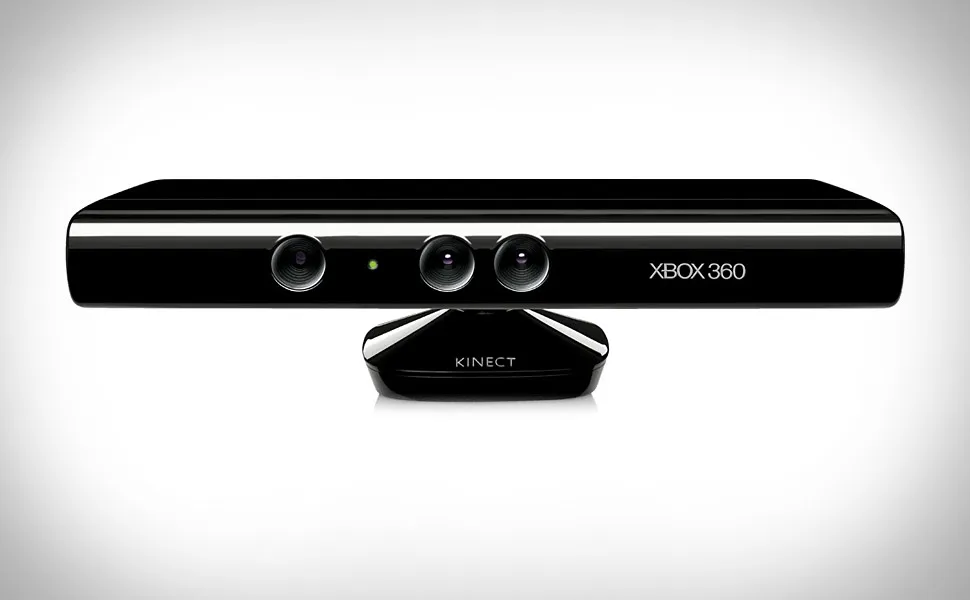
Internet Explorer and Edge lost ground to Chrome despite Microsoft’s distribution advantage.
Surface, though innovative, has faced periodic quality concerns and stiff competition in a rapidly evolving hardware market.
Critics describe an “enterprise echo chamber” effect: products engineered for strategic leverage or margin targets rather than for consumer passion and community loyalty.
Gaming, more than any other category, punishes that mindset.
The AI Question
Sharma has sought to quell fears that gaming will be sacrificed at the altar of AI-driven efficiency. In a recent interview, she pledged “no tolerance for bad AI” and rejected the notion that Microsoft would flood its ecosystem with what detractors call “soulless AI slop” to meet aggressive profit expectations.
“We will not chase short-term efficiency or flood our ecosystem with soulless AI slop,” Sharma said. “Games are and always will be art, crafted by humans.”
Yet inside the division, cost-cutting tells a harsher story. Layoffs, studio closures, and high-profile cancellations — including the long-anticipated Everwild — have fueled perceptions that creative risk-taking is being replaced by corporate discipline aimed at meeting finance-driven margin targets reportedly approaching 30%.
An Identity Crisis at $70 Billion
At its core, Microsoft’s consumer problem may be philosophical.
The company excels at recurring revenue models in enterprise software — Office 365, Azure, and cloud subscriptions built on predictable contracts and a monopoly in the Australian and global markets. But gaming thrives on cultural resonance, creative risk, and fan trust. Blockbusters are not built on spreadsheets alone.
The Activision-Blizzard acquisition was supposed to secure Microsoft’s future in gaming. Instead, it now amplifies the stakes. With more than $70 billion committed and Game Pass growth slowing, the company must prove that scale and subscription can coexist with creativity and commercial success.
If Microsoft cannot convert its “AI-first” momentum into demonstrable “player-first” results, the Xbox shake-up may be remembered not as a reset — but as a warning sign that one of the world’s largest technology companies still hasn’t solved the consumer puzzle.
The canary in the coal mine may already be singing.