New Owners Axe Fujitsu General Australia MD As Market Share Slides And Questions Mount Over Rebrand
 David Richards
24 Jun 2026
David Richards
24 Jun 2026
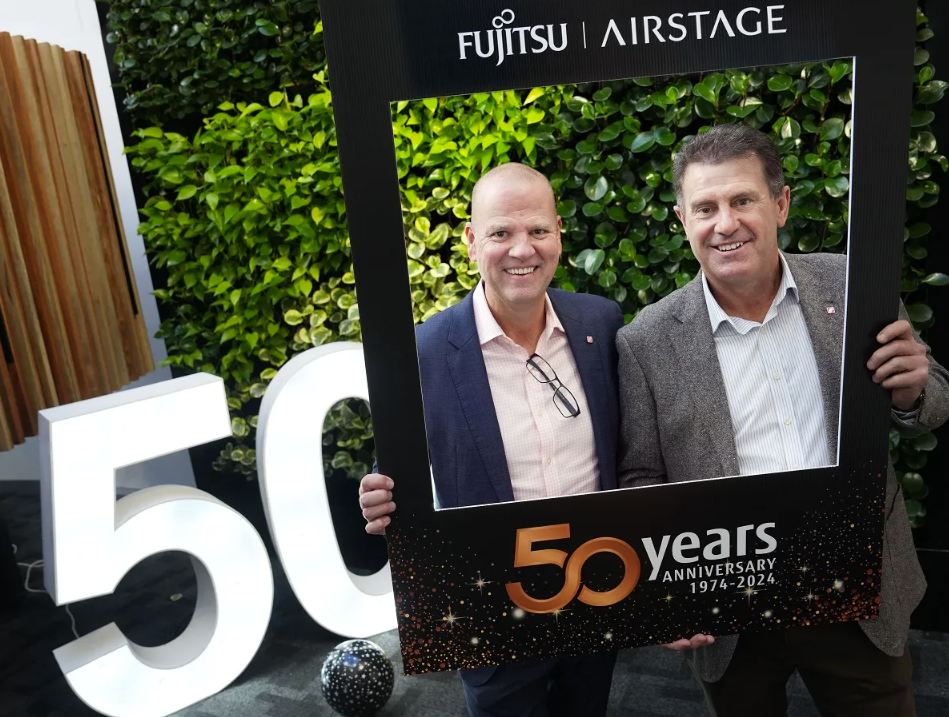
The new owners of Fujitsu General Australia have moved swiftly to stamp their authority on the local operation, with long-serving managing director Philip Perham exiting the business amid mounting pressure over declining market share and a controversial shift away from what use to be one of the strongest brands in the Australian air-conditioning market.

Paloma Rheem Holdings, which recently completed its acquisition of Fujitsu General, this week confirmed that Head of Oceania Sachio Inami will become the senior point of contact for the Australian operation, a move widely viewed as a sign that Tokyo now wants tighter control over the local business.
The leadership shake-up comes as the company prepares to transition towards the “General” brand, abandoning decades of brand equity built around the Fujitsu name at a time when competitors Daikin and Mitsubishi Electric are strengthening their grip on the Australian residential air-conditioning market.
Perham, who took over as managing director in 2017, leaves after presiding over a period in which Fujitsu General’s position has steadily weakened against both Japanese and Chinese rivals.
According to industry researchers including GfK, Euromonitor and channel sources, Daikin has grown its Australian residential air-conditioning market share from around 23 per cent in 2020 to approximately 30 per cent today. Mitsubishi Electric has expanded from roughly 18 per cent to 25 per cent over the same period.
By comparison, Fujitsu General’s share has largely stagnated at around 16 per cent despite the overall market expanding.
The company’s difficulties have emerged despite Australia historically being one of Fujitsu General’s strongest global markets.
Industry observers point to increasing pressure from value-focused Chinese manufacturers including Haier, Hisense, Midea and TCL, all of whom have aggressively expanded distribution while moving from entry-level products into affordable premium categories.

At the same time, growth in smart-home integration, inverter technology and energy-management solutions has increasingly favoured Daikin and Mitsubishi Electric.
Euromonitor’s latest Australian air-conditioning market analysis identifies Daikin and Mitsubishi Electric as the clear market leaders in what remains a highly concentrated industry.
The latest management changes have reignited questions over whether Fujitsu General’s market share losses could accelerate as the company attempts to execute one of the most significant branding transitions in its history.
Several industry executives argue that moving from “Fujitsu” to “General” presents substantial risks.
While Fujitsu remains one of the most recognised names in Australian air conditioning, General is effectively a new brand in the minds of many consumers and will require significant investment to build awareness and meaning.
“The company is walking away from decades of accumulated brand equity at a time when competition has never been tougher,” said one industry observer.
The transition is also raising fresh questions about the future of one of Australia’s longest-running endorsement arrangements.
Former Australian cricket captain Mark Taylor has served as Fujitsu General’s ambassador since 1998, making the partnership one of the country’s longest continuous corporate endorsements.

However, some marketing analysts believe the relationship may need to be rethought as the company attempts to attract younger consumers.
While Taylor remains strongly associated with trust, reliability and familiarity, critics argue that those attributes resonate most strongly with older Australians rather than younger homeowners seeking innovation, connectivity and energy-efficiency features.
For Australians under 35, Taylor has limited cultural relevance, raising questions about whether he remains the right face for a business attempting to reposition itself for the next generation of buyers.
Several industry insiders believe the solution may not be to remove Taylor entirely but to reposition him as a trust and heritage figure while introducing younger technology, sustainability or home-improvement personalities capable of connecting with emerging consumer segments.

The broader challenge facing the new owners is how to modernise the business without destroying the trust that helped make Fujitsu one of Australia’s most successful air-conditioning brands.
Sources also claim that additional management changes could follow as Paloma Rheem continues integrating the business and reshaping operations under the General banner.
The central question confronting the new owners is no longer whether Fujitsu General can retain its loyal customer base.
It is whether General can convince a new generation of Australians to buy into a brand they have never known while competitors continue taking share and strengthening their position at both the premium and value ends of the market.