Microsoft Under Fire Again Over Latest Secret Testing of Banned Chinese AI for Copilot
 David Richards
30 Jun 2026
David Richards
30 Jun 2026
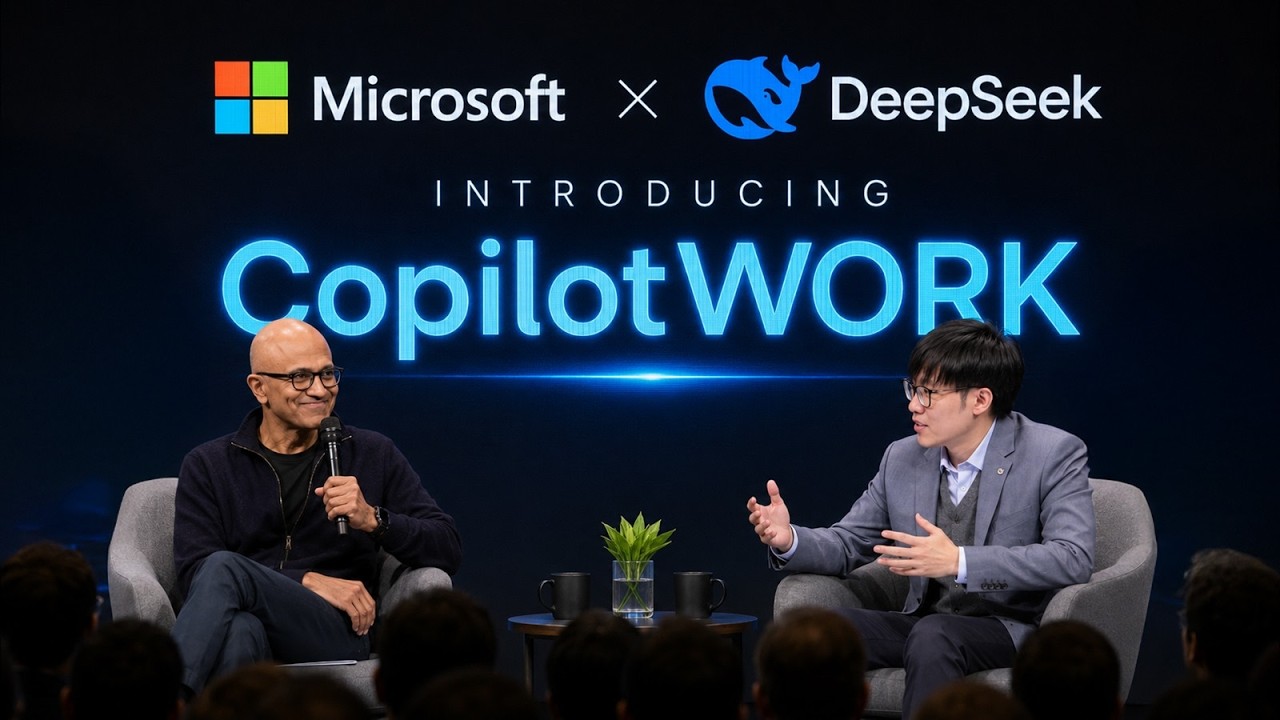
In a desperate bid to rescue its struggling AI ambitions and slash skyrocketing operational costs, Microsoft is quietly testing advanced Chinese artificial intelligence models which some claim is now superior to what Western Companies are currently offering and is a threat to Federal and State Governments and enterprise businesses.
The software Microsoft wants to adopt includes a system currently blacklisted by the Australian government over severe national security risks.
The tech giant’s sudden pivot to Chinese technology represents a stunning geopolitical about-face, coming just months after Microsoft co-founded an elite Western coalition explicitly designed to combat Chinese tech dominance.
Now, the company is preparing to inject that very same technology into its flagship Copilot Cowork ecosystem, triggering intense alarm across Western intelligence, government, and corporate sectors.
The Cost of Their Desperation
Ditching the West for Beijing Microsoft is currently facing intense pressure to monetize its massive AI investments while also trying to save face with the Chinese Government, claim officals.
Its current Microsoft 365 AI services are being widely criticized behind closed doors as buggy, labor-intensive, and prone to failure.
To make matters worse, the underlying Western infrastructure, provided by the likes of OpenAI and Anthropic, is proving ruinously expensive.
“We have users who do hundreds of tasks a week, which is great , they’re way productive , but the consequence is the costs can go very high,” Charles Lamanna, Microsoft’s EVP for Copilot, admitted in an interview with Axios.
To combat this, Lamanna confirmed Microsoft is floating China’s DeepSeek as a lower-cost consumer-tier option.
Specifically, Microsoft is testing a self-hosted, fine-tuned version of DeepSeek V4.
The move coincides with a radical, unannounced overhaul of Microsoft’s business model, shifting Copilot Cowork from a flat-rate fee to a usage-based billing structure.
Microsoft hopes this repricing will finally secure the market share and profitability that have so far eluded the tech giant.
The Security Paradox
Closing the Capability Gap The financial pivot comes as Chinese AI models achieve staggering technological parity with the United States, particularly in offensive and defensive cybersecurity capabilities.
According to reports from the Wall Street Journal, a new Chinese model released this month by Zhipu AI (Z.ai), known as GLM-5.2, has stunned experts by matching Anthropic’s flagship Mythos model in bug-finding scenarios.
While still trailing U.S. giants in a few general areas, the capability gap has effectively evaporated.
Guillermo Rauch, CEO of U.S. AI firm Vercel, took to X to express his alarm: “Genuinely impressed, almost shocked, at how good GLM 5.2 by @zai_org is at coding. This changes things.
Because these models excel at identifying software vulnerabilities, Western officials fear they could be weaponized to discover exploitable zero-day flaws before defenders can patch them.
Banned by Government, Blocked by Banks Microsoft’s embrace of DeepSeek has put it on a direct collision course with national security agencies.
In Australia, the Department of Home Affairs has already issued a mandatory Protective Security Policy Framework (PSPF) Direction, completely banning DeepSeek from all federal government networks and devices.
Corporate Australia is similarly unified in its rejection of the technology Microsoft wants to adopt.
Corporate giants including the Commonwealth Bank and Woolworths have flatly refused to adopt it.
Telstra, Optus, and TPG have also taken the extraordinary step of blocking all internal employee access to the Chinese model.
Despite these severe red flags, a flood of cheap, high-powered Chinese AI models is reportedly drawing in unsuspecting Australian small businesses distributors and consumers.
Government circles are now deeply concerned by Microsoft’s aggressive push to transition users away from classic local software and onto Azure cloud services embedded with these questionable Chinese systems.
A Hypocritical Pivot?
Microsoft’s backdoor adoption of Chinese AI exposes a glaring double standard.
In April 2026, Microsoft co-founded the Frontier Model Forum alongside OpenAI, Anthropic, and Google. Its explicit, stated mission was to combat “adversarial distillation practices” by Chinese entities.
Now, Microsoft is preparing to deploy the exact technology it labeled an adversarial threat.
As Microsoft aggressively pursues Chinese code to save its bottom line, the rest of the U.S. tech sector is facing unprecedented government lockdowns.