Microsoft Cuts Israeli Defence Services Over Gaza Surveillance
 Joe Gallop
26 Sep 2025
Joe Gallop
26 Sep 2025

Microsoft has disabled certain cloud services for a unit within Israel’s Ministry of Defence after an internal investigation found evidence the ministry used its Azure platform for mass surveillance of Palestinians in Gaza and the West Bank.
The decision follows a high-profile August report by The Guardian and Israeli media that Israel’s Unit 8200 had stored and analysed millions of intercepted calls and other data using Microsoft’s Azure cloud infrastructure.
The data was reportedly used to support military operations in the region.
In a statement posted on Microsoft’s blog, President Brad Smith said the company had “ceased and disabled a set of services” to the Israeli defence unit, citing its longstanding policy against using Microsoft technology “to facilitate mass surveillance of civilians.”

Microsoft employees protested in front of the lakeside homes of the company’s top executives
Smith confirmed the findings supported “elements” of the Guardian’s reporting, including the use of Azure storage capacity in the Netherlands and AI services.
“Our review is ongoing, but we have taken steps to ensure compliance with our terms of service and prevent the use of our services for mass surveillance,” Smith said, emphasising the company’s commitment to privacy and ethical use of technology.
The move marks the first known instance of a major US tech company cutting services to Israel’s military amid its ongoing conflict in Gaza.
An Israeli security official said the action “does not damage the operational capabilities of the IDF.”
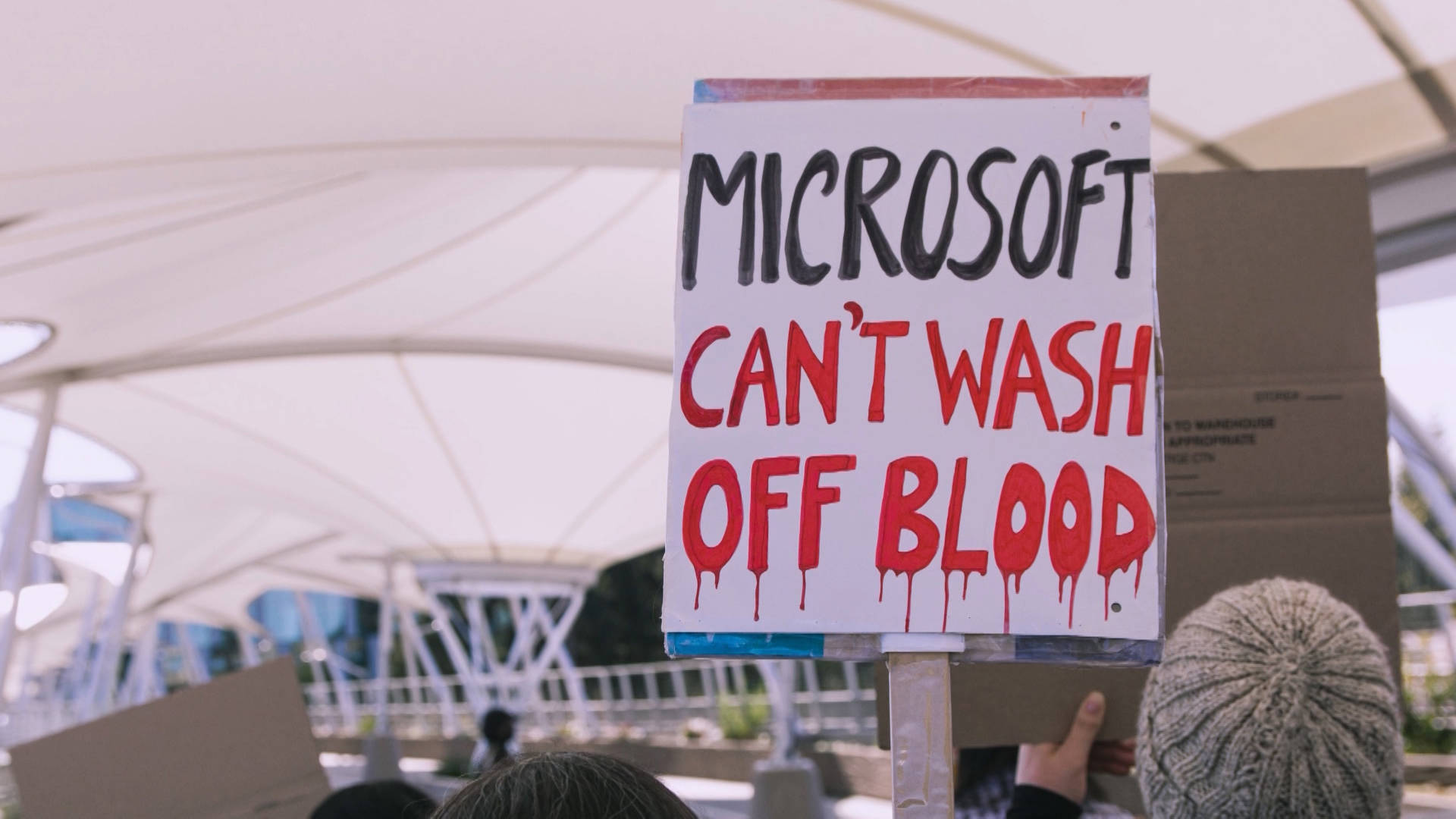
Microsoft protesters were fired after disrupting the company’s 50th anniversary celebrations
Microsoft’s relationship with Israel has been controversial. Employees have protested at corporate events and the company has faced scrutiny from human rights groups for its technology contracts with Israel.
Pro‑Palestinian demonstrations have taken place at Microsoft sites globally, including inside its US headquarters.
Last year, a United Nations report named Microsoft among firms warned about complicity in potential war crimes for providing technology used in surveillance and military operations.
While Microsoft stressed it will continue cybersecurity work with Israel and other Middle Eastern nations, the company said its review will “share lessons learned” to guide future safeguards.