Is Sonos Looking at A New Direction the Could Hurt Retailers?
 David Richards
03 Dec 2024
David Richards
03 Dec 2024

Struggling from a slump in revenues and a lack of profits, and with their brand new Sonos Ace headphones already discounted out to a price, that one retailers said this week “Is more like what it should have been in the first place” the US Audio Company is now desperately trying to find their way out of the management mess they find themselves in.
One option under consideration is moving to a subscription model with their problematic app upgraded to handle the potential new subscription service which will result in users only able to access content via a Sonos cloud environment other than a direct connected device.
Retailers may still be able to sell a Sonos speaker, with the US Company then using the retailers customer to spruik additional purchases direct.
Three weeks ago, the Company revealed that revenues were down 8% year-on-year (YOY), with Q4 down 16% year on year.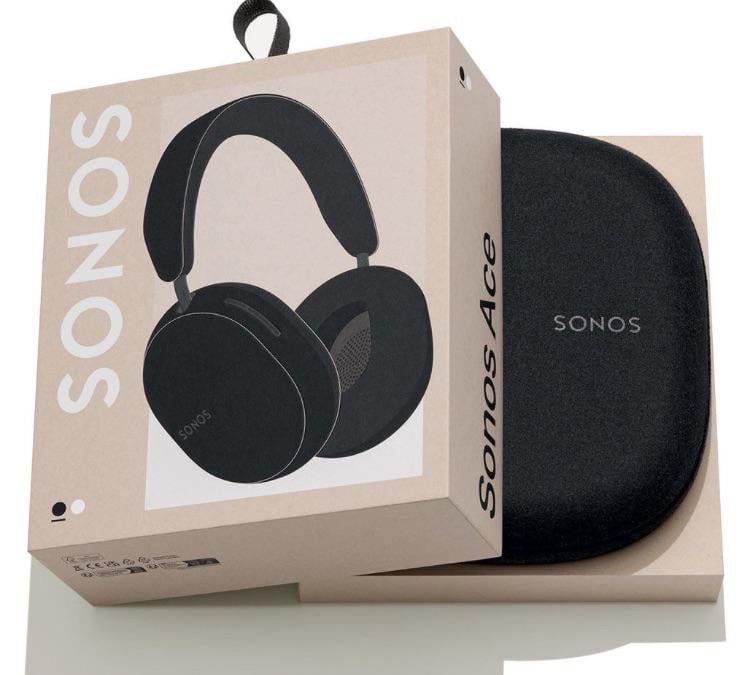
In Australia ChannelNews understands that the business has witnessed an uptake, in demand after they invested in TV marketing and a new brand campaign.
This is a Company that is becoming accustomed to failures with investors calling for the sacking of Sonos CEO Patrick Spence recently.
Last year revenues were down 5.5% with the Company having no choice but to sack staff due to incompetence by senior management.

Under siege Sonos CEO Patrick Spence
It’s also been revealed that consumers are turning off the networked audio brand with their latest financials revealing that new Sonos user engagement has slumped to the lowest in five years despite demand for networked speakers climbing in 2024.
The business that already has a clear strategy to attract consumers directly to the brands products Vs via a retail store is now researching the upside and downside of a subscription model that would basically see consumers paying a monthly or annual fee for a Sonos product.
Failure to pay Sonos can easily nobble the device similar to a how a smartphone can be cut off.
The Verge claims that Sonos wouldn’t be the first company to consider whether a subscription model might help to keep things buoyant. Recurring revenue streams make a lot of financial sense—and some huge brands use them to their advantage for that very reason.
The US publications point out that GoPro first turned to a subscription model in the face of poor sales in 2016, offering cloud storage for the footage from its pricey action cams. It expanded its GoPro Plus offering further in 2018, and has continued to do so, growing the subscriber base from 160,000 members at the time to 2.56 million as of November 2024.
In 2021, during the Activision Blizzard acquisition, revealed that subscription revenue made up 18% of the total Xbox business.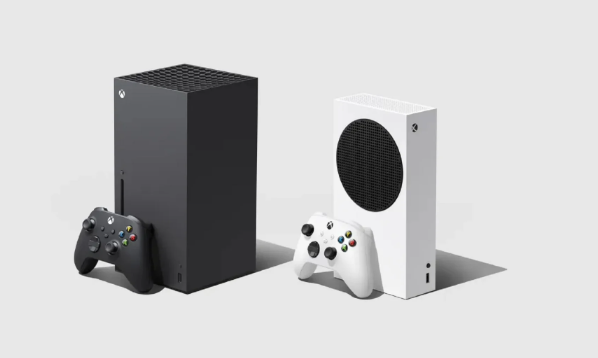
The Company that is already selling subscription access to 60,000 internet radio stations and for an extra fee you get high-res audio.
Observers claim that Sonos Radio HD hasn’t exactly transformed the company’s fortunes, or anecdotally been that popular.
A visit to online forums reveals concern for the model with observers pointing out, that the new app which crashed millions of Sonos sound systems having been reengineered to “work differently” than in the past with the software now able to handle a subscription.
On the community forum Reddit “Sono’s fanboy/hacker” Andy Pennell claims that the app has shifted from controlling your devices over your local network to an app that controls your devices via its own cloud.
In other words, diverting everything through Sonos’ servers, it ultimately gives the company more control over the things users can and can’t do with their devices. “Such a huge move was a surprise” he said.
“When the new app was announced, I don’t think anyone really expected that all of it was changing,” Pennell tells WIRED.
“We thought it might have a new skin on it, people would love it or hate it in the same way they do every time an app design changes, and that would be that. But this was everything—UI, speaker discovery … even the actual APIs that the app uses were changed.
It has been reported that the release of the Ace headphones had forced the change, and that “technical debt” racked up over two decades meant the app was no longer fit for purpose—but that’s something that Pennell struggles to understand.
“Regarding technical debt: I worked in their codebase for a couple of years, and I would be happy working today with what I saw around eight years ago. I don’t own a pair of the Ace headphones, so I can only speculate [about their requirements]. But from the features of them that I have read about, I don’t see anything that would require a top-down rewrite.”
Even stranger, says Pennell, was the decision to not roll the app back immediately once the usability issues were highlighted by the community. Spence initially said it was an option Sonos was exploring but later explained that “rereleasing S2 would make the problems worse, not better.”
WIRED recently spoke with an ex-Sonos developer who was made redundant in the company’s most recent layoffs. He asked not to be named, to avoid any potential difficulties.
He said of the sudden about face by Sonos management “I was pretty sceptical of the resources we were putting into an app that we aren’t charging any money for—something that isn’t bringing in any revenue. But the only thing that I heard from the folks on the app team about why this was needed, and its value proposition was about the flexibility it offered, and that it opened the doors to things that we couldn’t do before,” he says. “It wouldn’t surprise me though, if there were some subscription model pieces somewhere in there.”
Sonos who did a total about face some years ago when they tried to nobble older Sono’s speakers in an effort to force a new speaker purchase claim that a subscription model is not the works.
One Sonus speaker owner and a Sonos Community member said ““The internet has almost completely converted our entire economy into a ‘subscription’ economy. No-one wants to sell you a widget, then move on to find more people to sell more widgets to. The key to [success] for these companies is now: Sell the initial widget, then attach an ongoing revenue stream to it. The ‘cloud’ is ideal for this. Sonos has been marching in this direction for some time, and the recent app disaster has tipped their hand in the most public and embarrassing way possible.”
The Verge concluded in their story ‘%There’s no getting away from the fact that Sonos’ app redesign has opened the door to the opportunity for some kind of subscription play in the future. Maybe—just maybe—it could be the unpopular, but brave, move it needs to turn its fortunes around.