Intel Surges As AI Demand Fuels Strong Quarterly Performance
 April Ossington
24 Apr 2026

Intel delivered stronger-than-anticipated first-quarter figures on Thursday, supported by rising demand for its central processing units as artificial intelligence infrastructure continues to expand.
For the quarter ending 28 March, the company posted revenue of about A$20.5 billion, an increase of 7 per cent compared with a year earlier and ahead of its own projections. Shares jumped by almost 20 per cent at one stage in after-hours trading following the announcement.
Growth was largely driven by Intel’s data centre and artificial intelligence division, where revenue climbed 22 per cent to roughly A$7.7 billion.
Chief executive Lip-Bu Tan said the narrative around high-performance computing had previously centred on graphics processors and accelerators, but that trend is shifting. He noted that CPUs are once again becoming central to AI systems as workloads increasingly move from training models to running them in real-world applications. According to Tan, CPUs are proving more effective in handling orchestration, control systems and the coordination of data across multiple agents, reinforcing their importance in the evolving AI landscape. He added that the CPU business is positioned to deliver sustained growth well into the future.
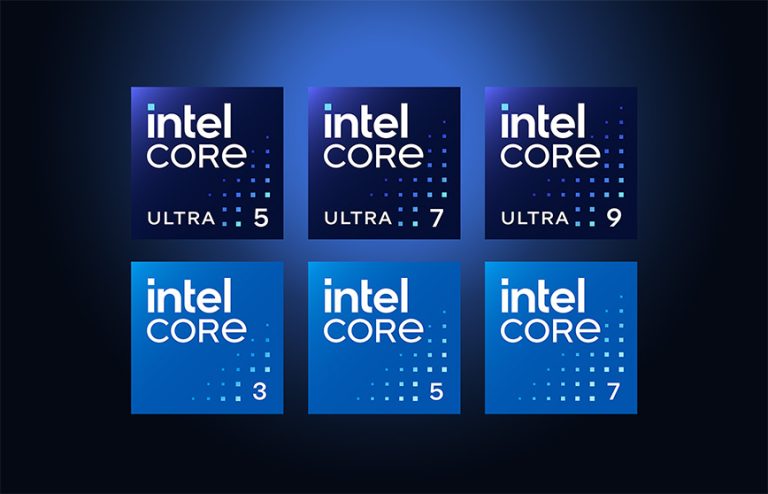
Intel’s client computing division, which includes chips for personal computers, recorded a modest rise of 1 per cent in revenue to approximately A$11.6 billion. The company has previously acknowledged supply pressures caused by strong demand, prioritising data centre and AI customers over PC-related orders.
Tan said that even as production improves, demand continues to exceed supply across most areas, particularly for Xeon server processors, where strong momentum is expected to continue through the year. Chief financial officer David Zinsner indicated that supply constraints may begin to ease after the first quarter, which he described as the tightest period of the year.
Industry-wide shortages are compounding challenges for manufacturers of PCs and servers, who are already dealing with a severe shortage of memory chips. The situation has led to longer delivery times and rising processor prices.
Looking ahead, Intel forecast revenue of between A$20.8 billion and A$22.3 billion for the April to June period.
The company’s contract manufacturing arm is expanding but continues to weigh on profitability. Intel Foundry reported a 16 per cent increase in revenue to about A$8.2 billion for the first three months of the year, though it recorded an operating loss of roughly A$3.6 billion as it invests heavily in new fabrication facilities.
During the quarter, Intel expanded its assembly and testing operations in Penang, Malaysia. Zinsner said this move would support demand that is expected to translate into revenue from 2027 onwards.
The foundry business has also secured a high-profile customer in Elon Musk. The entrepreneur confirmed that Intel will manufacture chips for the Terafab initiative, a joint venture involving Tesla, SpaceX and xAI, which aims to produce up to one million wafers each month. The project plans to use Intel’s 14A manufacturing process, which is still under development.
Tan said both companies share the view that global semiconductor supply is struggling to keep pace with accelerating demand, and that the partnership will explore unconventional methods to improve efficiency.
In late 2025, Intel began large-scale production using its 18A process at its facility in Chandler, Arizona. This technology is intended to compete with the most advanced offerings from Taiwan Semiconductor Manufacturing Company, including its 2-nanometre process. Intel reported that both 18A and the next-generation 14A technologies are progressing faster than expected.
Tan reflected on the company’s recent turnaround, noting that the discussion has shifted from concerns about survival to questions about how quickly Intel can expand capacity and meet surging demand. He said this marks a fundamental transformation in the company’s position.