Ingram Micro Reels from Ransomware Attack, Still Disrupting Australian Supply Chains
 David Richards
08 Jul 2025
David Richards
08 Jul 2025

Ingram Micro shares have dropped over 5%, extending their year-to-date decline to more than 17%, as the company grapples with the fallout from a major ransomware attack.
Four days after the breach, the U.S.-based IT distribution giant, an essential supplier to Australian retailers B2b businesses and solution providers, continues to haemorrhage revenue.
Its Australian website remains in “maintenance mode,” signalling ongoing operational paralysis.
ChannelNews understands that the Company does have insurance cover for such an event.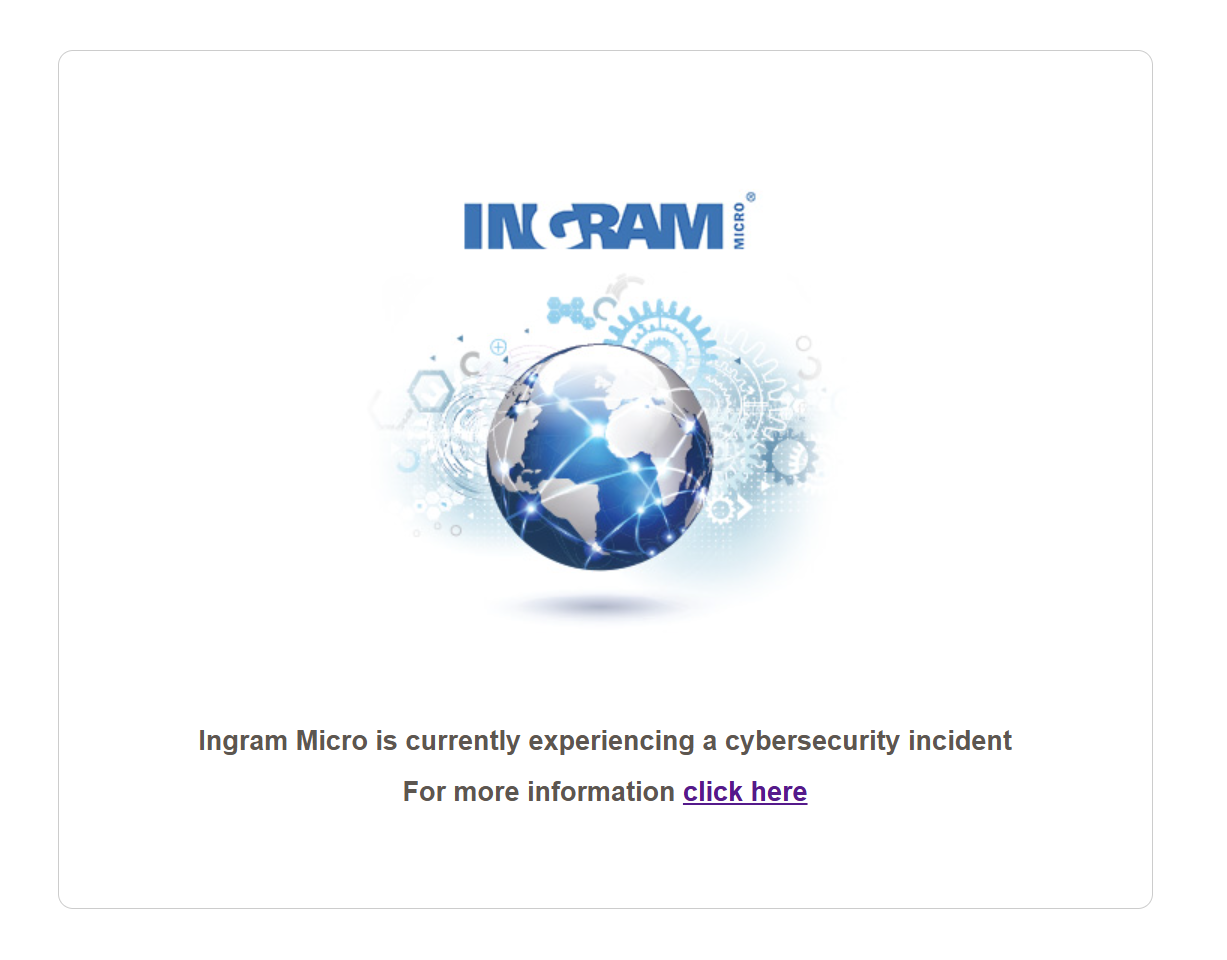
The full extent of the breach remains unclear, and it is not yet known whether negotiations with the attackers are ongoing. The longer Ingram Micro’s new distribution system remains offline, the greater the financial toll—potentially running into millions of dollars.
Ripple Effects Across the Retail Sector
The cyberattack has triggered widespread disruption across the retail and IT sectors. Major Australian retailers such as JB Hi-Fi, Harvey Norman, and The Good Guys, along with hundreds of solution providers, have been forced to pause projects due to stock shortages. In response, many have shifted to alternative distributors, with several brands now redirecting inventory to Ingram Micro’s competitors.
The outage, which reportedly began on July 3, has crippled several of Ingram Micro’s core platforms, halting order processing and shipments globally including in Australia.
Delayed Disclosure and Ongoing Investigation
Days after the incident, Ingram Micro confirmed it had been the target of a ransomware attack. “Promptly after learning of the issue, the company took steps to secure the relevant environment, including proactively taking certain systems offline and implementing other mitigation measures,” it said in a statement.
Law enforcement agencies across multiple countries are now involved, alongside leading cybersecurity experts. While Ingram Micro has yet to disclose the full scope of the breach, the ransomware group SafePay is believed to be responsible.
Reports suggest the attackers may have gained access via the company’s GlobalProtect VPN.
Industry Experts Warn of Broader Implications
“Ingram Micro is prioritising transparency by issuing regular updates via a dedicated status portal and direct email communication,” said Amit Jaju, Senior Managing Director at Ankura Consulting. “The company is triaging customer tickets based on urgency—especially those affecting critical services and logistics—and offering clear escalation channels, workaround options, and FAQs to help minimise business disruption.”
Neil Shah, Vice President at Counterpoint Research, emphasized the broader consequences: “The attack on Ingram Micro has broad and deep implications, exposing the interconnectedness and interdependence of the entire IT value chain.
One immediate impact was taking Ingram’s IT systems offline, effectively disconnecting them from vendors and customers.” Sanchit Vir Gogia, Chief Analyst and CEO at Greyhound Research, added that the attack has compromised global supply chain elasticity. “With fulfillment platforms offline, enterprise buyers face order backlogs, shipment uncertainty, and stalled hardware provisioning. OEMs lose visibility into downstream demand; resellers breach client SLAs; and enterprise procurement teams face cascading deferrals in capital recognition.”
Gogia noted that the impact is most severe in sectors with centralized procurement, such as government, telecom, and large-scale retail.
As logistics, routing, and vendor management increasingly rely on cloud infrastructure, the Ingram Micro breach underscores a critical vulnerability in today’s cloud-centric IT supply chain.