iFixit Praises Pixel Watch 4 Repairability, Calls Meta Ray-Ban Glasses ‘Unrepairable’
 Isabella Alexiou
13 Oct 2025
Isabella Alexiou
13 Oct 2025

Repair specialist iFixit has delivered contrasting verdicts on two new wearable devices, praising Google’s Pixel Watch 4 as the most repairable smartwatch available while warning that Meta’s Ray-Ban Display AR glasses are effectively unrepairable.
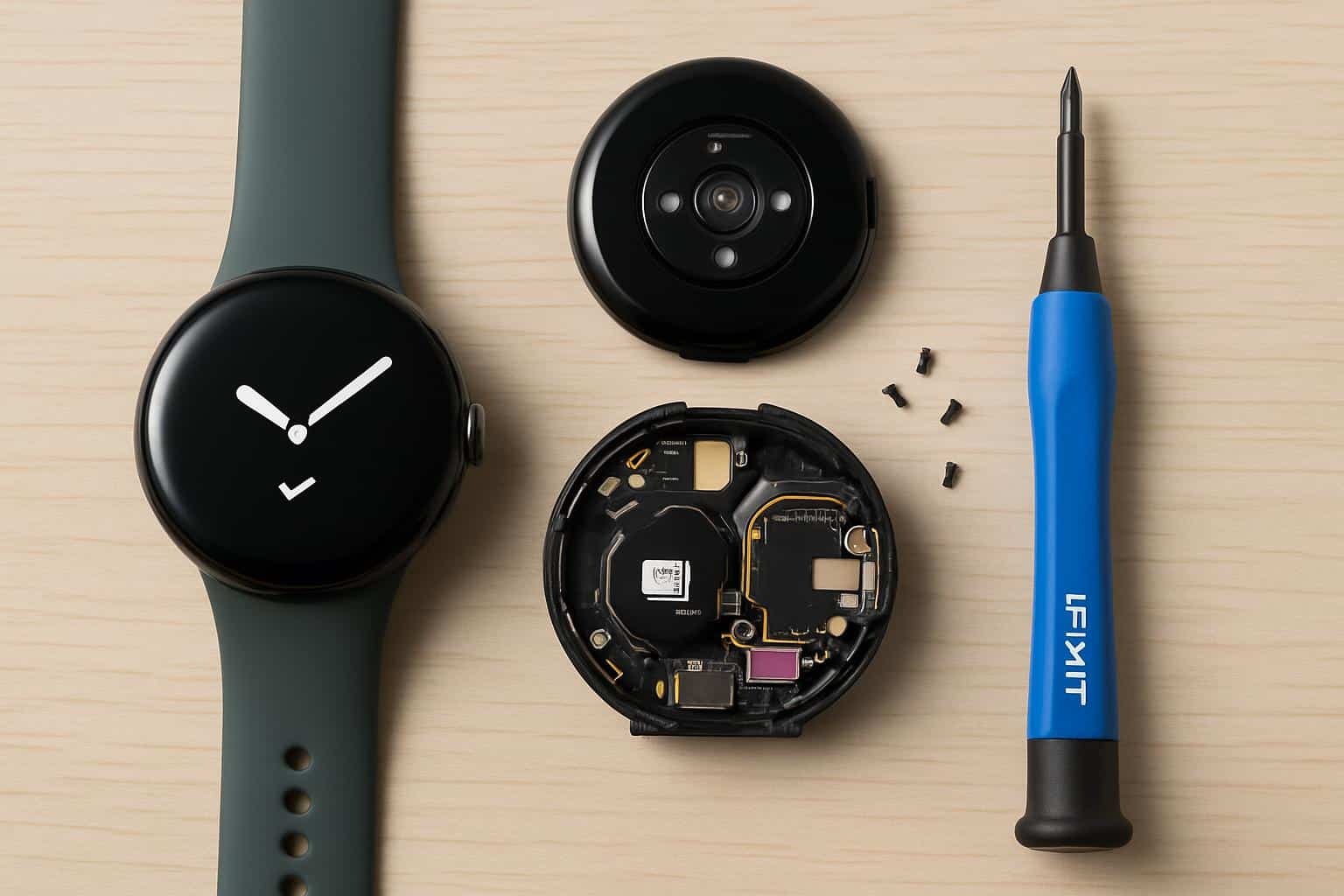
iFixit awarded the Pixel Watch 4 a provisional 9/10 repairability rating, calling it “the most satisfying smartwatch teardown” the site has performed to date, a notable achievement for a mainstream brand rather than sustainability-focused companies like Fairphone or Framework.
Google’s smartwatch, priced at $579, features visible screws that don’t compromise its IP68 water and dust resistance.
The vibration motor and battery are easily removable, with the battery requiring only unscrewing from its enclosure without any adhesive.
The display is secured solely by screws and sealed with a replaceable O-ring gasket that users can readily purchase.
iFixit noted that Google’s decision to make the watch round rather than square significantly improves repairability, as square designs make similar screw-based solutions more difficult to implement.
The site disclosed an ongoing business partnership with Google but insisted it’s unrelated to the teardown assessment.
The Pixel Watch 4 also received an 86/100 review from Engadget, praising its rapid charging, health tracking, and display quality.
In contrast, iFixit’s teardown of Meta’s USD $799 Ray-Ban Display AR glasses concluded that “the first iterations of these smart-glasses are going to be unrepairable.”
The repairability challenges stem from the device’s construction: users would need to split the arms and frame in half to perform basic tasks like battery replacement, with Meta providing no method to do so.
Speakers are soldered in place, and the specially-made lenses would be difficult to source for replacement.
Despite the repair concerns, iFixit praised the advanced technology within the glasses.
The lenses use a reflective geometric waveguide system with partially reflective mirrors that bounce light to the wearer’s eyes at specific angles, creating an AR experience while preventing others from viewing the display.
A mini-projector in the right arm uses liquid crystal on silicon (LCoS) technology to create a 600×600-pixel grid image without artefacts or the “eye glow” visible in older diffractive systems.
iFixit suggested Meta may be selling the glasses at a loss due to the expensive lens manufacturing process and urged the company to prioritise “replaceable batteries, modular arms and swappable lenses” in future iterations.
The Meta Ray-Ban Display glasses are currently available, with early reviews calling them “discrete and intuitive” during hands-on testing.