HP Puts An AI PC Inside A Keyboard With New EliteBoard G1a
 Joe Gallop
28 Jul 2026
Joe Gallop
28 Jul 2026
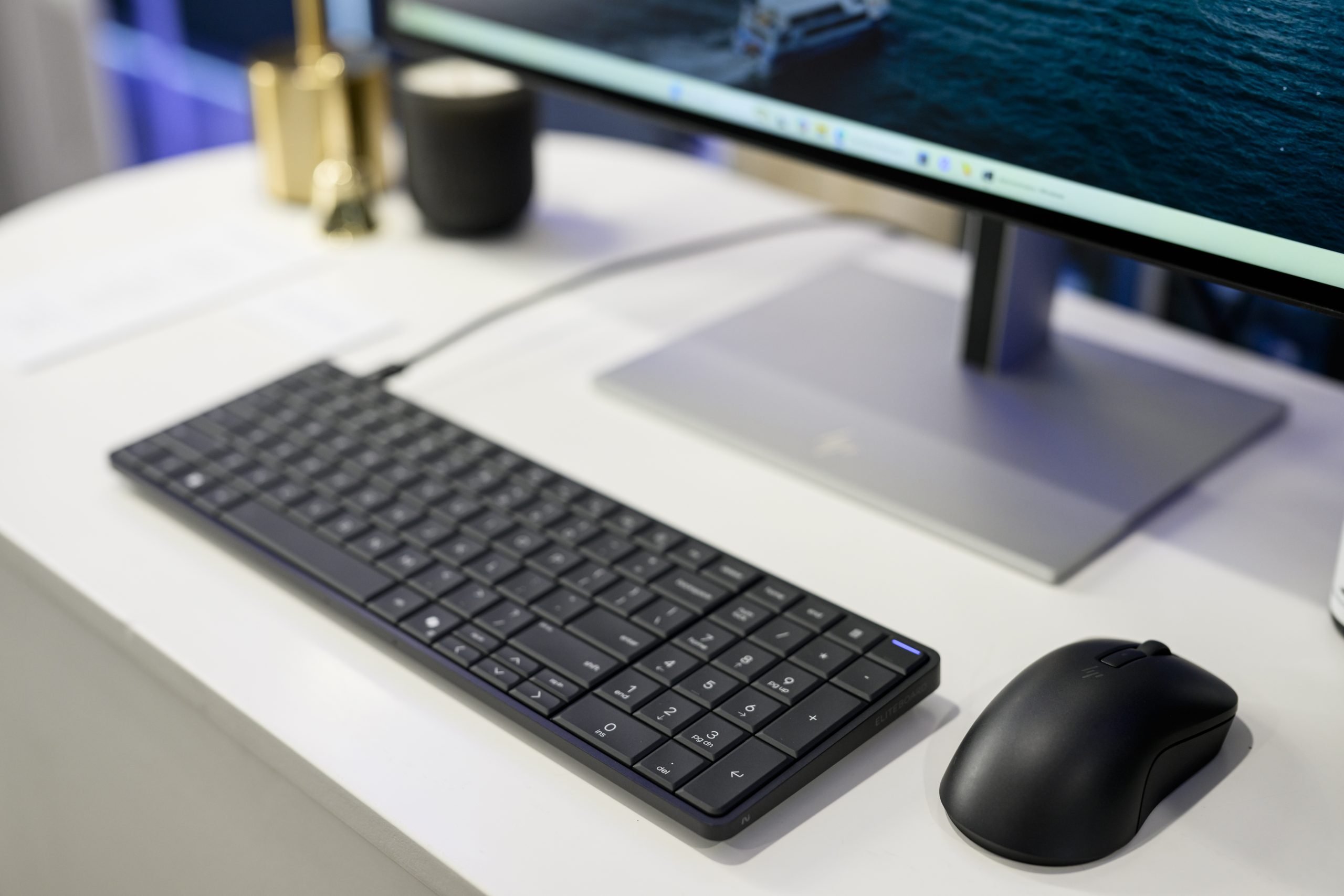
HP has launched its EliteBoard G1a in Australia, squeezing an entire AI-powered business PC into a keyboard and removing the need for a conventional desktop tower.
Unveiled at a media event in Sydney, the EliteBoard is being pitched as a new category of desktop computer for workplaces where employees use fixed desks, shared workstations, kiosks or multiple monitors but do not necessarily need a laptop.
The device, priced at A$2,685, is powered by AMD Ryzen AI processors and includes an integrated neural processing unit capable of delivering up to 50 TOPS of AI performance. It can also drive up to four 4K displays, despite being packaged inside a relatively compact keyboard chassis.
A single cable can carry power, display and data, allowing users to connect the EliteBoard to a compatible monitor without the collection of cables normally associated with a desktop computer.
The device also includes speakers and dual microphones, while an optional fingerprint reader can be used with Windows Hello for authentication.
Speaking during a fireside chat at the launch, HP Personal Systems Director Neil Westhof and AMD Australia Country Manager Peter Chambers said the product was not intended to replace laptops.
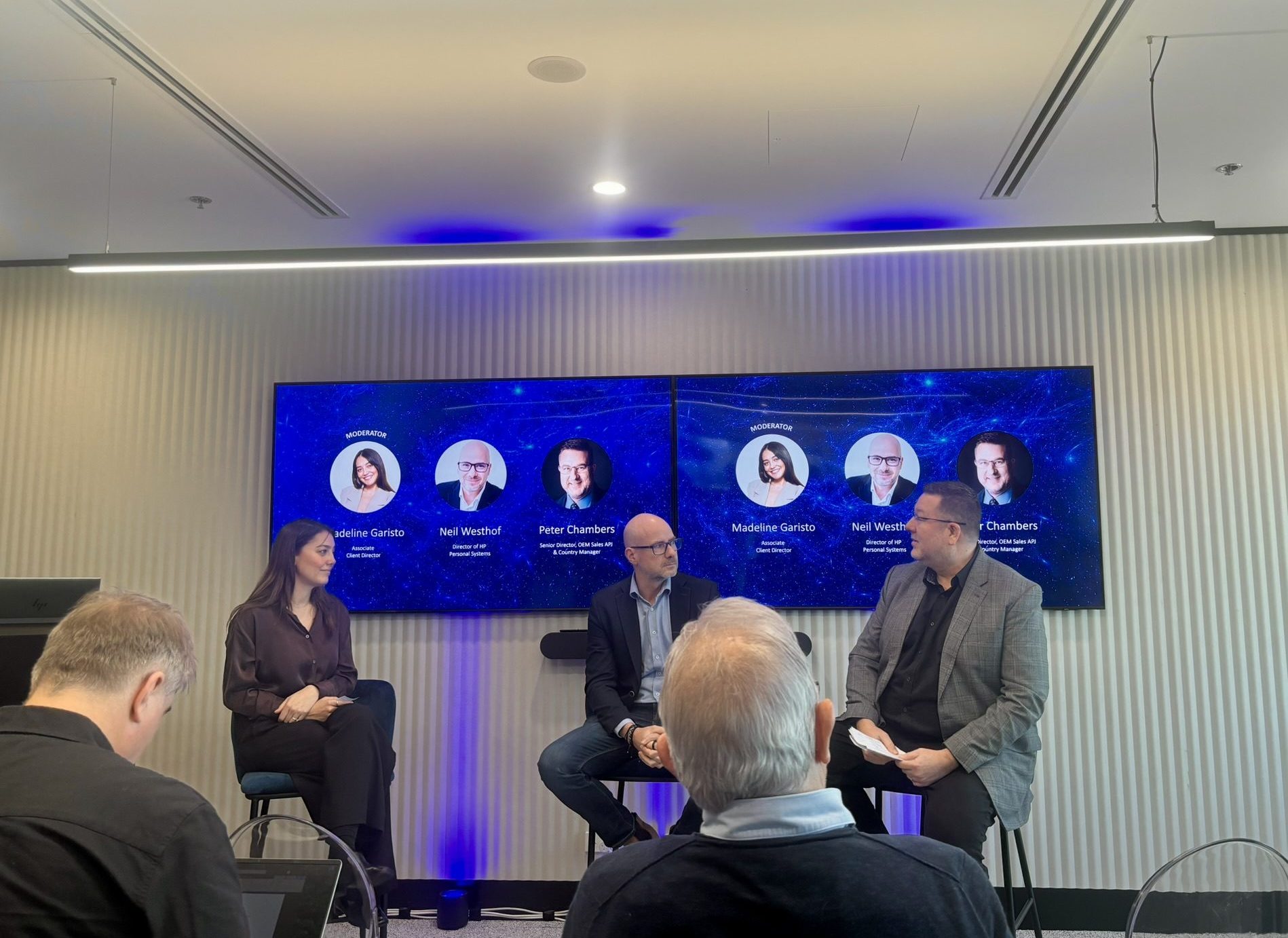
“Our goal is not for the EliteBoard to replace laptops,” Westhof said. “It is about improving the desktop experience for the age of AI and giving customers more choice.”
HP suggest the EliteBoard could be particularly useful in healthcare, government, financial services, reception areas and other customer-facing environments where space, security and device management are important.
The company is also targeting hybrid workers who regularly connect their laptops to monitors and leave them closed on a desk throughout the working day.
“You can literally walk up to a monitor, connect one cable for power, video and data, authenticate with Windows Hello and immediately start working,” Westhof said.
HP Wolf Security is built into the EliteBoard, alongside enterprise management tools and a dedicated security processor that handles functions including data encryption separately from the main CPU.
Running some AI workloads directly on the device could also reduce the amount of sensitive information sent to cloud services.
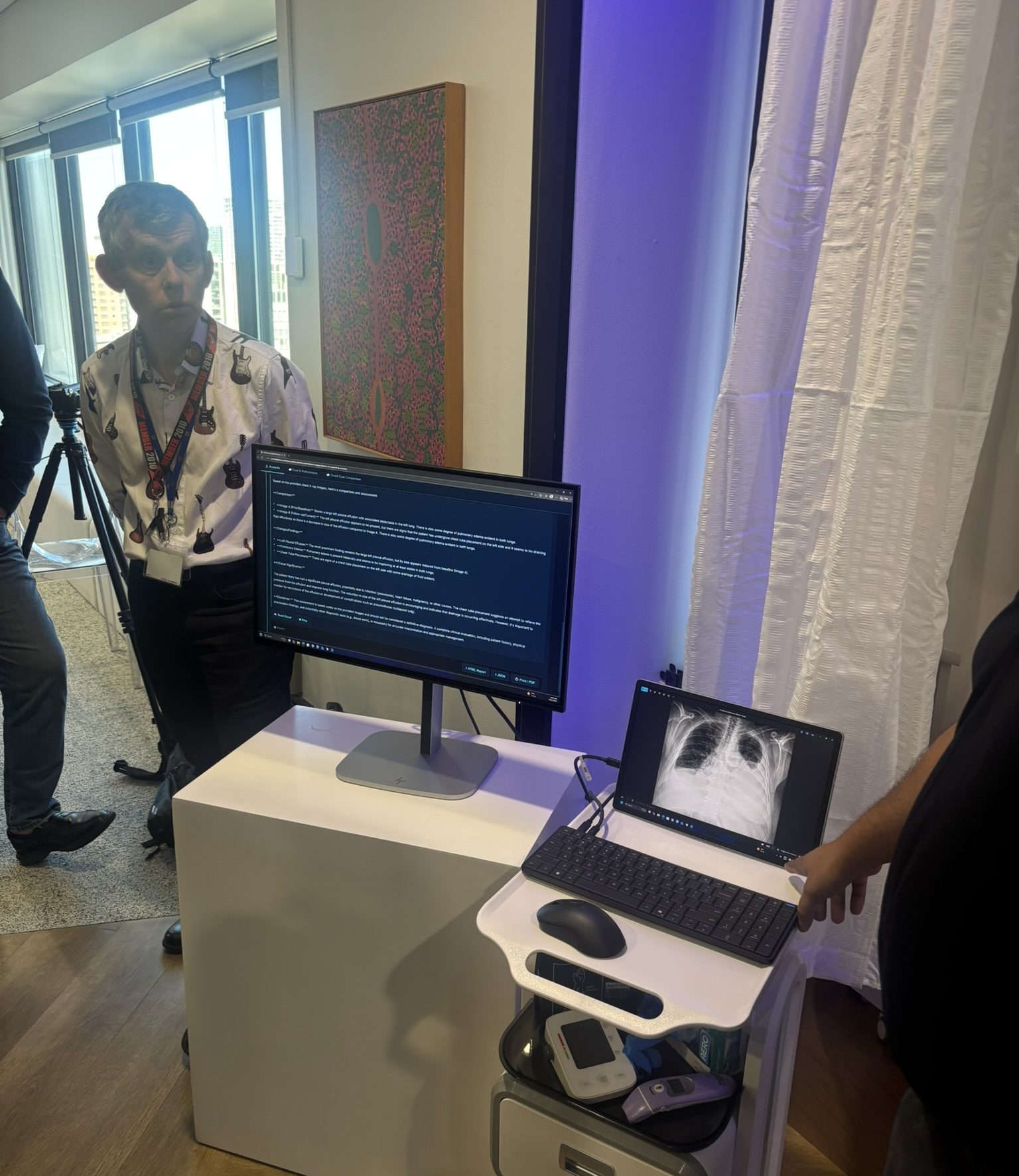
HP demonstrating how the device could be used in healthcare
“If every meeting, keystroke or AI inference requires a cloud connection, the technology may be impressive, but it can become economically difficult to scale,” Westhof said.
“The future of AI will be hybrid. Larger models and orchestration will remain in the cloud, but more workloads will move onto the device because of cost, security, privacy and connectivity.”
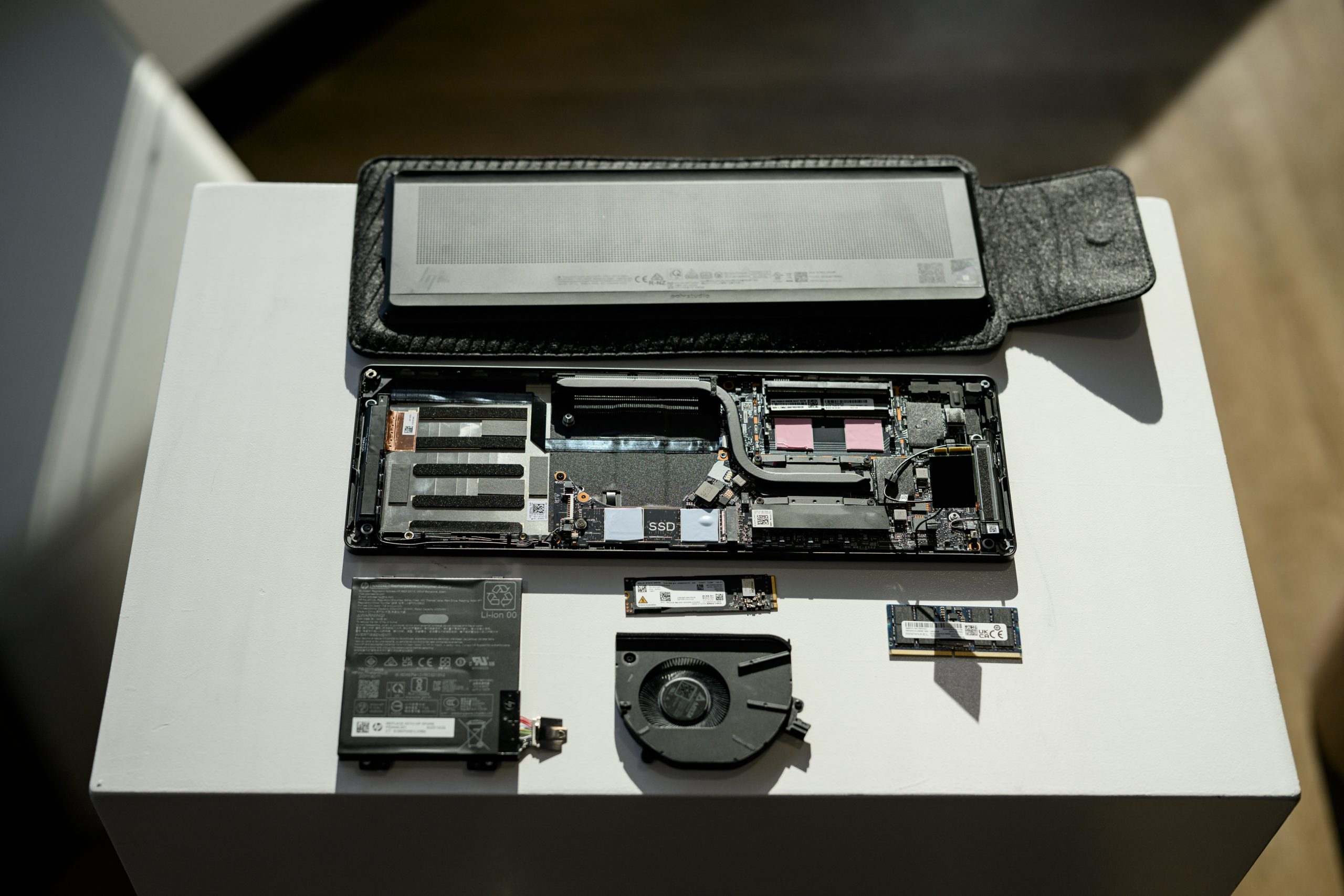
The EliteBoard has been designed with a modular architecture, allowing IT departments to open the rear of the device and replace major components rather than disposing of the entire computer.
HP says 75% of the plastic used in the device is recycled material, while the repairable design could help organisations extend its usable lifespan and reduce downtime.
Looking further ahead, Westhof and Chambers said PCs would increasingly shift from being traditional productivity tools to “personalised and adaptive AI productivity hubs” capable of managing automated workflows and multiple AI agents.