Has Finnish Ring Company Oura Got A PR Sleep Problem, Or Do They Need A New Communication Company That’s Actually Awake?
 David Richards
11 Mar 2026
David Richards
11 Mar 2026
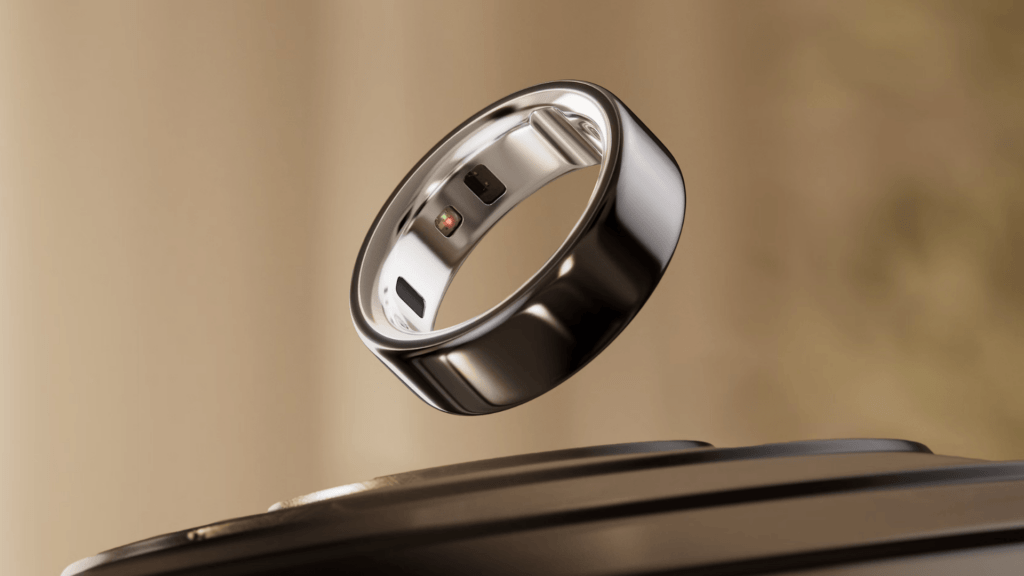
It appears the Finnish brand Oura may have a bit of a PR problem brewing in Australia — though judging by the company’s latest communications strategy, they may simply be hoping everyone sleeps through it.
The brand, a key partner of retailers JB Hi-Fi and Harvey Norman, recently held a media event in Sydney. However, rather than talking much about the product it actually sells — namely smart rings — the evening largely revolved around how well Australians and New Zealanders sleep.
Which, depending on your perspective, might explain a lot.
Handling the event was Corpcom Corporate Communications, a firm whose claim to fame appears to be managing reputational issues, internal messaging and external perception. Ironically, perception management became relevant fairly quickly after several key consumer electronics media outlets — including ChannelNews and SmartHouse — were nowhere to be seen on the invite list.
According to Corpcom director Jeff Kaplan, the company did “not manage their media list”, though when asked who actually did manage it, the answer appeared to be… somewhat less forthcoming.
This is becoming a recurring problem in the PR world: agencies that operate comfortably in one sector suddenly landing clients in a completely different industry and discovering — often a little too late — that they don’t actually know who covers that market.
The result? Media lists cobbled together from brokers, monitoring services, or whatever spreadsheet happened to be lying around.
Which raises an awkward question for brands spending serious money on PR: what exactly are they getting for their investment?
Consumer electronics journalists regularly receive global press releases that have clearly been given the “local treatment” by changing the launch date and swapping “New York” for “Sydney.” Sometimes the effort goes further — the spelling might be updated, the currency converted, and on particularly ambitious days the Asia-Pacific specifications might even be corrected.
Sometimes.
In Oura and Corpcom’s case, the strategy of the week appears to be the tried-and-true PR classic: when there’s nothing particularly new to say about the product, talk about research instead.
Enter the State of Sleep Report 2026.
The report — embargoed until this morning to presumably heighten anticipation — revealed the thrilling news that New Zealanders get the most sleep in the world at 7 hours and 11 minutes per night, followed closely by Australians at 7 hours and 9 minutes.
Ground-breaking stuff.
The embargo itself may have been optimistic. A quick search of Google News shows that very few consumer electronics outlets seem to have picked up the story.
Still, there was some good news for the Finnish company: at least one New Zealand media outlet ran with it — which is only fair given the Kiwis appear to be the most well-rested people on Earth.
Another fascinating discovery from the report is that Australians and New Zealanders are also the earliest risers globally, both getting out of bed shortly after 7am.
There was, however, no mention of the fact that both countries enjoy significantly more sunlight hours than Finland or much of Europe — a detail that might explain why people down here wake up earlier.
Minor detail.
The report also neglected to mention Oura’s market share in Australia or how many rings have actually been sold locally.
For context, Oura Health Oy is a Finnish wearable technology company founded in 2013 that produces the Oura Ring — a smart ring designed to track biometric data including sleep quality, heart rate variability and body temperature.
The company positions the ring as a premium health wearable focused on sleep science and recovery insights.

To access the data, users must open an app on their smartphone — unlike Apple, Samsung or Garmin watches, where the information is displayed directly on the watch face.
Since its founding, the company has sold over 5.5 million rings worldwide.
Which raises another question: in a market already dominated by smartwatches that track the same data, how many consumers actually need a dedicated sleep-tracking ring?
Perhaps that’s a question for the next research report.
In the meantime, at least we now know that Australians and New Zealanders are getting plenty of sleep — which may come in handy when reading embargoed press releases about it.
And if the rest of the media missed the story, well… they were probably just sleeping.