Experimental Electric Comb Shows Promising Results For Hair Regrowth
 April Ossington
17 Nov 2026
Researchers in China have developed an experimental electric comb that could offer a new approach to treating hair loss, with early testing in mice showing significant improvements in hair regrowth compared with conventional treatments.
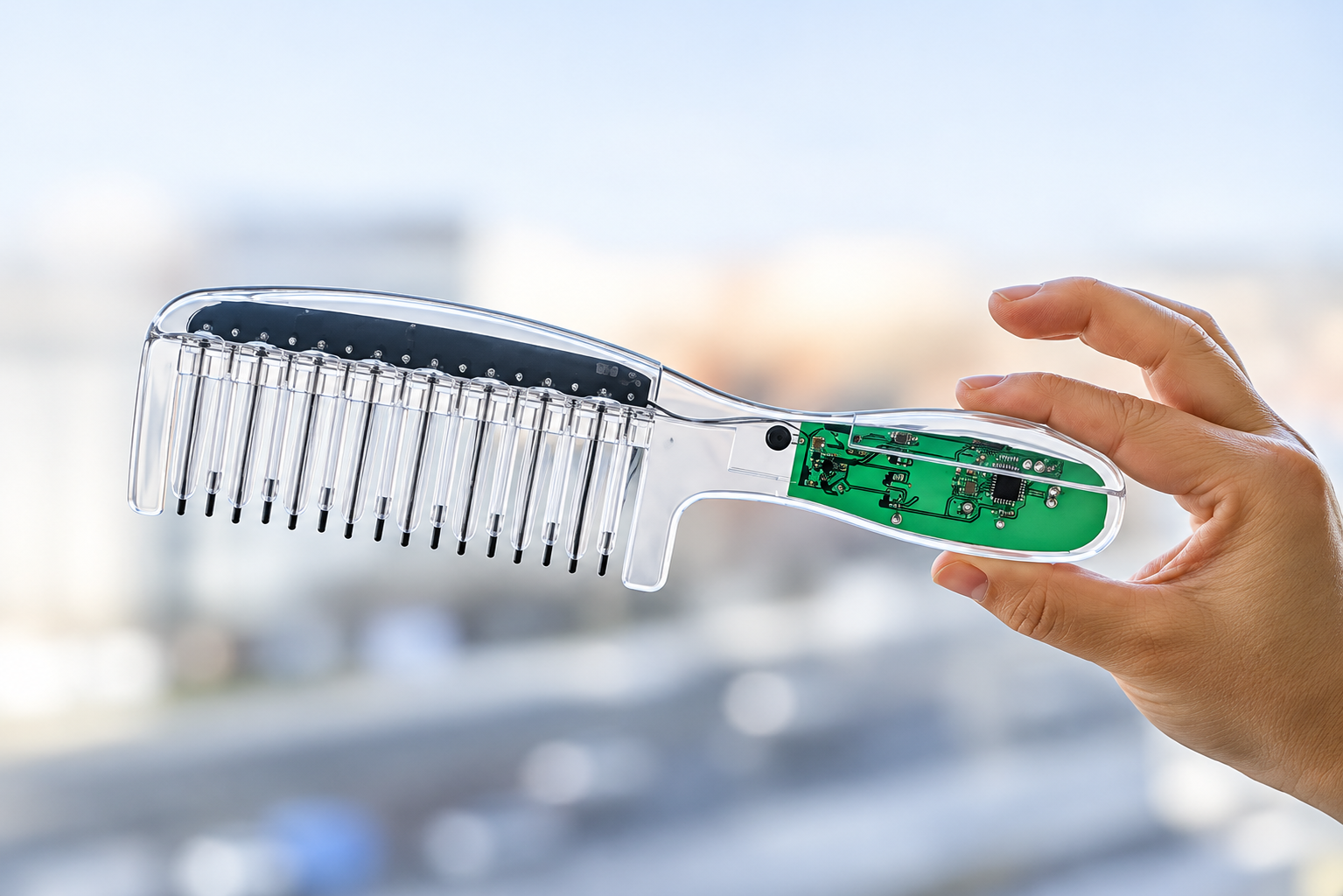
Developed by scientists at Beihang University in Beijing, the device, known as Detangle, combines electrical stimulation with targeted drug delivery to encourage hair follicles to produce new growth.
The technology was detailed in a study published in the scientific journal Nature Communications, with researchers reporting that the device achieved nearly 100 per cent hair restoration in a mouse model of androgenetic alopecia, commonly known as male-pattern baldness.
The results represent a substantial improvement over conventional topical minoxidil treatment, which achieved approximately 70 per cent restoration in the same experimental comparison.
Unlike traditional hair loss treatments that rely primarily on medication applied to the scalp, the Detangle system incorporates specially designed electrodes within the teeth of the comb.
These electrodes generate an electric field around hair follicles while integrated drug-delivery components help transport therapeutic substances deeper into the scalp.
According to the researchers, combining electrical stimulation with targeted drug delivery could improve treatment effectiveness by addressing some of the limitations associated with existing hair restoration products.
The experimental system demonstrated its results within one month, suggesting the technology could potentially offer a faster alternative to established treatments if similar outcomes can be achieved in humans.
Androgenetic alopecia is one of the most common forms of hair loss, affecting up to 80 per cent of men during their lifetime. Although the condition is not medically dangerous, it can significantly affect confidence, psychological wellbeing and quality of life.
Current treatment options include topical minoxidil, oral finasteride and hair transplantation, although each has limitations.

Photo by Mesut Cicen
Minoxidil, widely sold under brands including Rogaine, can help stimulate hair growth and slow further hair loss. However, results vary, treatment can take several months to show improvements, and continued use is generally necessary to maintain its benefits.
Some users also experience side effects, including scalp irritation and headaches.
Finasteride, another established treatment, works by reducing levels of dihydrotestosterone, a hormone associated with male-pattern baldness. While effective for some patients, it can cause adverse effects, including sexual dysfunction and mood changes.
Hair transplantation provides another option by relocating healthy follicles from areas of the scalp less affected by hair loss to thinning or bald areas. However, the procedure is invasive and can involve significant costs and recovery time.
The Detangle comb could potentially provide a less invasive alternative, although researchers emphasise that the technology remains in the experimental stage.
Importantly, the reported results have only been demonstrated in mice. There is currently no clinical evidence establishing that the device can achieve comparable hair restoration in humans.
Further laboratory research and safety assessments will be required before human clinical trials can determine whether the treatment is effective and suitable for wider use.
While the early findings are encouraging, the technology is not commercially available, and no Australian pricing or release date has been announced.
If future studies confirm its effectiveness, the electric comb could eventually offer another treatment option for people experiencing pattern hair loss.