EXCLUSIVE: IKEA Under Pressure: Job Cuts, Tax Scrutiny and a Business Model Showing Cracks
 David Richards
22 Mar 2026
David Richards
22 Mar 2026
The world’s largest IKEA retailer is entering a period of deep upheaval, as Ingka Group moves to cut around 800 jobs and overhaul a business it now admits has become too complex, too slow, and increasingly out of step with modern retail.
The decision to slash roles across its global operations is being framed as a simplification effort. But beneath the corporate language lies a more confronting reality: IKEA’s once highly efficient global machine is struggling under the weight of its own structure.
Ingka CEO Juvencio Maeztu has conceded the company has “grown too complex” for today’s environment—an unusually blunt admission from a brand long seen as a benchmark for operational discipline.
The reset comes at a time when IKEA is being squeezed on multiple fronts—by regulators, by competitors, and by shifting consumer expectations.
A Tax Model Under Fire
Nowhere are those pressures more visible than in Australia, where IKEA is facing a $171 million tax dispute with the Australian Tax Office (ATO), following an audit covering the years between 2016 and 2020.
At the centre of the case is IKEA’s global financial structure—a system that is legal but increasingly controversial.
For decades, IKEA has operated through a complex network of entities designed to separate retail operations from intellectual property ownership. Every IKEA store globally pays a 3% royalty on turnover to a Dutch-based entity, Inter IKEA Systems, for the use of the brand and business model.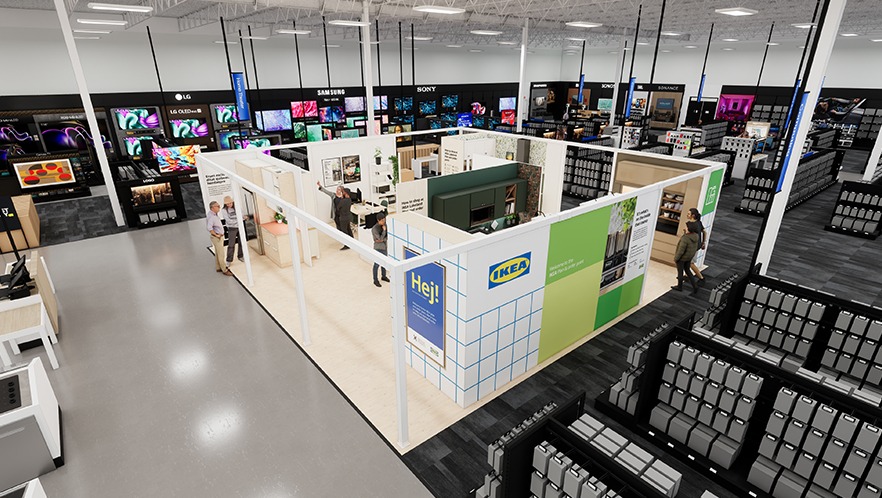
These royalties are booked as expenses in local markets like Australia, significantly reducing taxable profits.
Critics argue this structure enables aggressive profit shifting—moving earnings from higher-tax countries into jurisdictions with more favourable tax regimes. While the model complies with existing laws, regulators are increasingly questioning whether the pricing reflects genuine “arm’s length” commercial arrangements.
The ATO’s case goes directly to that issue.
Authorities are examining whether the royalties and related payments are artificially inflated, effectively draining taxable income out of Australia. The dispute also extends to royalty withholding taxes and the broader valuation of IKEA’s intellectual property—raising fundamental questions about where value is truly created within the business.
The numbers underscore the tension.
IKEA Australia has seen sales surge from $827 million in 2015 to $1.76 billion in 2025. Yet over that same period, it reported losses in five separate years and historically delivered only modest profits.
Even in more recent years, profitability remains thin relative to revenue. In 2025, gross profit of $782 million was reduced to just $130.7 million pre-tax after franchise fees of $55.7 million and other expenses of $175.6 million were deducted.
To regulators, that disconnect is hard to ignore.
And Australia is not alone. European authorities have raised similar concerns about IKEA’s tax arrangements, particularly around the pricing of intellectual property transfers and whether the company’s internal flows accurately reflect economic reality.

At the same time, IKEA is under growing competitive pressure in its core business.
The company built its global dominance on a simple promise: well-designed products at prices competitors couldn’t match. But that positioning is being eroded.
Prices have crept upward in recent years, driven by supply chain costs, inflation, and operational complexity. Meanwhile, a wave of competitors—particularly those sourcing directly from China—are undercutting IKEA on price and speed.
In response, Ingka has invested billions to bring prices back down. But those efforts are coming at a cost, compressing margins in a business already under financial strain.
The challenge is structural.
IKEA’s vast store network, complex logistics systems, and layered corporate structure were designed for scale—but not necessarily for agility. As newer competitors operate with leaner, more flexible models, IKEA is being forced to rethink how it delivers value.
A Retail Model in Transition
That rethink is already underway—and it marks one of the most significant shifts in IKEA’s history.
For decades, the company’s identity was built around its massive, warehouse-style stores—destination locations where customers would spend hours navigating showrooms and collecting flat-packed goods.
Now, that model is being quietly dismantled.
In Australia and globally, IKEA is rolling out smaller, stockless urban stores designed to function as showrooms rather than traditional retail outlets. Customers can meet with consultants, plan purchases, and place orders—but the actual fulfilment happens online.
It’s a fundamental change in how IKEA sells.
Last year alone, Ingka opened 54 new locations, many of them in city centres, and is now piloting even smaller, more cost-efficient formats aimed at suburban and regional markets.
The shift reflects broader changes in consumer behaviour—but it also highlights the growing inefficiency of IKEA’s traditional footprint.
Large-format stores are expensive to operate, slow to adapt, and increasingly out of sync with how people shop.
Failed Bets in New Categories
At the same time, IKEA’s attempts to diversify beyond furniture are yielding mixed results.
The company has pushed into smart home technology and audio products in an effort to position itself as a broader lifestyle brand. But execution has been uneven.
Its latest generation of Matter-compatible smart home devices—launched in late 2025—has been plagued by reliability issues. Reports indicate failure rates of up to 50%, with users experiencing pairing failures, lag, and unstable connections, particularly within Apple HomeKit ecosystems.
Devices frequently drop offline, respond slowly, or fail to maintain stable Thread network connections.
For a company trying to build credibility in the connected home space, those problems are more than technical—they risk damaging consumer trust.
A Business Under Strain
Taken together, the challenges facing IKEA are no longer isolated—they are systemic.
A complex global structure is attracting regulatory scrutiny. A once-dominant price advantage is under pressure. A legacy retail model is being dismantled. And new growth areas are failing to deliver.
Even as the company expands—operating in 32 markets and continuing to open new locations—questions are mounting about the sustainability of its model.
Ingka’s restructuring is intended to address these issues by streamlining decision-making, cutting costs, and restoring agility.
But the scale of the task is significant.
Simplifying a business that has spent decades building layers of operational, financial, and organisational complexity is not a quick fix.

IKEA tips.
The Turning Point
IKEA has long been seen as one of the most disciplined and efficient retailers in the world—a company that perfected the art of global scale.
Now, that very scale is becoming a liability.
The company is being forced to confront uncomfortable questions about how it operates, how it competes, and how it justifies its financial structure in an era of increasing scrutiny.
What was once a model of optimisation is now being tested from every direction.
And as job cuts begin, regulators close in, and competitors continue to chip away at its market share, IKEA finds itself at a critical turning point.
The challenge is no longer just about simplifying the business.
It’s about proving the model still works.