EU Slaps Google And Apple With Multibillion-Dollar Fines On The Same Day
 Varun Godinho
11 Sep 2024
Varun Godinho
11 Sep 2024
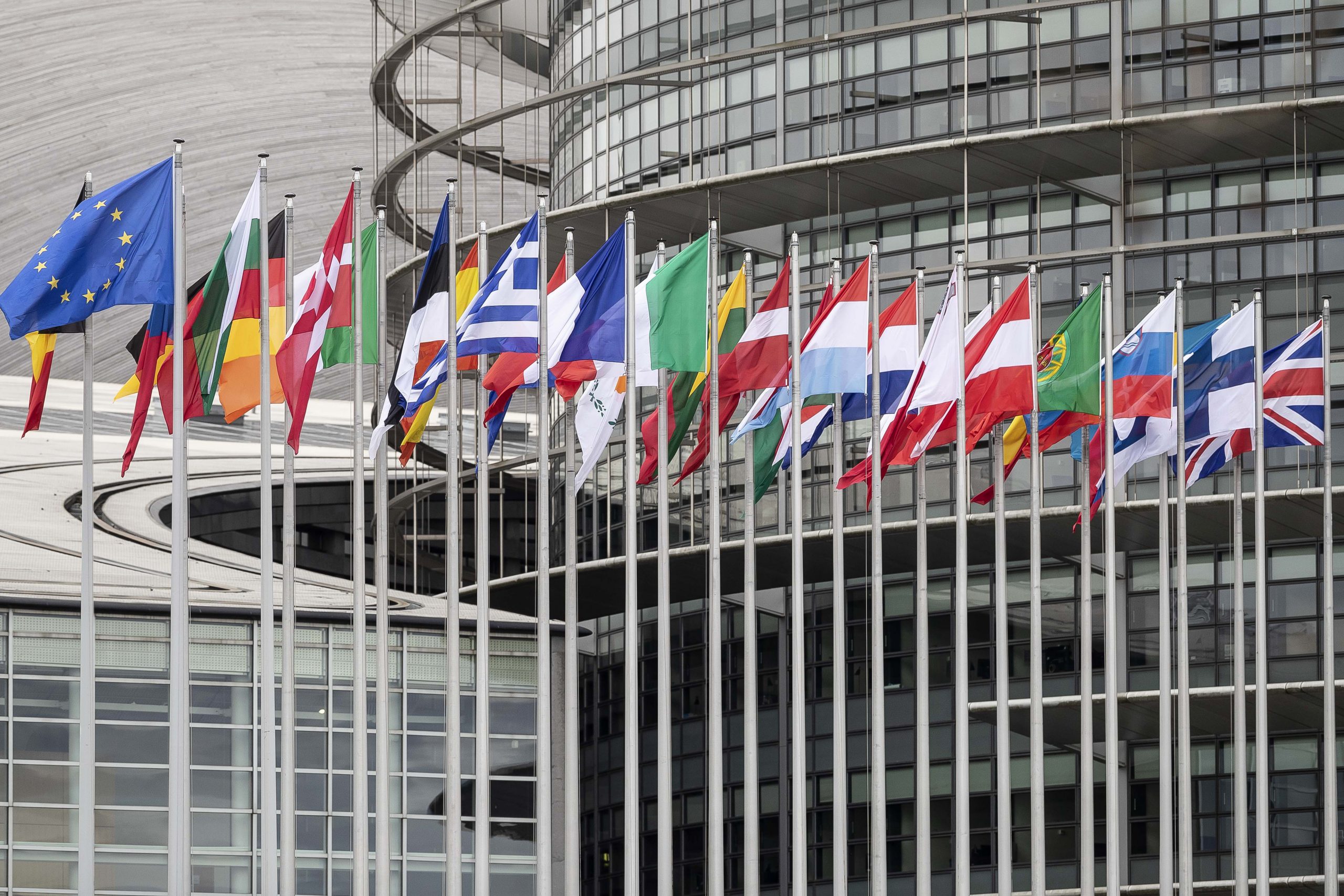
It was a somber day for two of the world’s biggest tech companies – Apple and Google – which were hit with steep fines by the EU on the very same day.
On Tuesday, hours after Apple’s high-profile It’s Glowtime where it unveiled its latest iPhones, the company lost a legal fight over a €13 billion (A$21.55 billion) Irish tax bill, while Google too lost its challenge over a €2.4 billion (A$3.98 billion) fine for abusing its market power.
The EU’s Court of Justice (ECJ) in Luxembourg backed a landmark 2016 decision that Ireland broke state-aid law by giving Apple an unfair advantage.
The ECJ ruling comes after years of legal arguments about whether the European Commission was right to demand in 2016 that €13bn (A$21.55 billion) in “illegal” tax breaks for Apple should be repaid because it gave it an unfair advantage.
The ECJ ruled this week that a previous lower court win for Apple should now be overturned and backed the commission’s 2016 decision that Ireland had granted Apple unlawful aid relating to the tax treatment of profits generated by its activities outside the US, which Ireland must now recover.
Apple expects to record a one-time income tax charge of about $10 billion (A$15.02 billion) in the fiscal fourth quarter ending September 28 as a result of the latest ruling.
In response, an Apple spokesperson said, “The European Commission is trying to retroactively change the rules and ignore that, as required by international tax law, our income was already subject to taxes in the US. We are disappointed with today’s decision as previously the general court reviewed the facts and categorically annulled this case.
“This case has never been about how much tax we pay but which government we are required to pay it to. We always pay all the taxes we owe wherever we operate and there has never been a special deal.”
That same EU court that delivered a damaging verdict for Apple, also took a mighty swing at Google.
Google lost its bid to overturn a €2.4 billion (A$3.98 billion) EU fine for abusing its monopoly power to crush rival shopping services.
The ECJ backed a 2017 decision which found that the US tech giant illegally leveraged its search-engine dominance to give a higher ranking to its own product listings.
A Google spokesperson said that the company was “disappointed” with the court’s judgment and that a 2017 offer to remedy the EU’s concerns helped to generate more clicks for other shopping services.
But the latest setback for Google may only be the beginning as the shopping case is one of a trio of fines handed by EU antitrust enforcers with penalties totaling more than €8 billion (A$13.26 billion).
Google (Image: Sourced from Unsplash)
In 2018, Google was slammed with a €4.3 billion (A$7.13 billion) fine for allegedly restrictive contract terms that prevented makers of tablets and phones from adding competing apps and web browsers, on Android-run devices. The following year, it attracted another €1.49 billion (A$2.47 billion) fine for thwarting advertising rivals through exclusivity agreements for online ads with its AdSense for Search product.
The EU’s competition commissioner, Margrethe Vestager, has warned that the only way of remedying Google’s dominance in adtech would be to mandate the breakup of the firm’s business in the area, according to Bloomberg.
Already in the US, Google is facing a potential breakup of the company after a US court judge ruled recently that Google was a monopolist in the internet search engine space.
The EU’s shopping case “was symbolic because it demonstrated that even the most powerful tech companies could be held accountable,” Vestager said. “No one is above the law.”
She shared her views on Apple’s latest ruling too. “It’s important to show European taxpayers that once in a while, tax justice can be done,” Vestager told reporters in Brussels.
Apart from these latest dramatic legal wins for the EU, it has also introduced legislation by way of the Digital Markets Act earlier this year which is already proving to be successful in holding Big Tech companies including Google parent Alphabet, Apple, Facebook and Instagram parent Meta as well as Amazon, among others, to refrain from favouring their own services over rivals and crushing competition or indulging in anticompetitive behaviour.
Already, companies such as Apple are being forced to change their operating rules within the bloc. Recently, Apple changed its policy in the EU to allow developers to communicate with their customers outside its App Store. Developers can communicate and promote offers that are available anywhere, not just on their own website, from within their app.