Nine Network’s State of Origin Coverage Plagued by Severe Glitches, Contentious Failures
 David Richards
18 Jun 2026
David Richards
18 Jun 2026
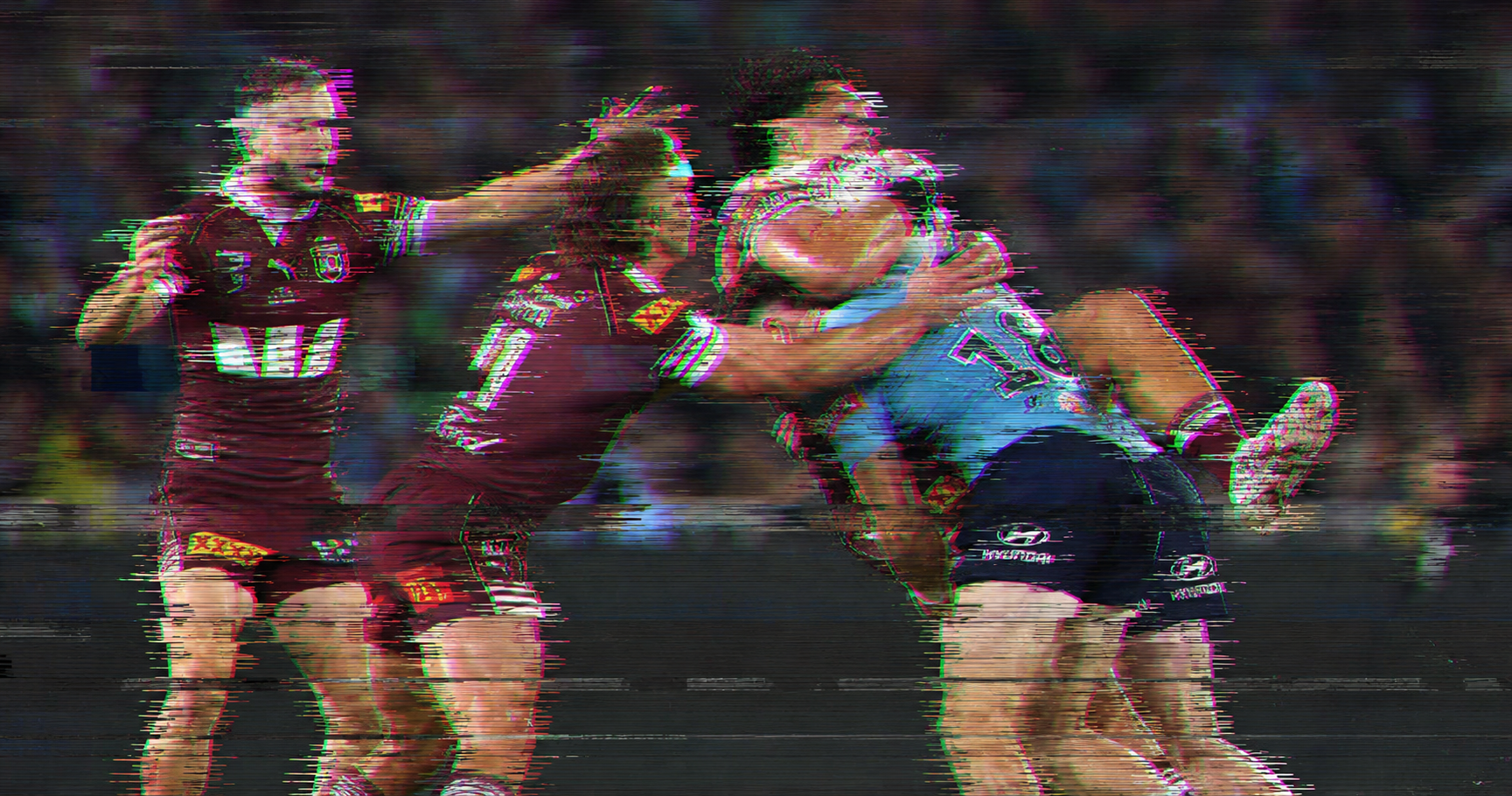
The Nine Network is facing a fierce backlash from sports fans and industry critics following a stutter vision broadcast of State of Origin Game II, where severe technical failures, infrastructure issues and critical production errors marred one of Australia’s biggest sporting events.
The widespread disruption comes at a politically sensitive time for the broadcaster, which is currently bidding for exclusive rights to all NRL matches starting in 2027 across its free-to-air channels and Stan streaming platform.
Critics argue last night’s debacle proves the network is fundamentally unequipped to handle the responsibility.
A Major Technical Collapse
From the opening whistle, viewers across the country were subjected to what has been dubbed “stutter vision”—a constant barrage of frozen images, dropped frames, and stream interruptions.
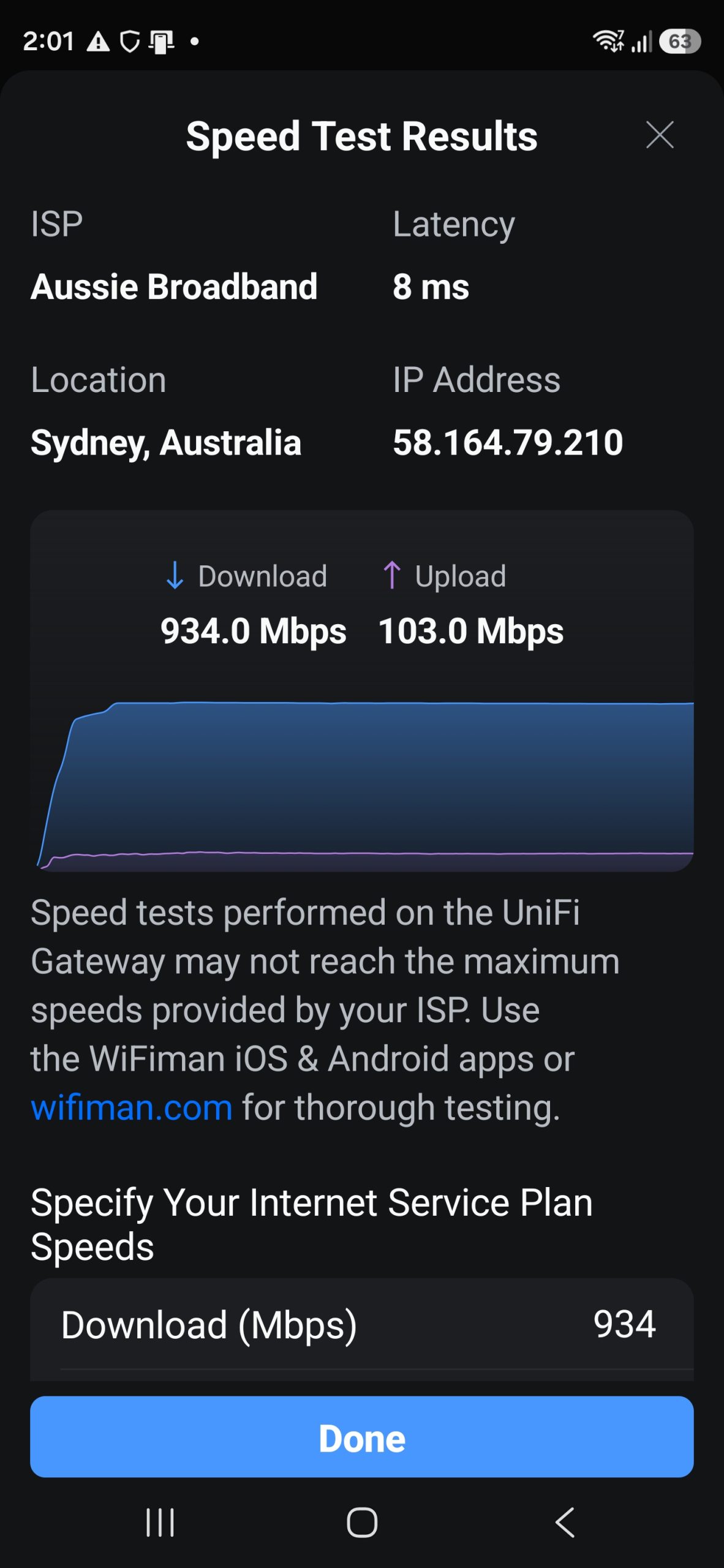
The issues plagued both traditional free-to-air television and the network’s digital streaming platform, 9Now. Even viewers with enterprise-grade home internet setups capable of speeds exceeding 900 Mbps reported unwatchable feeds, confirming the bottleneck originated entirely at the source. My dowload speeds were as seen below and despite excellent broadband I still had to put up with a night of poor coverage on a top end Samsung TV.
According to technical analysts, Nine’s server infrastructure suffered overload issues when millions of fans logged on simultaneously.
Unlike rivals Foxtel and Kayo, which utilize robust Content Delivery Networks (CDNs) to distribute data loads regionally, Nine’s digital processing pipeline hit maximum capacity, failing to deliver the high-frame-rate data segments required for live sport.
Outdated Tech and the 4K Divide
The broadcast failure has cast a harsh spotlight on Nine’s lack of investment in modern broadcasting infrastructure.
BROADCAST STANDARD COMPARISON
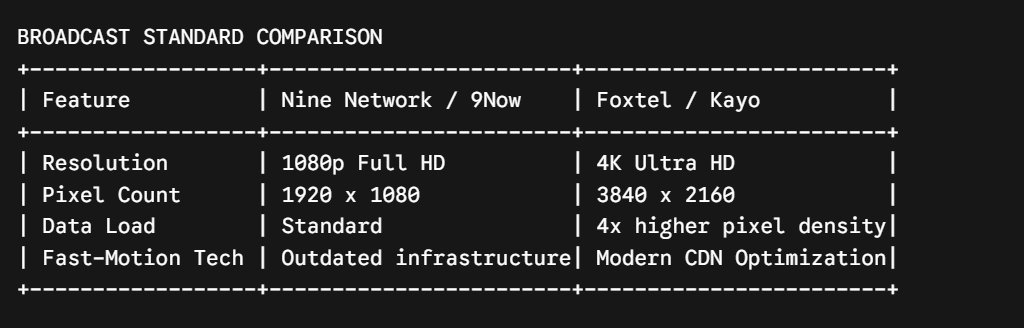
Because live sports are captured at high frame rates (50fps to 60fps) to keep fast-moving action smooth, any disruption in data flow becomes instantly noticeable. While competitors have heavily invested in hardware to seamlessly deliver 4K Ultra HD, Nine remains anchored to 1080p Full HD. Despite pushing a lower-resolution product, their infrastructure still buckled under the peak-hour strain.

Production Blunders Outrage Fans
The technical glitches were compounded by a series of high-profile editorial and production failures:
Missed Opening Try: A severely mistimed commercial break caused a massive portion of the audience to entirely miss NSW’s opening try by Kotoni Staggs.
Replay Suppression: Compounding the error, control room directors failed to air a comprehensive replay until well into the match, offering only a brief, cut-down video segment long after the event.
Analysis and Injury Blackouts: Fans and commentators heavily criticized the network for delayed injury updates, limited post-match analysis, and poor pre-game coverage decisions.
Social media reaction was immediate and merciless, with thousands of fans branding the broadcast an “unacceptable embarrassment” for a national network.
High Stakes for the 2027 NRL Rights Bid
The timing of this broadcast failure could not be worse for Nine. The network is currently navigating sharp declines in traditional media revenue, yet delivering a glitch-free sports broadcast requires millions of dollars in immediate hardware and software upgrades.
With Nine aggressively pitching to strip rival networks of NRL games from 2027, last night’s failure raises a critical question for rugby league executives: Can Nine be trusted with the future of the game, or will Australian sport be left buffering?