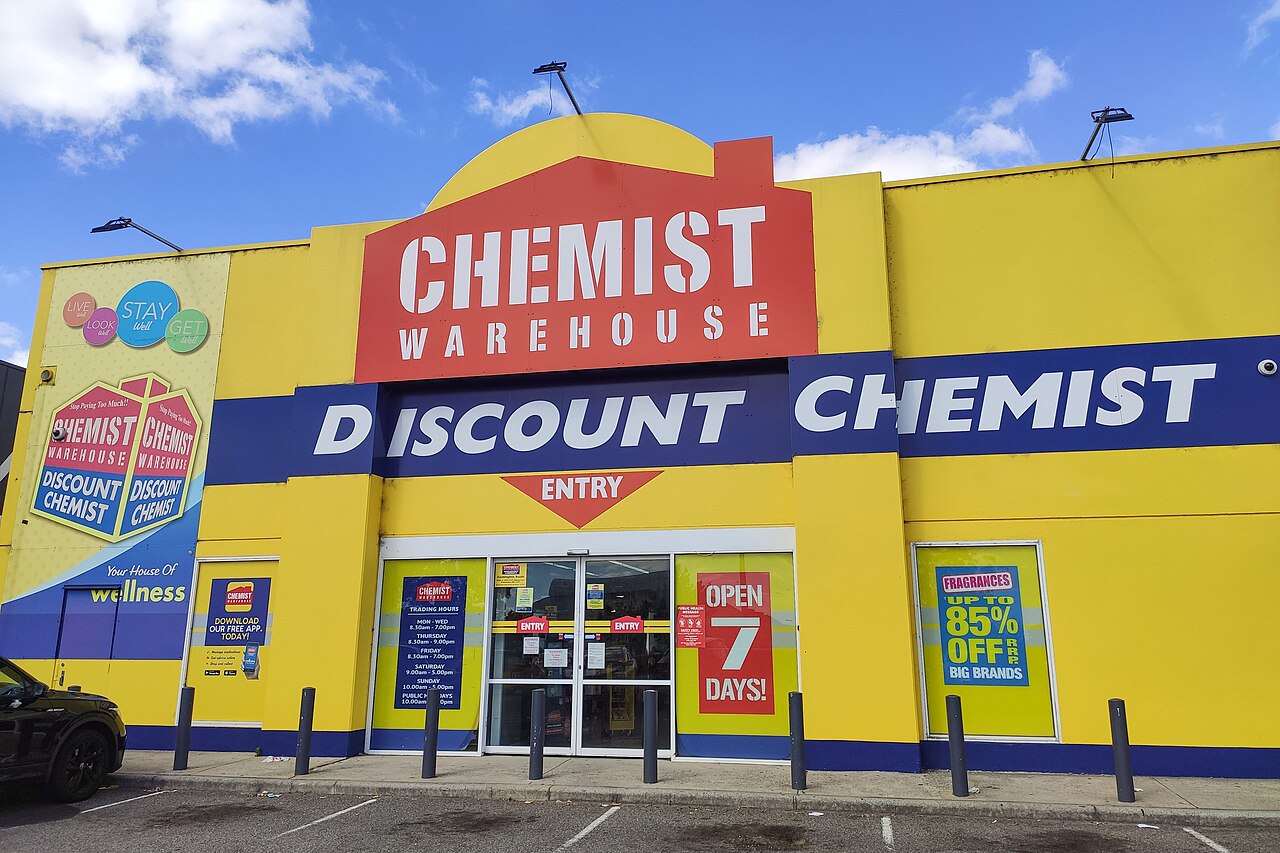
Chemist Warehouse Ordered To Enter Union Talks, Big Problem Looming For Retailers
 April Ossington
03 Dec 2025
April Ossington
03 Dec 2025

Chemist Warehouse has become the first major retailer to be compelled into multi-employer bargaining under the Albanese government’s workplace laws, setting the stage for potential wage increases across the sprawling pharmacy chain.
The Fair Work Commission has directed the company’s billionaire owners, Marcello Verrocchi and entities linked to the Gance family, to begin negotiating a union-backed workplace agreement in South Australia. The order follows a finding that the Shop Distributive and Allied Employees Association, or SDA, secured majority support among 300 workers employed by six Chemist Warehouse franchisees across 13 stores in the state.
The decision represents the first time a pharmacist chain has been pushed into a collective agreement with a union, and it marks Chemist Warehouse as the inaugural retail group brought into the federal government’s expanded multi-employer bargaining framework.
Chemist Warehouse, known for employing large numbers of casual staff on award-level pay, had resisted the union’s application. The company argued its franchise structure made joint bargaining inappropriate. The Commission’s ruling now creates an opening for the SDA to seek to extend future agreements to as many as 1000 outlets nationwide.
SDA South Australia secretary Josh Peak hailed the decision as a historic victory. He said the ruling dismantled structural barriers that had prevented Chemist Warehouse employees from bargaining together.
“The Commission has ordered the network to the bargaining table. It is time for the billionaires behind the brand to show respect to the workers who generate their enormous profits,” Peak said.
“For too long the company relied on a fragmented franchise model that made collective bargaining almost impossible. Those days are over. One network, one deal.”
The union plans to push for higher wages, more predictable rosters and stronger minimum rights that it hopes will become the standard across the pharmacy sector.
Chemist Warehouse did not immediately provide comment in response to the ruling.
The decision follows the SDA’s earlier success in securing an order requiring McDonald’s franchisees to negotiate a multi-employer agreement in South Australia. That case used the supported bargaining stream, which allows union access without demonstrating majority support across the entire workforce.
In the Chemist Warehouse matter, the union proceeded through the single-interest bargaining stream, which requires proof of majority support and automatically recognises common-interest employers where a franchise model exists. This approach could pave the way for union involvement in other pharmacy groups under Sigma Healthcare, which merged with Chemist Warehouse earlier this year and owns brands such as Amcal, Guardian, Discount Drug Stores and PharmaSave.
During the proceedings, Chemist Warehouse’s lawyers attempted to challenge the SDA’s petitions, arguing that union organisers had failed to adequately explain the proposal to many young workers. Deputy President Peter Hampton acknowledged that some explanations may have been incomplete, but found they still provided a sufficiently clear picture for employees to understand what they were endorsing.
He ruled that there were no material misrepresentations that would undermine the majority support demonstrated through the petitions.
Two of the eight employers initially included in the application were later excluded after the union failed to secure majority backing among their staff.
Franchisees will still need to sign off on any future agreement, but if talks stall for nine months and are deemed intractable, the union can apply for the Commission to impose an outcome under Labor’s industrial laws.