Calls Grow For Amazon Monopoly Probe As US Giant Moves To Carve Up Australian Retail
 David Richards
06 Jul 2026
David Richards
06 Jul 2026
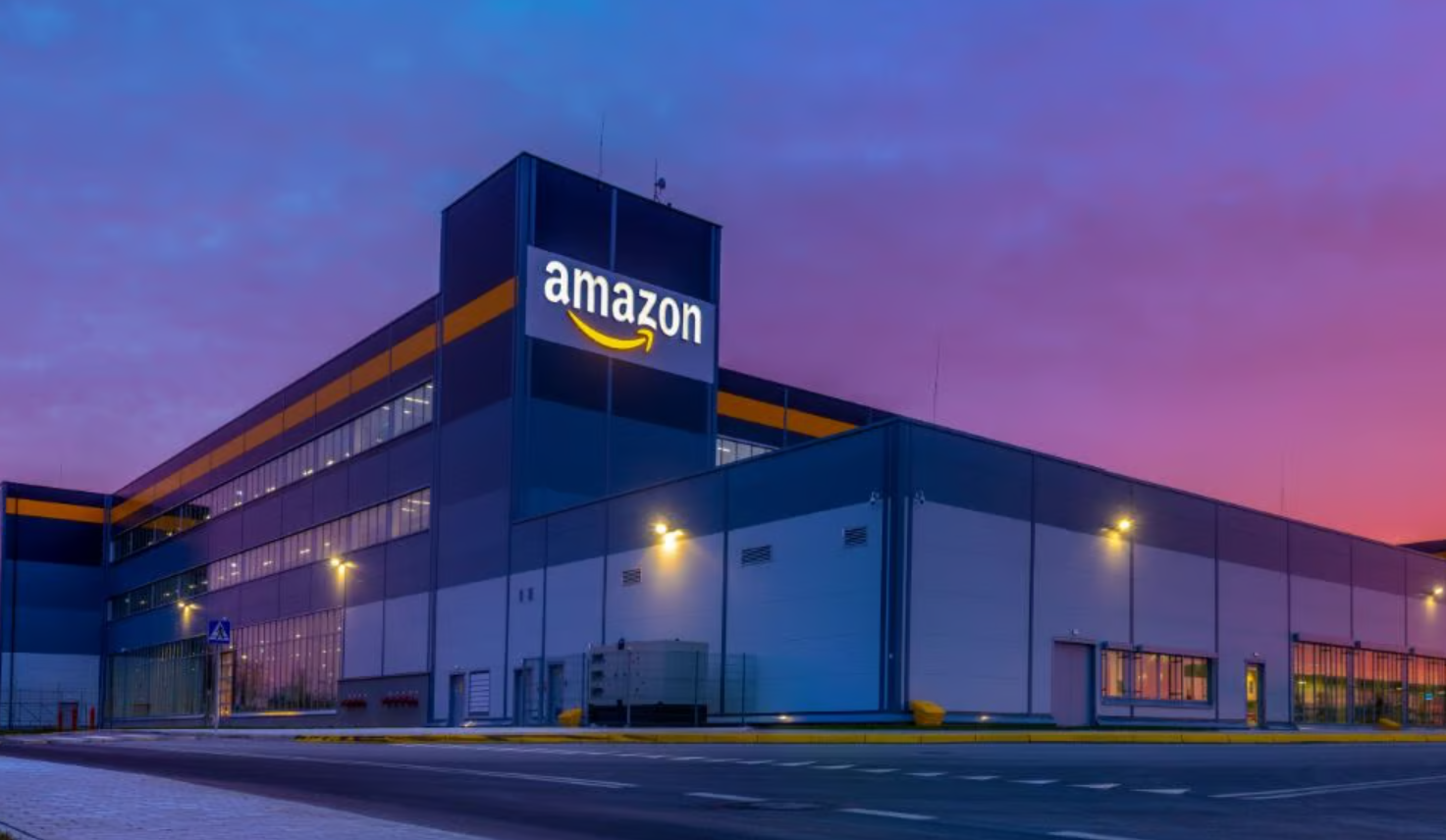
Serious questions are being asked as to whether Amazon should be investigated as a potential monopoly in the making in Australia, as the US giant quietly builds out massive robot-driven distribution hubs, launches its own satellite broadband network, and moves into big-ticket appliance categories that have long been the lifeblood of local retailers such as Harvey Norman, JB Hi-Fi and The Good Guys.
Retailers who spoke to ChannelNews claim the Seattle-based Company’s latest land grab, a plan to build its biggest ever distribution centre in Australia, is a clear signal that Amazon intends to replicate in this market the same playbook that has gutted retail strips across the USA, destroyed thousands of stores and replaced warehouse workers with robots.
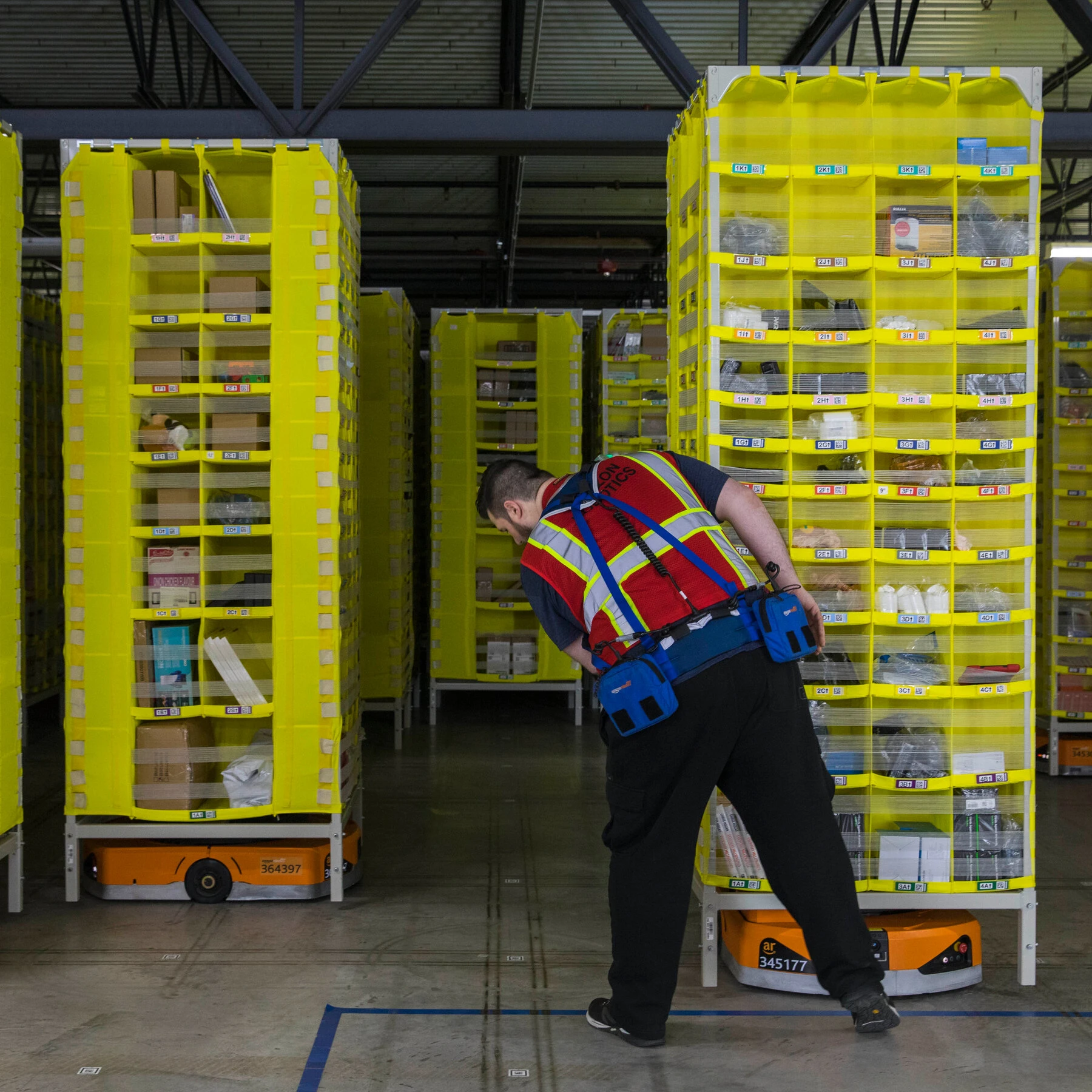
At Amazon Humans are Used To repair robots
And they are asking a simple question: why is nobody in Canberra looking at this before it is too late?
This is, after all, the same US Company that was hauled into the Federal Court by the Australian Competition & Consumer Commission just days ago.
On June 29, 2026, the ACCC filed proceedings alleging Amazon buried five unfair terms in its Prime subscription contracts, then relied on those terms to ram advertising into Prime Video for more than 850,000 annual subscribers who had already paid $79 upfront, forcing those who wanted to stay ad free to stump up an extra $2.99 a month. The regulator also alleges Amazon’s US parent was knowingly involved, having made the global decision to introduce advertising and helped implement it here.
That case is about consumer law, not competition law.
But it goes directly to the culture of a Company that, critics claim, changes the rules mid-game whenever it suits its bottom line. The question now being asked across the retail industry is whether the ACCC, or the Federal Government, should go much further and examine Amazon’s entire Australian operation before local retailers are destroyed and thousands of retail jobs are lost.
The Biggest Distribution Centre Australia Has Ever Seen
In its latest move, Amazon has quietly snapped up land from the private Ingham Property Group, which is transforming a huge site it controls next to the airport into a logistics precinct, according to The Australian.
Amazon has lodged plans to build a complex spanning 200,000 square metres, a facility that will rival its Kemps Creek operation, which measures about 24 football fields. The new complex is being designed with airfreight access in mind, and Amazon will develop the project itself, rolling out the futuristic model it uses in the USA, where robotics and limited human staff pick and pack orders.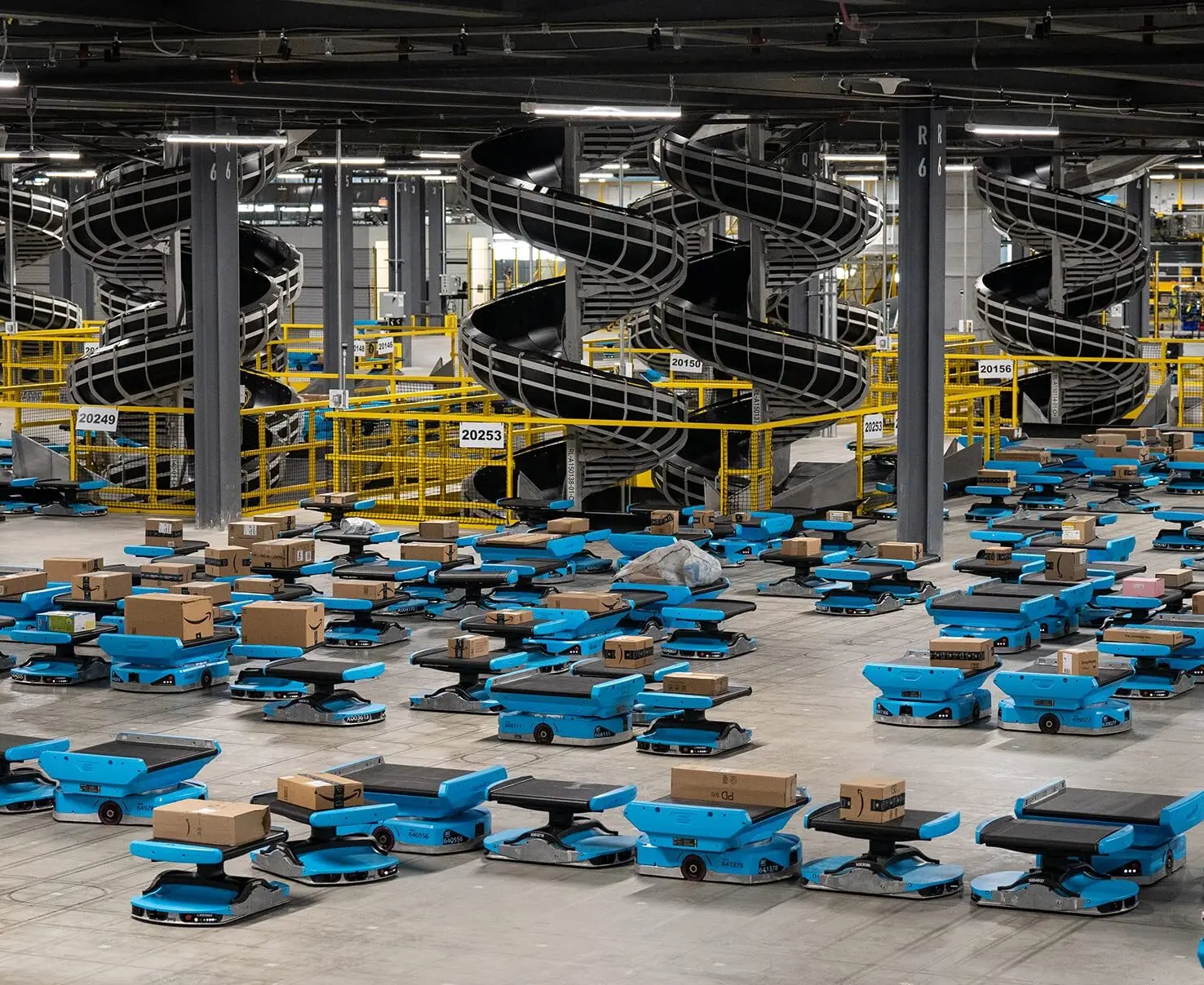
Critically, the facility is being built to handle large items such as washing machines, fridges and big-screen TVs, categories Amazon has historically stayed out of in Australia, and categories that sit at the very core of the Harvey Norman, JB Hi-Fi and The Good Guys business models.
It follows the completion in early 2026 of new purpose-built fulfilment centres spanning 80,000 square metres, about 4.5 times the size of the Opera House, aimed squarely at improving Amazon’s household goods ranges, including furniture and TVs, in direct overlap with the categories that drive local retailers’ revenues. Now the Company is building out further locations in NSW.
A Queensland University of Technology retail expert has suggested Amazon is quite possibly on track to become one of the country’s largest retailers, projecting revenue of $5.5 billion.
The American Warning
If Australians want to know what happens when Amazon is allowed to run unchecked, they only have to look at the USA, where retail has become a disaster zone.
The concentration is stark. Amazon captured roughly 37.6% of US retail e-commerce sales in 2025, with Walmart a distant second at about 6.4%, Apple at 3.6%, eBay at 3.0% and Target around 1.9%.
The consequences have been brutal. According to Coresight Research, 7,327 retail stores closed in the USA in 2024, up 57.8% on 2023, with discount stores, pharmacy chains and office supply retailers similar to Officeworks making up the majority. It got worse from there, with roughly 6,000 store closures announced in the first half of 2025 and millions of square metres of vacated retail space now sitting boarded up. Coresight has predicted that roughly 15,000 retail locations will be forced to close this year because of the dominance of Amazon.
Behind the store closures sits the jobs question. Amazon’s warehouses increasingly run on robots instead of people, while the Company uses its global buying power to squeeze suppliers and undercut competitors who still carry the cost of physical stores and human staff.
Citigroup has specifically named Harvey Norman and JB Hi-Fi as the two Australian retailers most under threat, alongside specialist hi-fi retailers and phone carriers, who now face an additional threat from an entirely different direction: space.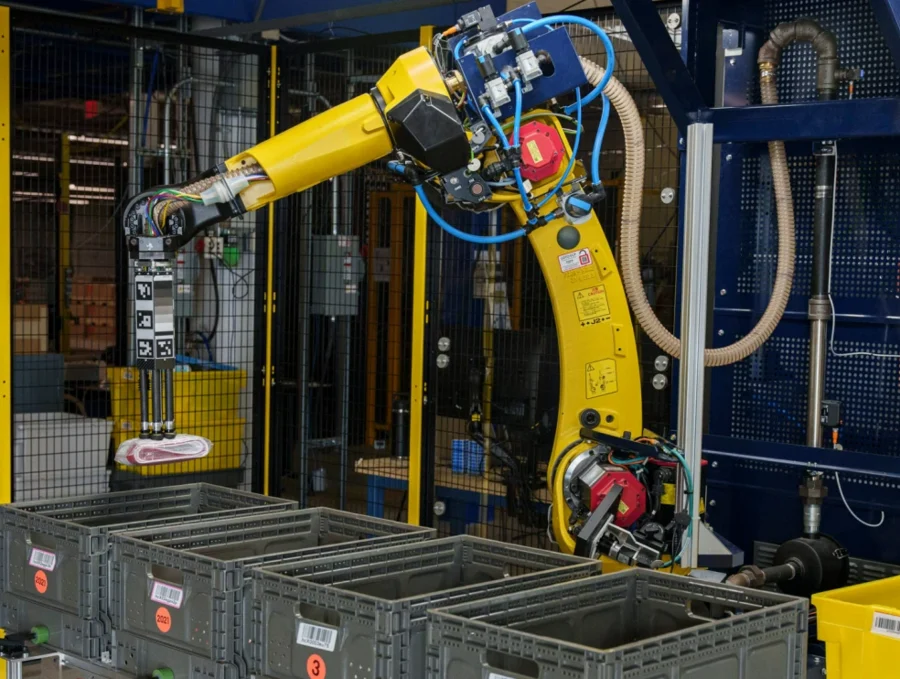
Satellites Add A New Front
In the early hours of July 2, a United Launch Alliance Atlas V rocket lifted off carrying 29 Amazon Leo satellites. Amazon says the satellites have been successfully deployed, that it has established contact with them in orbit and confirmed they are in working condition. All that remains is raising them to their operational altitude of 490 kilometres, after which Leo will be ready to begin providing Australian customers with access to its satellite broadband service. A key Amazon partner in the venture is the Australian National Broadband Network.
For phone carriers and internet providers already watching Amazon eat into retail, the message is clear: this is a Company that intends to own the pipe as well as the shop.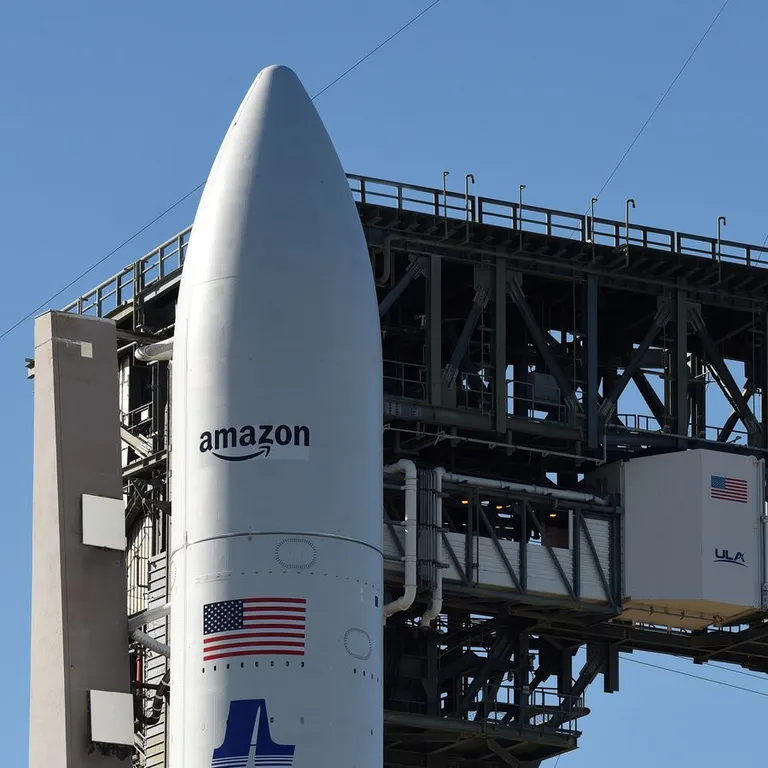
The Incumbents Fight Back, Sort Of
The local retailers have not been passive. JB Hi-Fi Group CEO Nick Wells, who took over from Terry Smart in October 2025 after a decade as CFO and a year as COO, has been positioning the retailer’s national store footprint as its point of difference, backed by aggressive investment in click and collect, ship from store, real-time inventory visibility and faster fulfilment. Wells has said JB Hi-Fi is now benchmarking its own delivery performance directly against Amazon’s.
Gerry Harvey, by contrast, has stayed characteristically dismissive of the threat.
Analysis from May 2026 suggests JB Hi-Fi is being repriced by the market from a growth stock into a high-quality mature retailer. That is not distress, but it is a signal the growth narrative has matured, even as Amazon’s expanding local presence forces JB Hi-Fi to accelerate spending on logistics, ecommerce infrastructure and automation simply to hold its ground. Amazon is today seen as posing the largest threat to revenue growth and profit margins for both JB Hi-Fi and Harvey Norman, with Amazon Australia expected to keep expanding online and taking share within that channel.
America Woke Up Late. Will Australia?
In the USA, politicians only recently woke up to the threat that local businesses face as Amazon expands. The Federal Trade Commission, joined by 18 state attorneys general and Puerto Rico, sued Amazon in 2023, alleging it is a monopolist using interlocking anticompetitive strategies. The FTC argues Amazon’s conduct stops rivals and sellers from lowering prices, degrades quality for shoppers, overcharges sellers, stifles innovation and prevents rivals from competing fairly.
The case has already survived a motion to dismiss. The trial date has moved more than once, originally pencilled in for October 13, 2026, before Amazon successfully pushed back against that timeline. It is now set down for a bench trial starting February 9, 2027, in the US District Court for the Western District of Washington.
Amazon’s regulatory exposure has only widened since. The FTC secured a US$2.5 billion settlement in September 2025 over deceptive Prime enrolment practices, and has reportedly drafted a further potential complaint, again involving multiple state attorneys general, that could surface as early as October 2026. That gives Amazon three live fronts in the USA alone: the marketplace monopoly case, the Prime settlement fallout, and the newer probe.
If the FTC succeeds in restricting Amazon’s practices, it could level the playing field for competing marketplaces like Walmart, eBay and Shopify, which have struggled against Amazon’s scale, potentially delivering lower prices and better service through renewed competition. A win for Amazon, on the other hand, could embolden aggressive platform strategies worldwide, making it harder for any regulator, including Australia’s, to challenge similar conduct in future.
The Question Canberra Won’t Ask
Here is the uncomfortable truth: the US case is testing the exact mechanism, marketplace dominance squeezing sellers and rivals, that Australian retailers fear is now being built out on their doorstep, complete with robot warehouses next to the airport and satellites overhead.
Yet Australia currently has no equivalent competition action against Amazon underway. The Prime Video case is a consumer law skirmish. On the competition front, what is happening here remains pure market share erosion through price and logistics muscle, unchallenged and largely unexamined.
The Americans waited until Amazon controlled nearly 38% of online retail and thousands of stores had already closed before their regulators moved. By the time the FTC case is decided in 2027, tens of thousands more US stores will be gone.
Australian retailers, and the hundreds of thousands of people they employ, are entitled to ask whether the ACCC and the Federal Government intend to wait for the same wreckage here before anyone asks the question the Americans left far too late: is Amazon a monopoly in the making, and should it be stopped before local retail is destroyed?