CES 2026: Now Chinese Brand Moto Want’s To Have A Crack At Watches & Audio Speakers
 David Richards
09 Jan 2026
David Richards
09 Jan 2026

Motorola, the Chinese-owned brand that unveiled its new Razr Fold smartphone at CES 2026 — notably excluding Australian media from briefings — is now attempting to expand beyond smartphones by entering the audio and accessories market.
Alongside the foldable handset, Motorola has introduced a range of new products including the Moto Tag 2 tracker, Moto Watch, Moto Pen Ultra stylus, and a new portable speaker called the Moto Sound Flow.
The cylindrical Moto Sound Flow is positioned as a direct competitor to Samsung-owned JBL speakers. It features a twill-textured fabric exterior and will be available in two Pantone-curated colours: Carbon and Warm Taupe. At this stage, Motorola has not confirmed which Australian retailers will stock the product, with the company declining to engage with Australian media at CES while freely briefing overseas journalists.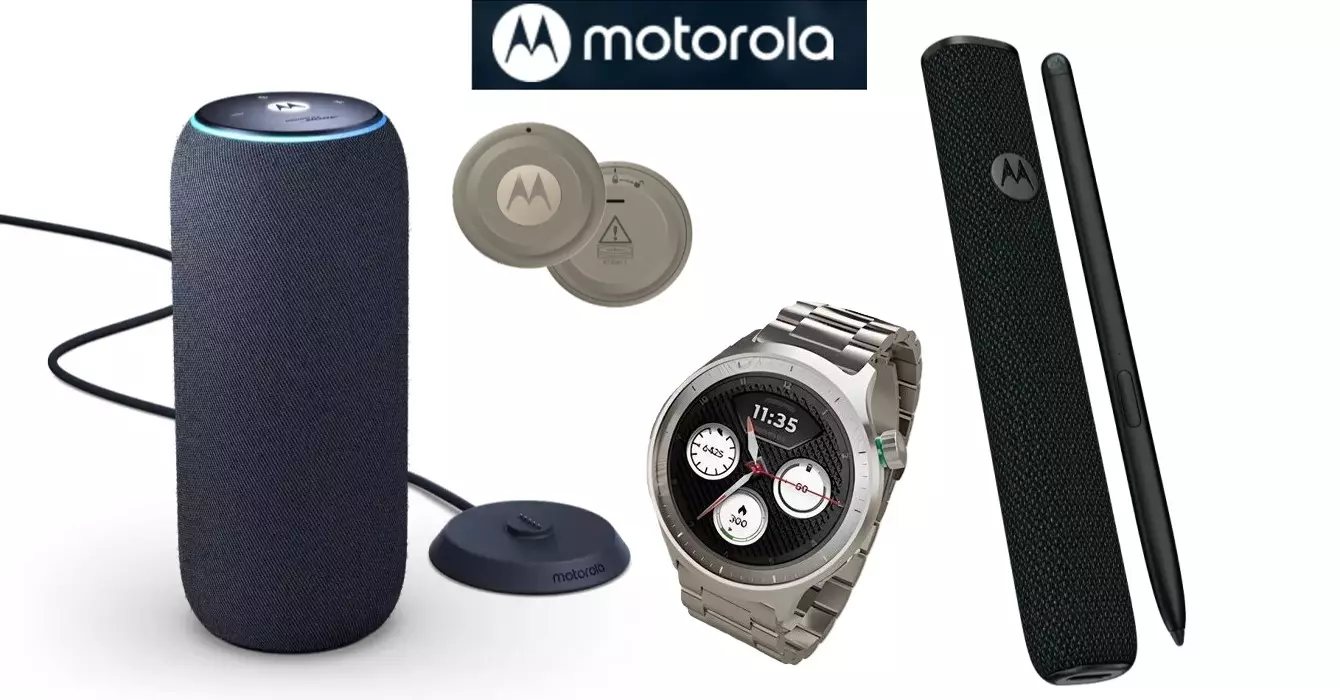
Despite its minimalist design, the speaker includes a dedicated woofer, tweeter, and dual passive radiators. Motorola US representatives have told us the speaker is calibrated using Sound by Bose technology and delivers up to 30W of output — a branding strategy increasingly used by audio companies such as Skullcandy to enhance perceived value.
Connectivity options include built-in Wi-Fi, Bluetooth 5, and one-tap pairing with compatible devices. The speaker also supports advanced UWB (Ultra-Wideband) features, allowing it to automatically assign left and right channels when two speakers are paired based on the phone’s position.
In multi-room configurations, Motorola’s RoomShift feature uses UWB to detect the user’s location and seamlessly switch audio playback to the nearest speaker.
The Moto Sound Flow is powered by a sizeable 6,000mAh battery and carries an IP67 dust and water resistance rating, making it suitable for outdoor use.
Motorola has indicated the product will launch in Australia, though pricing remains unconfirmed. One industry source suggests it could retail for around $499, which would place it in a highly competitive segment dominated by established audio brands.
Motorola’s previous tracker sold in Australia was criticised for poor design — particularly a non-replaceable battery that failed prematurely. Whether those issues have been resolved in the new generation remains to be seen.
Unlike rival Samsung, now the world’s number one audio company, Motorola has little experience in the audio market, raising questions about whether brand recognition alone will be enough to win over consumers.